
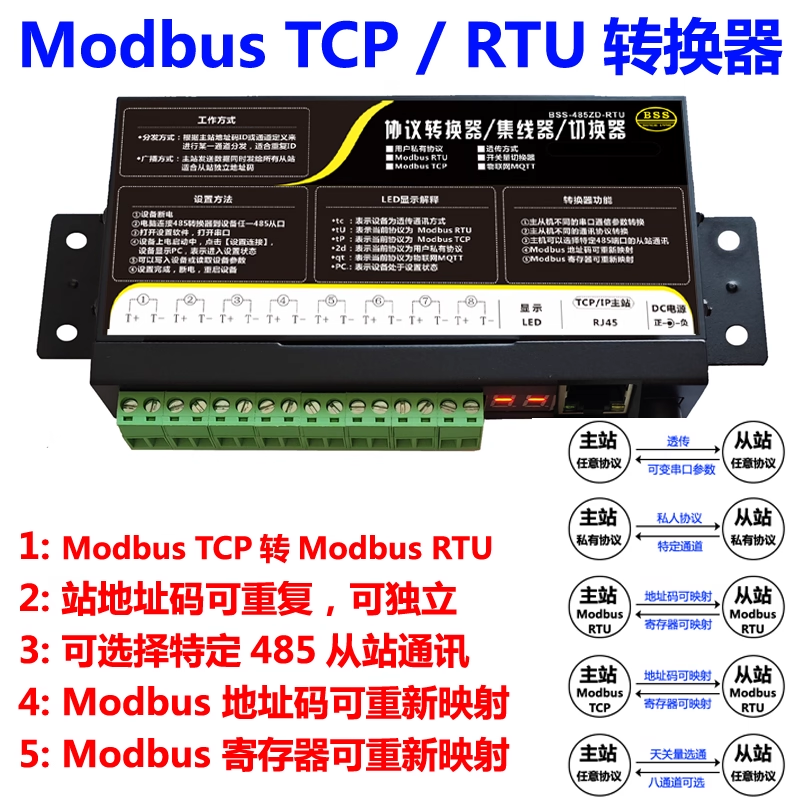
1、 Equipment Overview
BSS-485232-R1UNot just a basic oneModbus TCPAnd withRTUProtocol converter is a feature rich toolCommunication hub and intelligent gateway. It is specifically designed to solveModbusDesigned to address various challenging issues in the integration of multi site systems, capable of integrating based onTCPIntelligent distribution of network master station requests to multiple channelsRS485Numerous slave devices on the bus.
Core Value Points:
- •Seamless protocol conversion: ImplementationModbus TCPAnd withModbus RTU/ASCIIBi directional transparent transmission between them.
- •Resolve address conflictsInnovatively solving the problem of slave devicesIDRepetitive, non modifiable, or unknown engineering challenges.
- •Intelligent data mappingSupport flexible remapping of slave address codes and register addresses, providing a unified and concise access view for upper level master stations.
2、 The five major scenarios of core functions and solutions
The converter has been accurately positionedModbus TCPMain station andRTUThe five most common pain points when networking from a substation (as shown in the scenario diagram):
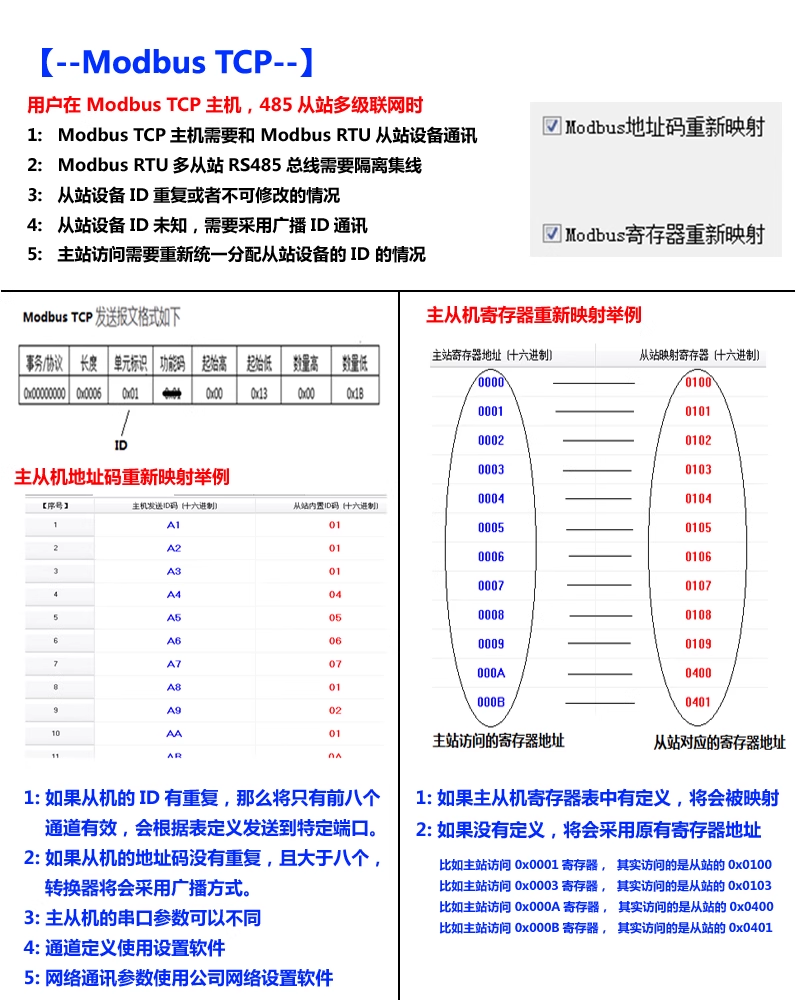
- 1.Basic protocol communication: Modbus TCPThe main station needs to communicate withModbus RTUCommunication between slave devices.
- 2.Bus isolation and expansion: RS485The bus needs to be isolated or expanded to avoid overloading a single bus or spreading faults.
- 3.From the stationIDRepetitionMultiple slave devices leaving the factoryIDRepetition and inability to modify, traditional buses cannot coexist.
- 4.From the stationIDunknownThe address of the slave station is unknown and needs to be addressed and identified using a broadcast address.
- 5.unifiedIDAdministrationThe master station hopes to reassign a unified and orderly logic to all slave stationsIDSimplify management.
3、 Key technical principles: mapping and working mode
1. Two intelligent working modesThe device provides two core working modes to adapt to different communication needs:
- •Distribution methodThe default and most commonly used mode. The converter converts the requests from the main station based on the internal preset mapping table“Logical substationID”Translate to correspondingPhysicsRS485PortAnd the slave station on this portactualIDTo achieve precision“one-on-one”Command issuance.
- •Broadcasting methodWhen the master station sends a broadcast command or the command does not match any mapping rules, the device can simultaneously send the command to all slave stations on all ports, suitable for global write operations or searching for unknown devices.
2. Remapping address codes and registers (core function)This is the key difference between this device and ordinary converters, as it communicates through two mapping tables“Translation”And with“route”.
- •Address code remappingThis function directly solves the problemIDRepetitive questions.
- •Operational mechanismMaintain an address mapping table within the device. For example, the main station believes that it is accessingIDFor
1The slave station, but the mapping table definition: logicalID1corresponding Port1 In practiceIDFor1From the station; logicID2corresponding Port2 In practiceIDAlso for1From the station. - •effectEven if there are multiple slave stations physicallyIDAll are Logically speaking, for the main station, they are already
1The only (ID) device that perfectly resolves conflicts.1,2,3...Register remapping
- •Operational mechanismMaintain an address mapping table within the device. For example, the main station believes that it is accessingIDFor
- •This feature further simplifies the programming of the main station and unifies the data view.Operational mechanism
- •Maintain another register address mapping table within the device. The master station accesses a virtual, contiguous register address space, and the converter maps it to the actual register addresses of different slave stations.give an example
- •(As shown in the figure):Main site access
- •The converter is mapped to access the slave station
0x0001-> Register.0x0100Main site access - •The converter is mapped to access the slave station
0x000A-> Register.0x0400effect
- •The converter is mapped to access the slave station
- •The master station can easily access discrete key data from all slave stations like operating a single large slave station, without the need to memorize complex address correspondence relationships.4、 Typical application scenarios
System access
- 1.SCADA/MESWidely adopted in the workshopof Data from instruments, sensors, and other devices are centrally uploaded to Ethernet based monitoring systems or manufacturing execution systems. Multi vendor device integration is used to integrate different brands, address planning confusion, or conflicting devices (such as air conditioning, electricity meters, and water meters) in smart buildings or energy management, achieving unified monitoring.Modbus RTUEquipment reuse and system upgradePLCWithout replacing the existing oneSCADAQuickly connect the slave device to a new IoT platform or cloud platform.MES) .
- 2.5、 SummaryThe intelligent protocol converter goes beyond the simple role of protocol translation and is a powerful toolModbusCommunication integration and data routing hubID. It passed
- 3.Address remappingAndRTURegister remapping
The intelligent mechanism elegantly solves the problem in the form of a hardware gateway
BSS-485232-R1UThe most challenging problem in system integration. For system integration engineers, it greatly reduces the complexity and cost of multi slave and heterogeneous network integration, making it an ideal choice for building stable and efficient industrial communication networks.Communication integration and data routing hub. It passes through“Address remapping”and“Register remapping”The intelligent mechanism, in the form of a hardware gateway, elegantly solves the problemModbusThe most challenging problem in system integration. For system integration engineers, it greatly reduces the complexity and cost of multi slave and heterogeneous network integration, making it an ideal choice for building stable and efficient industrial communication networks.


Leave a Reply