
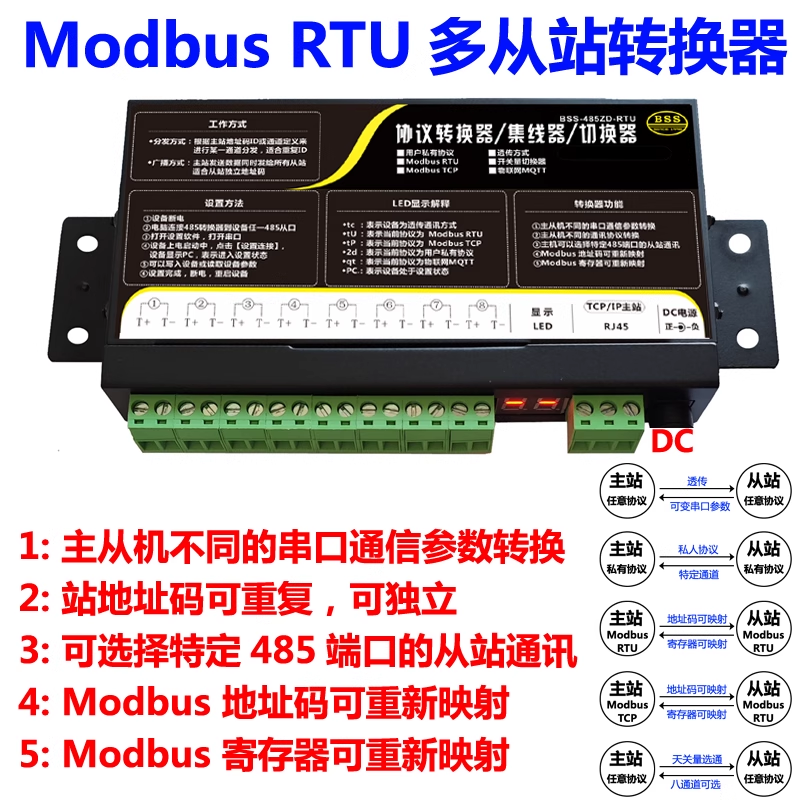
1、 Equipment Overview
This oneModbus RTUThe multi slave converter acts as a bridge between the master station and multiple slave stations“Intelligent intermediary”Role It not only realizes the conversion of communication parameters, but its core function is toModbusof Address codeAndRegisterFlexible remapping and unified management are carried out to integrate the chaotic slave network into a clear and orderly virtual device for the master station.Core values: Resolve address conflicts
- Perfectly solve multiple sub stations: Repetitive and unchangeable engineering challengesIDUnified register mapping.
- Map the dispersed register addresses of different slave stations to the familiar continuous address space of the master station.: Compatible with heterogeneous networks
- Allow the master and slave stations to use different serial communication parameters (such as baud rate, data bits, stop bits, etc.).: 2、 Core functions and pain points addressed
The device is accurately aimed
The four major pain points in multi slave communication are shown in Figure 2:Modbus RTUDuplicate sub station address code (
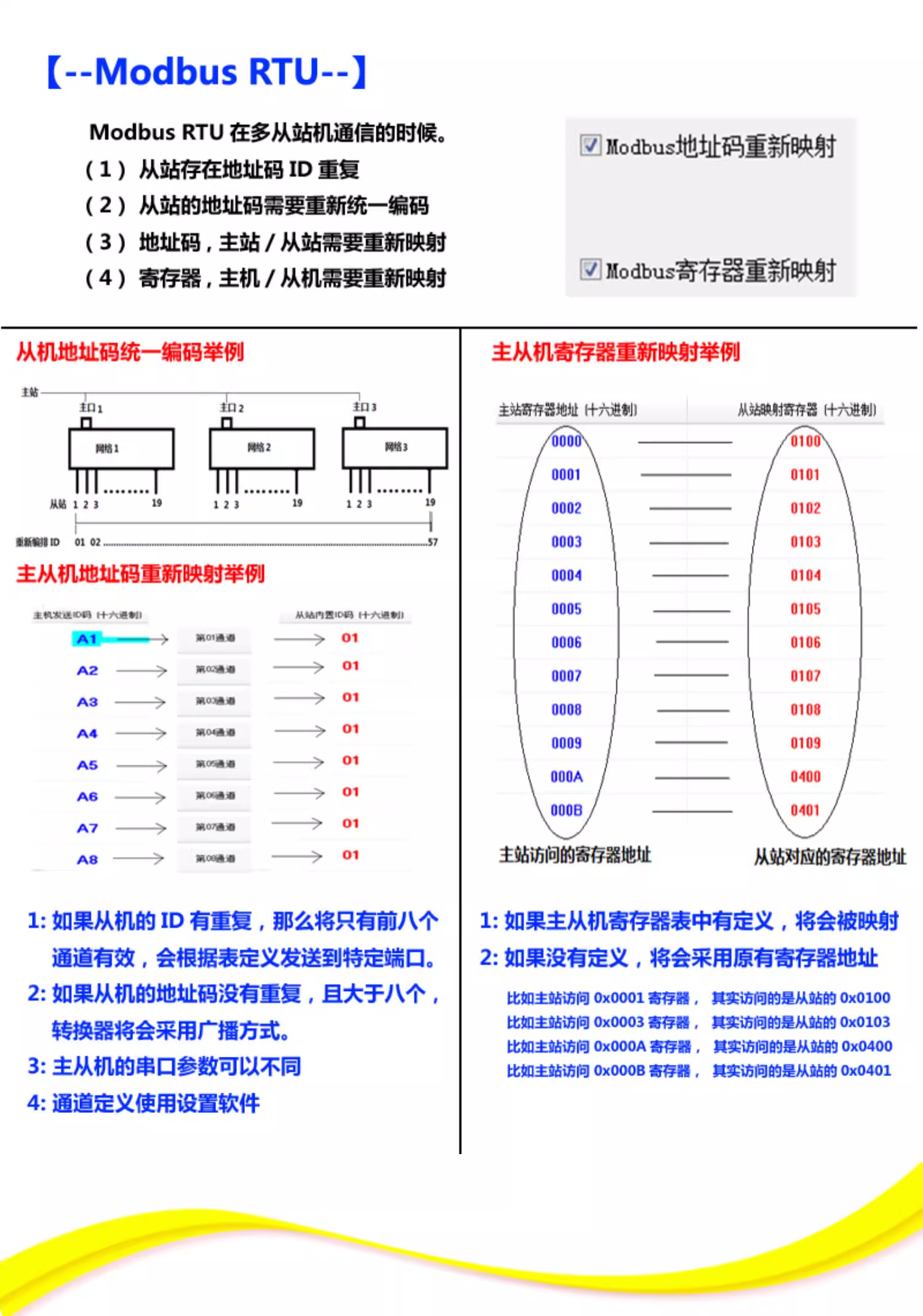
- )IDMultiple devices have the same factory settings(If all are 1).IDThe address code of the slave station needs to be re encoded uniformly
- I hope to allocate an orderly new system for all sub stationsThe address code needs to be remappedID.
- The master station needs to use a set of logical addresses to access physically dispersed slave stations.The register needs to be remapped
- The master station wishes to use a continuous set of register addresses to access discrete registers from different slave stations.3、 Working principle: two working modes and mapping mechanism
operation mode
1. The device provides two core working modes to adapt to different scenarios: Distribution method
- This is the most commonly used mode. The main station is sendingCarry one in the instructionModbusLogical address code“. The converter parses this logical address into a specific one based on the internal preset mapping table”Physical portsAnd the slave station on this portactualThus achieving precisionIDone-on-one“Communication.”Broadcasting method
- When the master command does not contain a specific address code (or uses a broadcast address), the device can simultaneously send the command to all slave stations on all ports, suitable for global operations.Unified address code and mapping mechanism
2. This is the most critical function of the device, and its principle is based on Example of Unified Encoding of Slave Address Code“Clear display of charts:”solve
- RepetitionIDWhen there are multiple slave stationsWhen repeated (e.g. all areID), the device passes throughID=1Port number“To distinguish them. The main station only requires access”Logical address“to1”to“Logical address8”The converter will automatically route the instructions to the corresponding ports 1 to 8ID=1From the station. In this way, even physicallyIDRepeatedly, logically speaking, they are already devices with unique addresses for the main station.
- Unified managementForIDA non repetitive but chaotic slave station can be reassigned a neat set of logical addresses (such as01-32) by the device, greatly simplifying the polling program of the master station.
3. Register remapping mechanism This feature further simplifies the access logic of the main station, such as:“Example of remapping master slave registers”As shown:
- Maintain a register mapping table within the device that defines the access of the main station“Virtual register address”With the station“Actual register address”The corresponding relationship.
- give an exampleThe main station believes that it is accessing
0x0001Register, but the converter found it in the mapping table0x0001Corresponding to the station0x0100Register. So, the converter will automatically rewrite the request from the master station to access the slave station0x0100Register. - Through this feature, the master station can operate on discrete register data from multiple slave stations like accessing a large slave station with continuous registers, without worrying about complex address relationships at the underlying level.
4、 Typical application scenarios
- Equipment reuse and system integrationMultiple suppliersModbusQuickly connect old devices (such as instruments and sensors) with different address plans to a new onePLCOrSCADAThe system does not require any modification of device parameters.
- Batch management of similar devicesIn building automation or energy management, smart meters and water meters installed in batches usually have the same factory address, making it easy to monitor each meter separately using this device.
- Simplification and standardization of protocolsProvide a clean and standardized set for upper level applicationsModbusAccessing interfaces, shielding the heterogeneity and complexity of underlying devices, and reducing the difficulty of software development and maintenance.
5、 Summary
This oneModbus RTUA multi slave converter is not just a simple protocol converter, but also a powerful oneCommunication integration and data routing gateway. It passed through“Logic”And with“Physics”The advanced design concept of separation is elegantly solved in the form of a hardware gatewayModbusThe most challenging problem in system integration. For system integration engineers, it is fast to build, stable, reliable, and easy to maintainModbusCommunication network“Artifact”It can significantly reduce the difficulty and implementation cost of the project.


Leave a Reply