With the rapid development of IoT technology, intelligent building control systems are gradually becoming a standard configuration in modern buildings. It can not only improve the energy efficiency of buildings, but also enhance the quality of life and comfort of users. In this context, distributed IO modules play a crucial role as the core component of intelligent building control systems. Today, I will introduce a device that can provide efficient solutions for intelligent building control - the M31 series distributed IO module.
1, Overview of M31 Series Distributed IO Modules
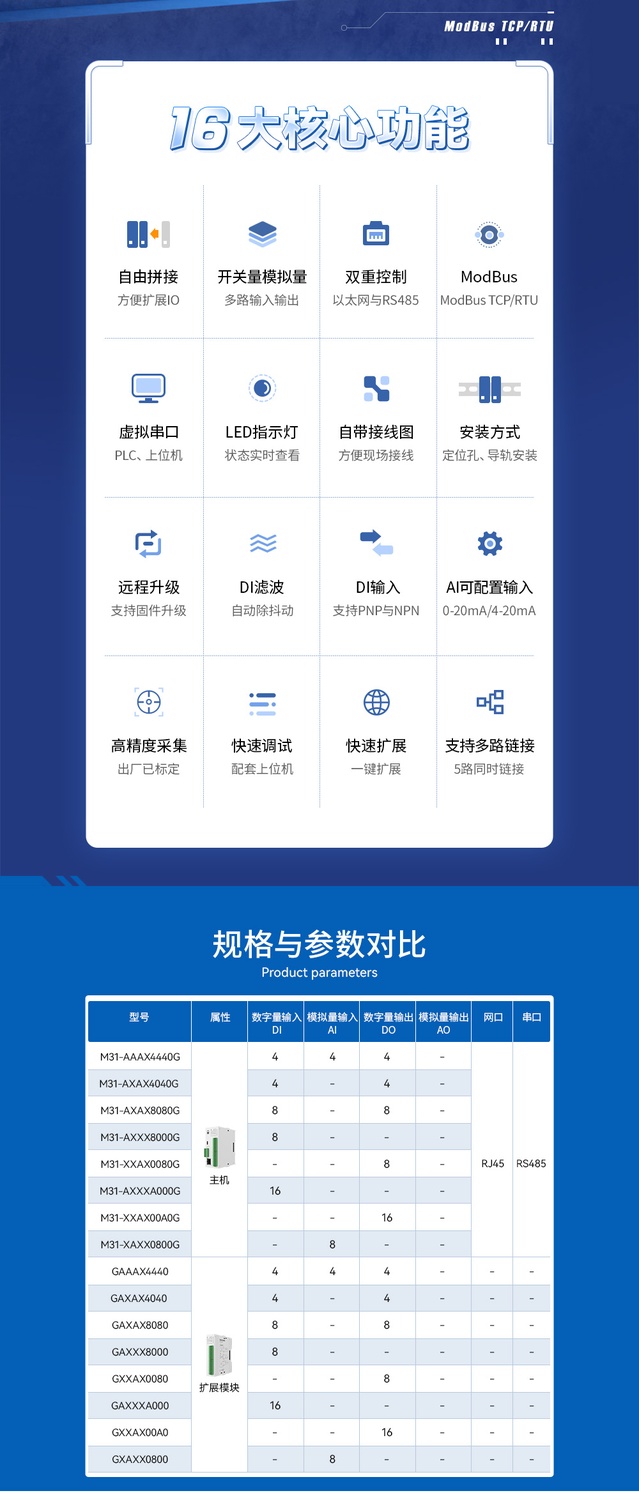
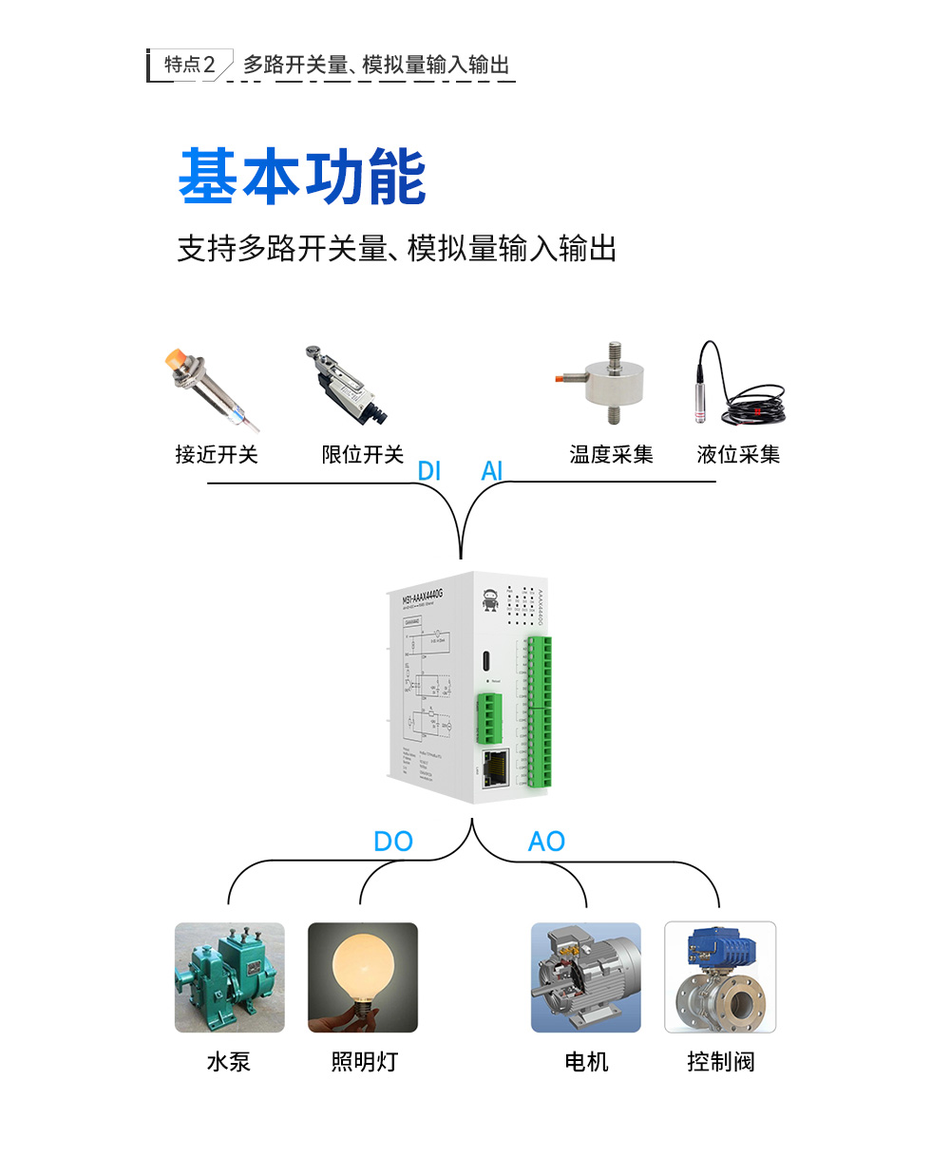
The M31 series distributed IO module is a host module developed by Chengdu Yibaite Electronic Technology Co., Ltd., which integrates digital output (DO), analog input (AI), and digital input (DI). The host model we use is M31-AAAX4440G, with 4 digital outputs (4DO), 4 analog inputs (4AI), and 4 digital inputs (4DI). Supports Modbus TCP and Modbus RTU protocols. Thanks to its flexible architecture design, the host can expand its functionality through expansion modules, greatly enhancing the flexibility and scalability of the system. Whether it is a large building or a small residential area, the M31 series can provide reliable support for building control systems of different scales.
2, Application scenarios of intelligent building control systems
In intelligent building control systems, distributed IO modules are mainly responsible for the collection, transmission, and command execution control of various sensor data. The following are several typical application scenarios of M31 series modules in intelligent building control:
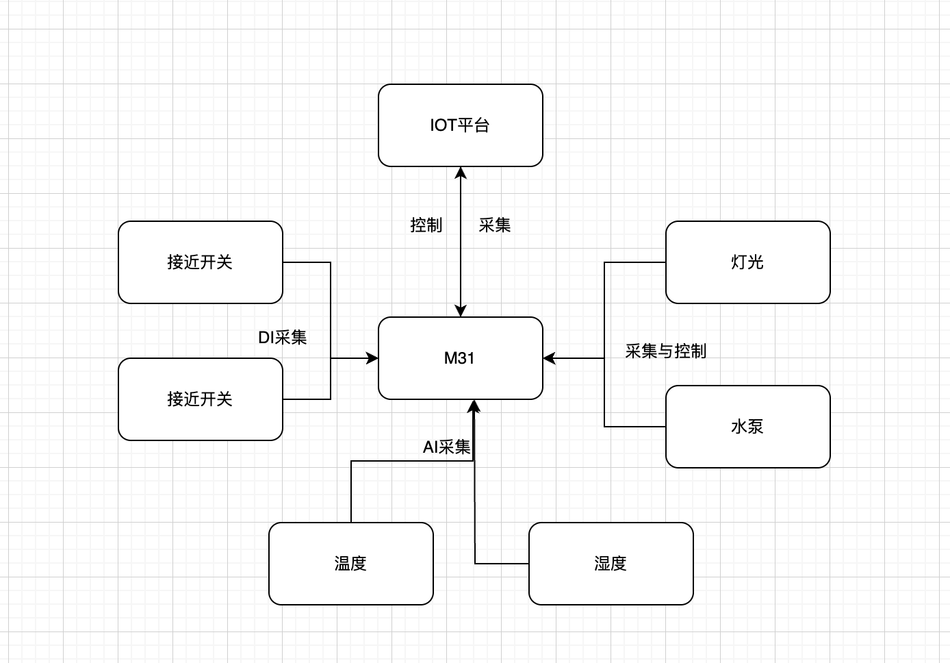
- Environmental monitoring and control: Through the 4AI module, the M31 series can collect real-time data on temperature, humidity, CO2 concentration, etc. in the environment, and transmit these data to the central control system. On this basis, the system can automatically adjust the operating status of air conditioning and ventilation equipment to ensure that the indoor environment is always in the best condition.
- Lighting Control: Intelligent lighting is an important component of modern buildings. Through the 4DI module, the M31 series can receive user light switch commands or infrared sensing signals, and control the turning on and off of lights through the 4DO module, achieving a perfect balance between energy saving and comfort.
- Security System: The M31 series module can also be used in building security systems to monitor the status of doors and windows, fire alarms, and other equipment in real time through connections with various alarm devices. Once an abnormal situation is detected, the system can immediately issue an alarm and activate the corresponding emergency plan.
III. Advantages of M31 Series Distributed IO Modules
Compared with traditional centralized control systems, M31 series distributed IO modules have the following significant advantages:
- Efficiency: M31 series modules adopt a distributed architecture, which can directly process input and output signals at the device level, reduce data transmission delay, and improve system response speed.
- Scalability: One M31 series host supports multiple expansion modules, allowing users to flexibly configure the system according to their actual needs, achieving seamless expansion from small to large systems.
- StabilityThe M31 series module supports Modbus TCP and Modbus RTU protocols, ensuring the stability and reliability of data transmission. Even in complex network environments, the system can ensure stable operation.
- usabilityThe installation and configuration of M31 series modules are very simple, and no professional technicians are needed to quickly get started. This is undoubtedly a huge advantage for users who want to quickly deploy intelligent building control systems.
Let's take a look at the detailed parameters of this device together
4, Equipment specifications and performance parameters
| Category | Name | parameter |
| power supply | Working Voltage | DC9~36V |
| Power indicator | PWR red LED indicator light | |
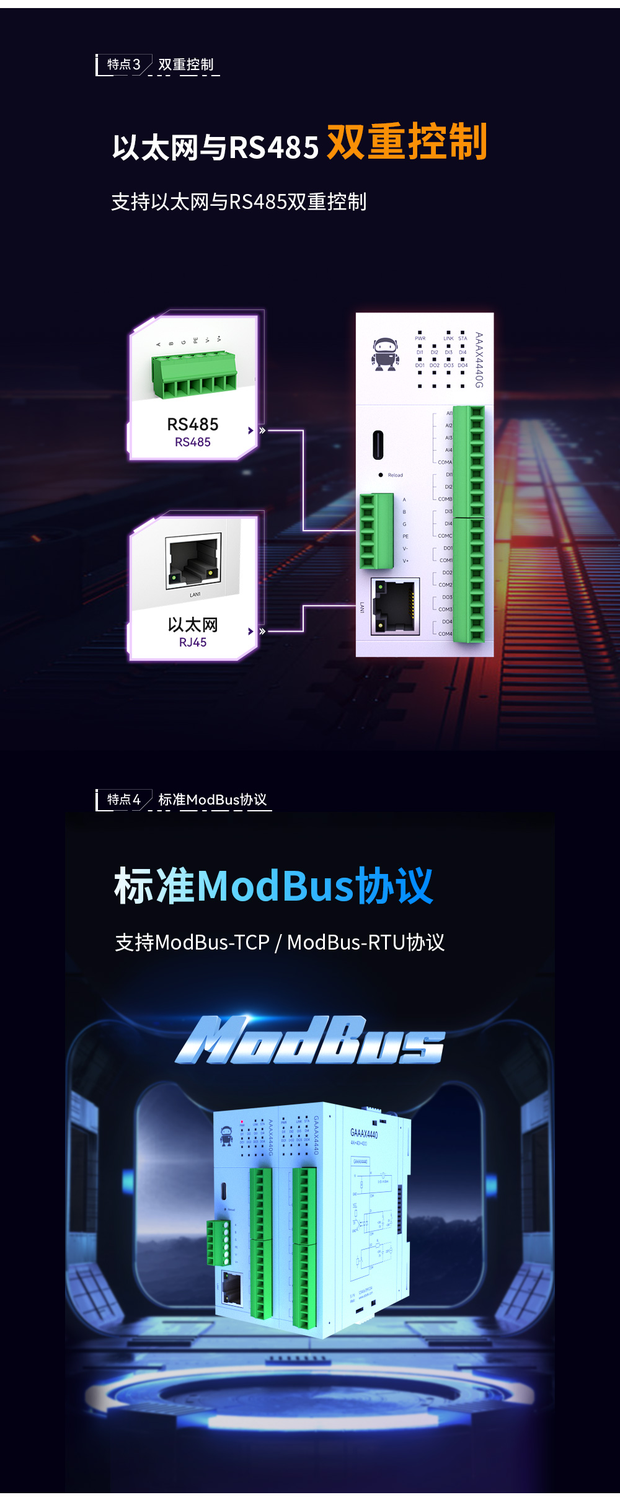
| Communication | communication interface | RJ45, RS485 |
| Baud rate | 9600bps (optional) | |
| Communication Protocol | Standard Modbus TCP and Modbus RTU protocols | |
| MODBUS | Device address | Can be modified through Modbus commands, upper computer, and hardware dialing |
| DI input | input type | NPN, PNP |
| input voltage | 12~24V | |
| sampling frequency | Maximum 2.5 Hz | |
| Input Indication | DI Green LED Indicator | |
| AI Input | Acquisition Characteristics | Single ended Input |
| Input Type | 0-20mA, 4-20mA | |
| AI Resolution | 3 ‰ | |
| Acquisition Frequency | Maximum 2.5 Hz | |
| Input Indication | None | |
| DO output | DO output type | A-type relay (normally open) |
| DO output mode | level output | |
| relay contact capacity | 5A 30VDC, 5A 250VAC (the same COM common terminal power | |
| maximum current support 8A) | ||
| output indication | DO green LED indicator light | |
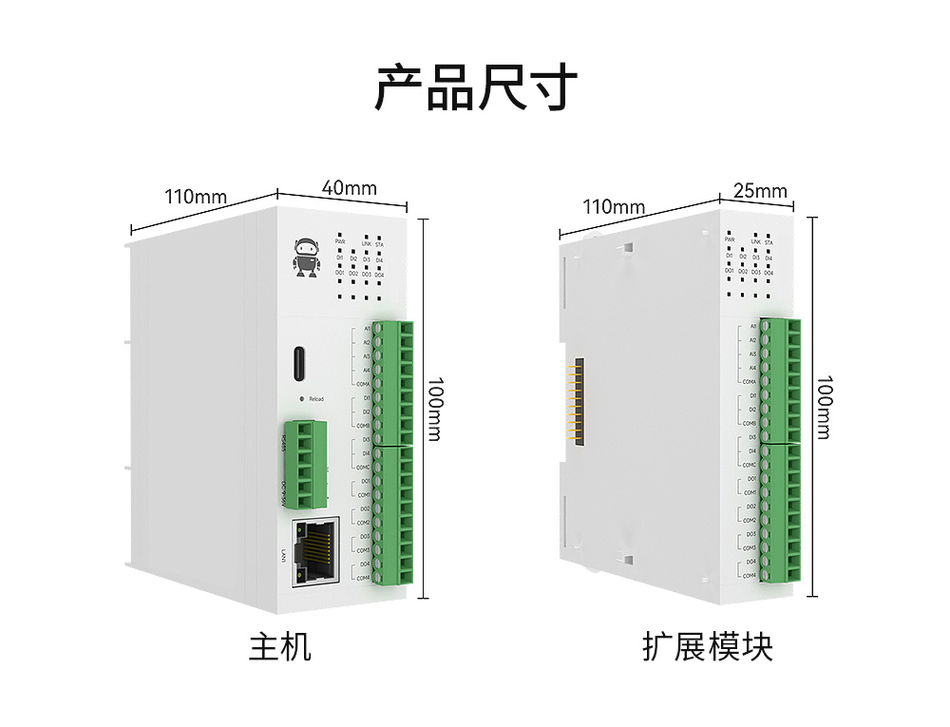
| Other | product dimensions | 110mm * 40mm * 100mm (length * width * height) |
| Working temperature and humidity | -40~+85 ℃, 5%~95% RH (no condensation) | |
| Storage temperature and humidity | -40~+105 ℃, 5%~95% RH (no condensation) | |
| Installation method | Installation of positioning holes and guide rails |
Default parameters of the device
| Category | Name | parameter |
| Basic Parameters | Modbus Address | 1 |
| Baud Rate | 9600bps (9 options available) | |
| Check Bit | None (default), Odd, Even | |
| Data Bit | 8 | |
| Stop Bit | 1 | |
| DI Filtering Parameters | 6 | |
| AI Filtering Parameters | 6 | |
| Network Parameters | Working Mode | TCP Server (up to 5 client access channels) |
| DHCP | Close | |
| Gateway Address | 192.168.3.1 | |
| Subnet Mask | 255.255.255.0 | |
| Local IP | 192.168.3.7 | |
| Local Port | 502 | |
| Target IP | 192.168.3.3 | |
| Target Port | 502 | |
| DNS Server | 114.114.114.114 | |
| Modbus TCP/RTU Protocol Conversion | Open | |
| Local MAC | Determined by chip (fixed) |

For more function introductions, please visit the official website.
V. Actual User Experience
Due to the fact that the device casing is not made of metal, it is relatively lightweight when held in hand. The following is a physical photo of the
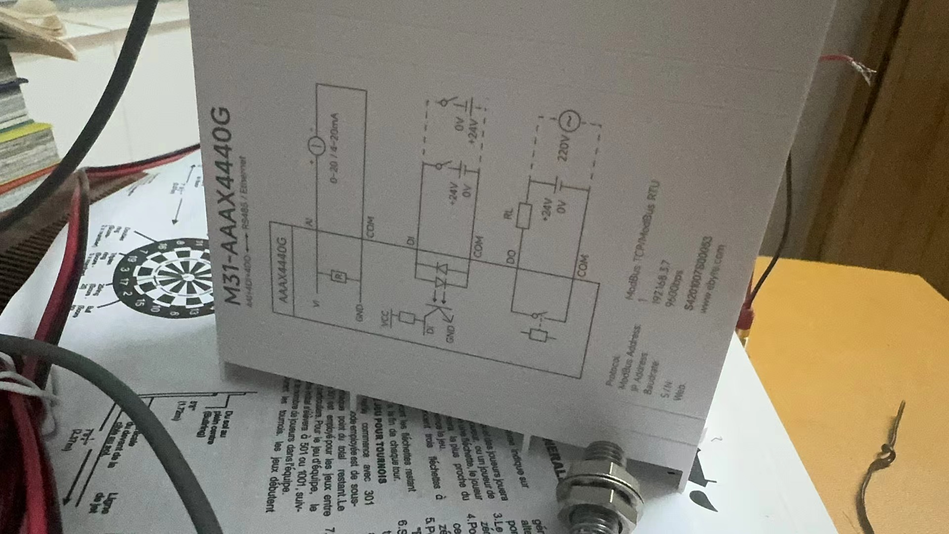
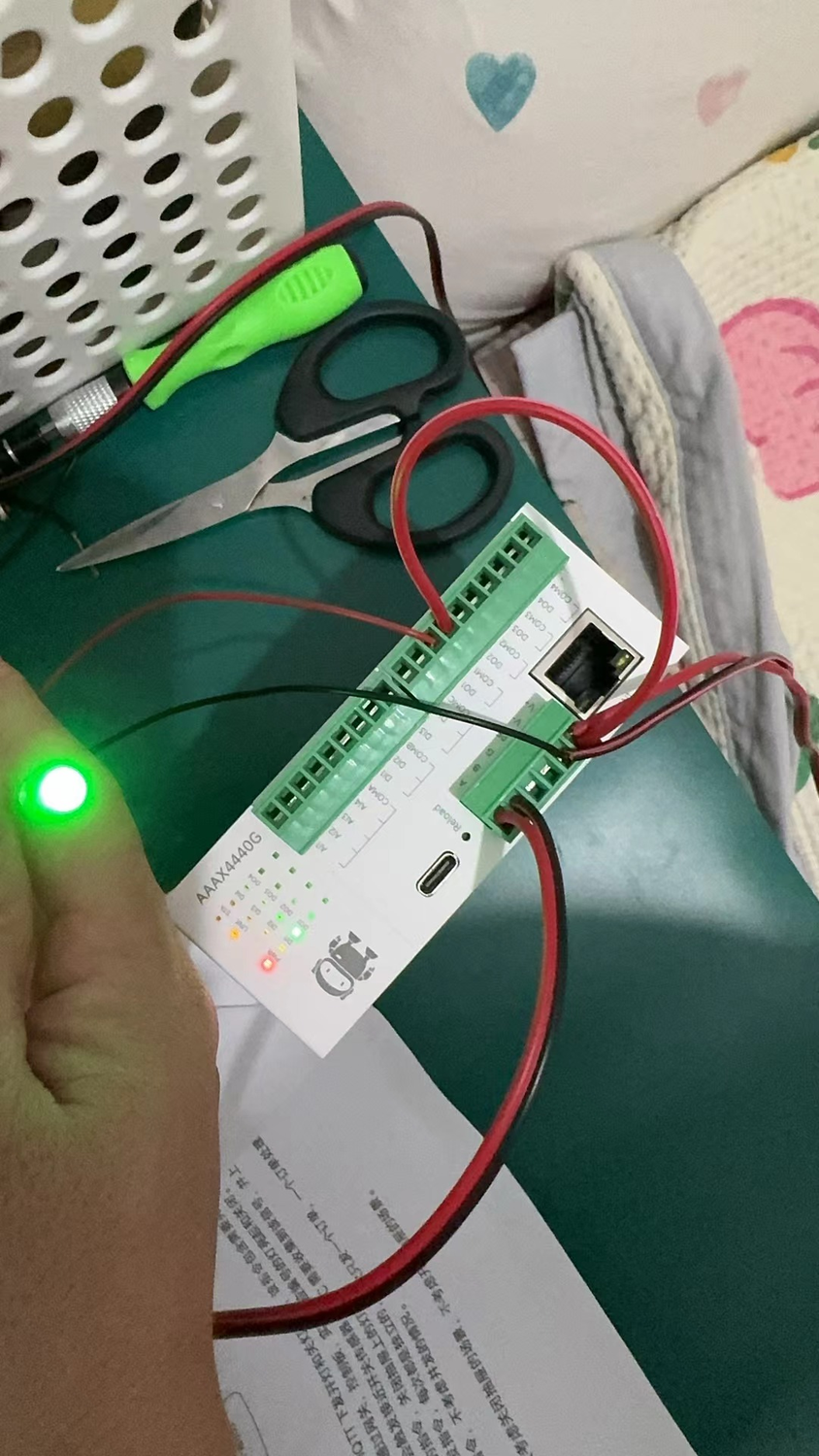
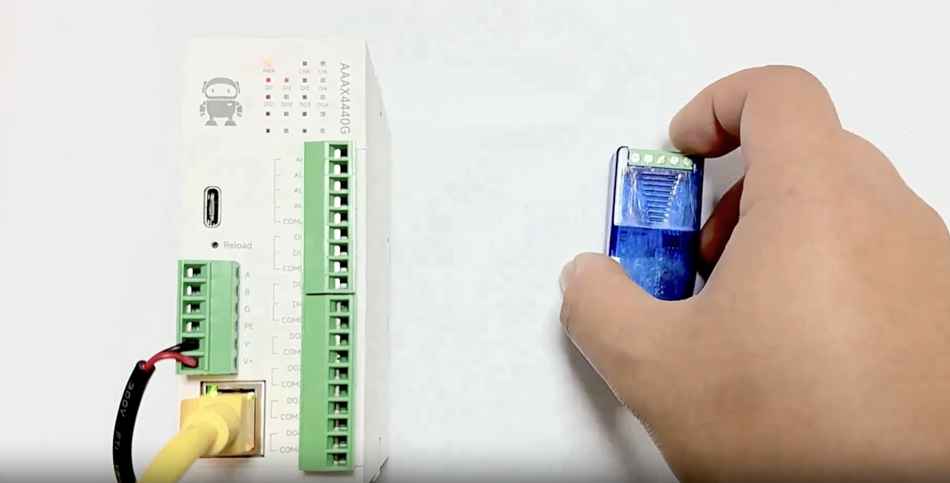
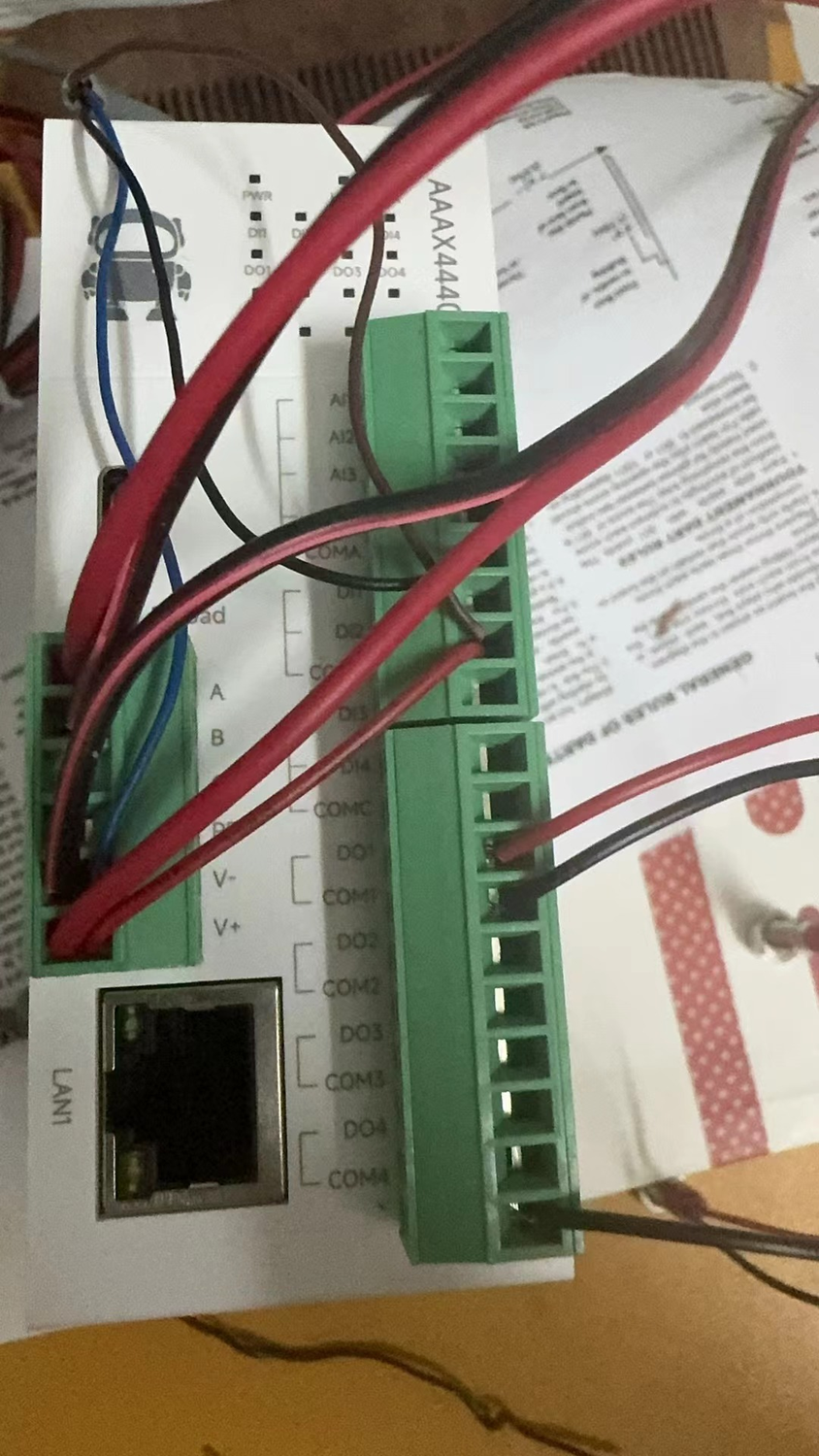
. When in use, I used a 12V power supply for power supply and then used a Modbus to USB device to transmit the signals collected by the device to the computer. A proximity switch and an LED light were connected to the device. Here is detailed wiring information
Device wiring
- 12V power supply positive pole connected to M31 positive pole
- 12V power supply negative pole connected to M31 negative pole
After connection, the Power indicator light will light up
- Modbus to USB device A+connected to M31 A+
- Modbus to USB device B+connected to M31 B+
- The other end of the Modbus to USB device is USB inserted into the computer
- The brown wire of the switch is connected to M31's DI1 COM1 interface
- The black wire of the switch is connected to M31's DI1 interface
- The blue wire of the switch is connected to the negative pole of the power supply
- The positive pole of the power supply is connected to DI1's COM1 interface
The indicator light DI1 will light up when the proximity switch is close to the metal, and the indicator light will turn on. Extinguish.
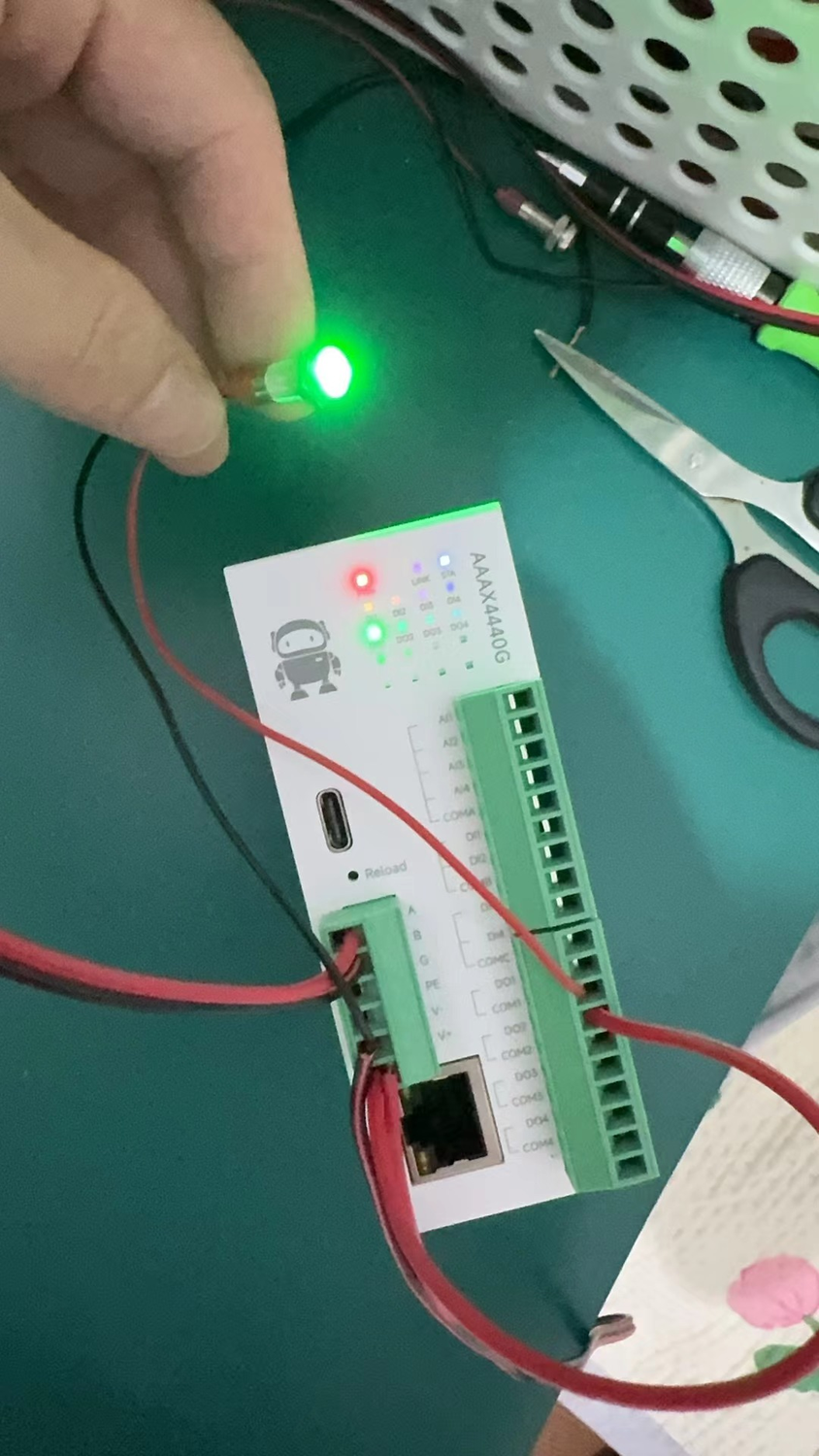
Wiring between LED light and DO interface
- Power supply positive terminal connected to COM interface of DO1
- LED light positive terminal connected to DO1
- Connect the negative pole of the LED light to the negative pole of the power supply
After wiring, you can use the upper computer or serial assistant to control the light.
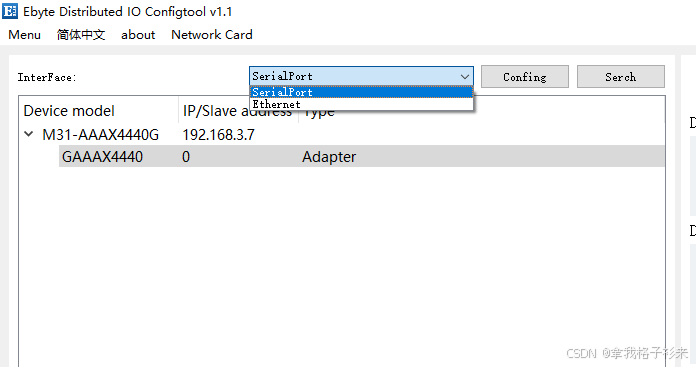
Use of upper computer
Download upper computer from official websitehttps://www.ebyte.com/product-view-news.html?id=2086
After installation, open it and configure it in the upper left corner to use a serial port to communicate with the device. The serial port address is 1 and the baud rate is 9600
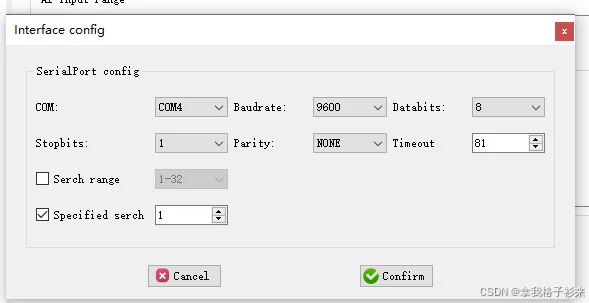
. After successful configuration, the device's signal will be collected at regular intervals, as shown below:
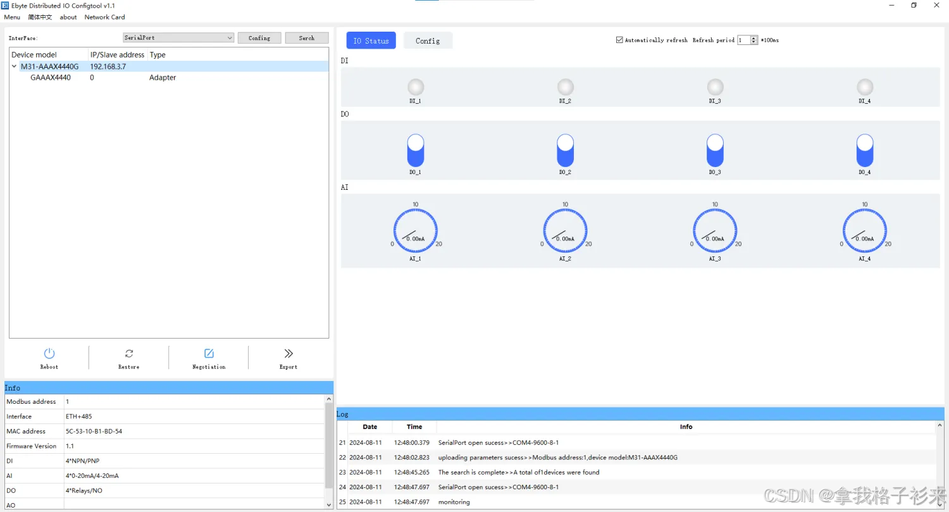
Click DO1 to turn off the LED light. When the proximity switch approaches or leaves the metal, the status change of DI1 can be seen on the page. Due to the lack of signal generators and analog devices at hand, AI interface equipment cannot be tested. Let me show you a case study done by someone else
When the proximity switch approaches or leaves the metal, the status change of DI1 can be seen on the page.
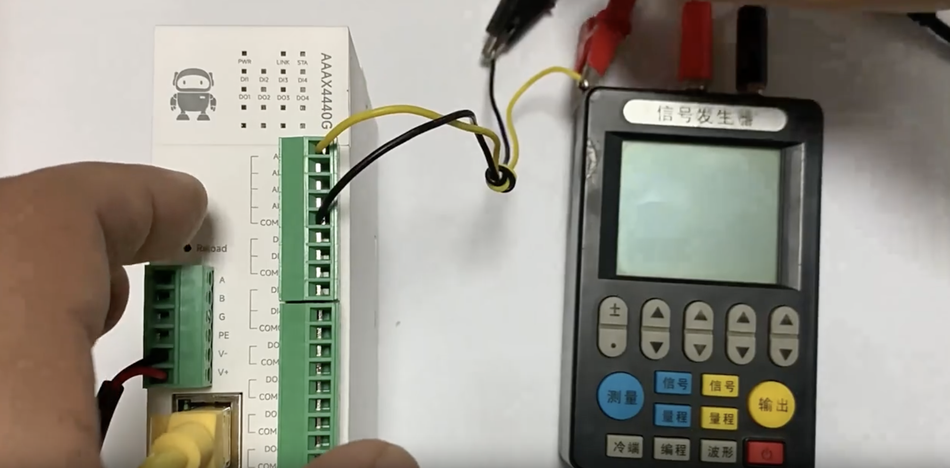
Due to the lack of signal generators and analog devices at hand, AI interface equipment cannot be tested. Let me show you some cases that others have done
VI. Summary
With the popularity of intelligent building control systems, the importance of distributed IO modules has become increasingly prominent. The M31 series distributed IO modules have become an ideal choice for intelligent building control systems due to their high efficiency, stability, ease of use, and scalability. Whether in new construction projects or old building renovations, the M31 series modules can help users achieve smarter and more energy-efficient building management. If you are looking for a product that can improve the performance of intelligent building control systems, then the M31 series distributed IO module is definitely your best choice.
Through the M31 series modules, intelligent building control is no longer a complex project, but a tangible reality. Let us witness the new era of intelligent building control systems together and experience the convenience and comfort brought by technology.
7. Introduction to Manufacturers and Benefits
Chengdu Yibaite Electronic Technology Co., Ltd., established in 2012 with an office area of over 4000 square meters, is a high-tech enterprise that integrates research and development, production, and sales, with a complete industrial chain, focusing on IoT communication applications. The products cover various commonly used IoT devices such as LoRa, WiFi, Bluetooth, ZigBee, 4G/5G/NB IoT, GBRS, CAN bus modules, etc. Our products are exported to over 50 countries and regions worldwide, with 12 years of technological accumulation and a billion level export trade volume.
"Caring Enterprise, Responsible Society" has always been Yibaite's vision to repay society. As a high-tech enterprise with a strong sense of social responsibility, Yibaite continuously provides sponsorship for various activities such as electronic competitions and club activities for partner universities, as well as internship and employment opportunities for current students.
And their official account will send free benefits at the end of each month. If they follow the "Yibaite Internet of Things Application Experts" official account to comment on welfare activity articles, they will have the opportunity to obtain a variety of welfare products for free, including development boards, modules, industrial routers/gateways, data radio stations, remote control switches, antenna power supplies and so on. There is still a 0 yuan sample activity waiting for you to participate.


Leave a Reply