
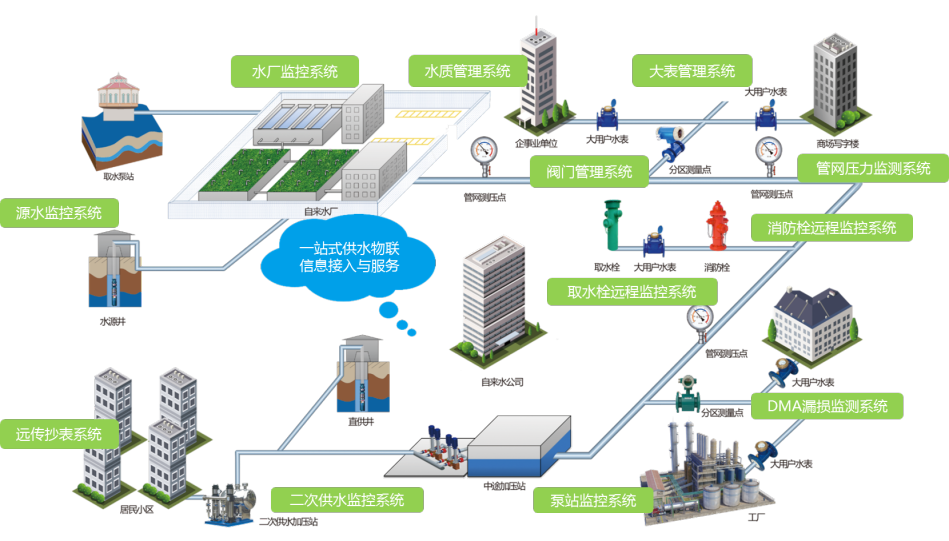
Equipment status monitoring is crucial in smart water scenarios, covering real-time monitoring and evaluation of water pumps, valve facilities, pump station electrical equipment, etc., aiming to ensure reliable operation of equipment, prevent failures, and improve overall reliability. The following is a more detailed discussion on electricity monitoring, noise monitoring, and related technologies in this field:
1. Electricity consumption and related monitoring
Content
- Real time monitoring and analysis:The power monitoring system realizes real-time monitoring of the power consumption of various devices and provides data analysis and report generation functions.
- Energy consumption analysis and optimization:By analyzing the energy consumption of different time periods and devices, the system can identify high energy consuming devices and time periods, and then optimize and adjust them.
- Abnormal detection and warning:The power monitoring system can timely detect abnormal situations such as equipment failures and circuit problems, and take maintenance measures through the warning system to avoid production interruptions and energy waste.
- Cost Management and Conservation:Evaluate the energy efficiency level of equipment, optimize power consumption plans, reduce energy costs, and enhance enterprise competitiveness.
Principle:
- Necessity:Industry standards require electricity monitoring for electrical equipment of 55KW and above.
- Optimization Management:Through real-time monitoring and analysis, enterprises can manage and optimize energy consumption.
Technology:
- Electricity Monitoring System:Utilizing multifunctional electricity meters for monitoring, achieving digitization, informatization, and networking.
- Real time report generation:The system can generate real-time electricity consumption reports to help enterprises better understand their electricity usage situation.
2. Noise monitoring
Content
- Sound and visual leak detection:Through sensitive sensors and algorithms, noise monitoring equipment can detect the sound and visual signs of water leakage in the pipeline network.
- Storage and analysis:Noise monitoring equipment can store noise level and frequency data from different locations for subsequent analysis and comparison.
- Real time measurement:Noise monitoring equipment enables real-time measurement and real-time acquisition of noise data in the pipeline network, which helps to detect leakage problems in a timely manner.
principle:
- Multi functional monitoring:Noise monitoring equipment serves for pipeline leakage monitoring, including sound and visual detection.
- Real time performance:Real time measurement helps to quickly respond to leakage problems in the pipeline network.
Technology:
- Sensor technology:Specialized sensors are used to monitor vibration and noise signals, helping to monitor the operating status and abnormal conditions of equipment or pipelines in real time.
- Pipeline Noise Recorder:By detecting the vibration of the pipeline wall, monitoring whether the pipeline leaks, and helping to record and analyze noise data.
3. Monitoring product technology
Content
- Electricity monitoring technology:Use a multifunctional electric meter for monitoring.
- Vibration and noise monitoring technology:uses specialized sensors for monitoring, installed on equipment or pipelines. Principle: Precise Monitoring: Precise monitoring of vibration and noise is achieved through specialized sensors.
principle:
- Accurate monitoring:Accurate monitoring of vibration and noise is achieved through specialized sensors.
Technology:
- Electricity monitoring technology:Utilize multifunctional electricity meters to monitor and analyze equipment electricity consumption.
- Vibration and noise monitoring technology:uses specialized sensors, pipeline noise recorders, and other equipment to help achieve comprehensive monitoring of vibration and noise. Through these advanced monitoring technologies, the smart water system can achieve comprehensive monitoring of equipment status, ensure efficient operation of water equipment, prevent potential failures, and provide timely response and handling for abnormal situations. This not only improves the stability and reliability of the water system, but also helps to reduce maintenance costs and improve overall efficiency.
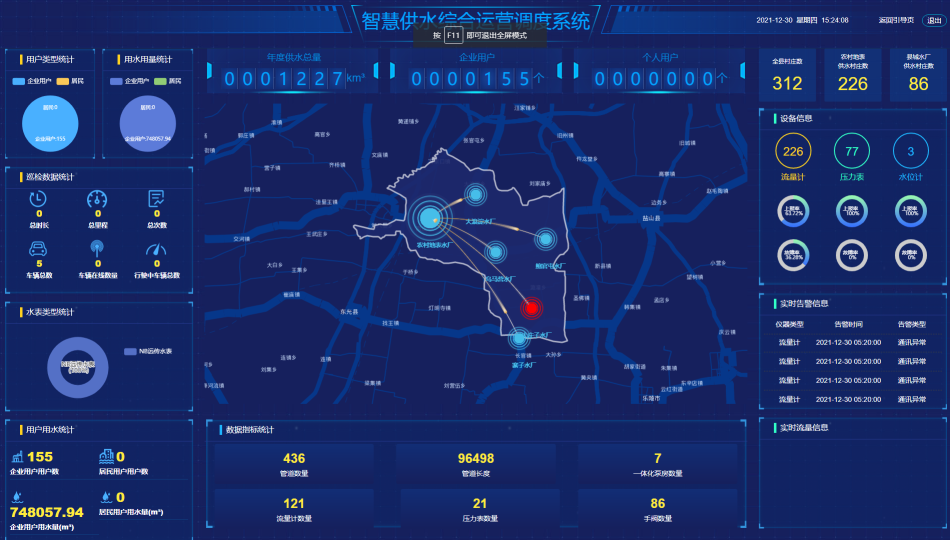
Through these advanced monitoring technologies, smart water systems can achieve comprehensive monitoring of equipment status, ensure efficient operation of water equipment, prevent potential failures, and provide timely response and handling for abnormal situations. This not only improves the stability and reliability of the water system, but also helps to reduce maintenance costs and improve overall efficiency.


Leave a Reply