
In the era of the Internet of Things and Industry 4.0, efficient and stable communication with devices has become a core requirement. MThings, a product of Mole Messenger, provides a flexible and highly configurable solution for this purpose, especially in non-standard Modbus scenarios.
The following is a detailed analysis of its data configuration method:
1. Simple Standard Modbus Configuration
For the standard Modbus data protocol, MThings makes configuration exceptionally simple. Most parameters can remain in their default state, and users only need to adjust a small amount of information such as register addresses and quantities.
2. Detailed Explanation of Configuration Parameters
To ensure that users can fully utilize MThings' configuration capabilities, we will introduce each parameter and its function in detail:
- ID and Value: Both are non-editable. The ID is automatically assigned by the software in sequence, while the value is displayed in the operation state by double-clicking to trigger a single read operation.
- Name and Unit: The name is an identifier for the data and cannot be left blank. The unit is the measurement standard for the data, such as "meter" or "volt".
- Command and Write: These two items are related to the write operation of data. The command field allows users to enter write command data, while the write field triggers the action of issuing a write command.
- Scope and Block: Scope refers to the effective range of data, primarily used for assisting debugging, while Block denotes the type of data block related to the Modbus standard protocol.
- Address and Quantity: These two items determine the location and size of the data. Address specifies the starting position of the data, while Quantity determines the number of addresses occupied by the data.
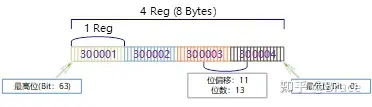
- Bit Offset and Bit Count: These two items are used to refine the usage of register data. For example, if certain data only uses certain bits in a register, the bit offset and bit count can determine the position and quantity of these bits.
- Factor and Offset: These two items are used for local conversion of register data, allowing linear operations on received data.
- Polling and Batch Write: These two items determine the read and write behavior of data in simulated host mode. When checked, the data will participate in batch read or write operations.
- Curve and Storage: These two items involve long-term recording and monitoring of data. When Curve is checked, the data will be displayed in real-time on the curve monitoring page. When Storage is checked, the data will be saved periodically.
- Transmission type and presentation type: These two items determine the representation of data in the Modbus protocol and the presentation method in the software interface.
- Decimal digits, byte order, and word order: These configurations are used to precisely represent the format and order of data.
- Interval time, timeout, and retry count: These three items are closely related to the transmission speed and reliability of data. Interval time determines the waiting time between two requests, timeout is the maximum time to wait for a response, and retry count determines whether a request needs to be retried after timeout.
3. Time parameters of simulated master and simulated slave in MThings
In MThings, the time parameters of the simulated master and simulated slave are different. For example, in simulated master mode, interval time takes effect after receiving a response, while in simulated slave mode, it takes effect between the request and the response.
Figure Schematic diagram of timeout and interval time of simulated master
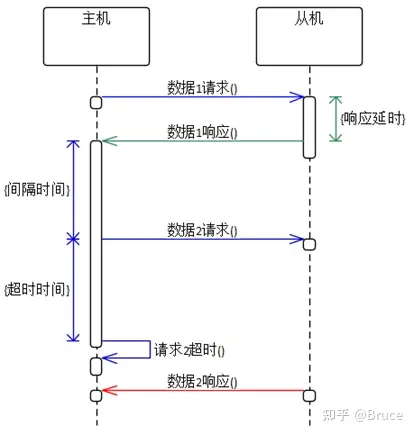
Figure Schematic diagram of interval time of simulated slave
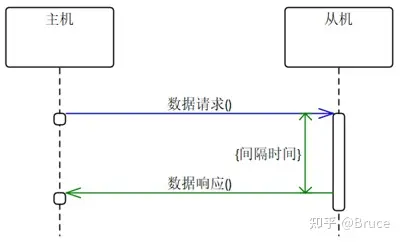
Figure Example of bit offset & bit number
4. Conclusion
MThings, the Mole Messenger, provides a flexible and efficient data configuration method for Modbus scenarios, whether standard or non-standard. Through a deep understanding of each configuration parameter, users can better utilize MThings to achieve efficient and stable communication with devices.


Leave a Reply