

The serial server is a communication interface protocol converter that performs data conversion between RS-232/RS-485/RS-422 terminals and TCP/IP. It provides bidirectional transparent transmission of data between RS-232 terminals and TCP/IP networks, offering serial-to-TCP/IP functionality and solutions for converting RS-232/RS-485/RS-422 to TCP/IP. It allows RS-232/RS-485/RS-422 serial devices to connect to the network immediately.
The serial communication server, also known as the terminal server, essentially serves as a serial server. It enables serial devices to instantly gain networking capabilities, allowing for centralized management of scattered serial devices and hosts through a network, making it simple and convenient. It supports TCP, UDP, ARP, ICMP, HTTP, DNS, and DHCP protocols, as well as Windows Native COM and automatic network interruption recovery connection functions.
Serial servers are widely used in scenarios requiring sensor data collection and remote control. A significant number of users on the MODBUS IoT platform utilize serial servers for device access. Typically, serial servers are connected to Modbus slave devices via RS485/232/422 ports, such as switch relays, temperature and humidity sensors, various gas sensors, electricity meters, water meters, PLCs, motor controllers, etc. The relationship between the serial server connected to the MODBUS IoT platform and sub-devices is usually as follows:
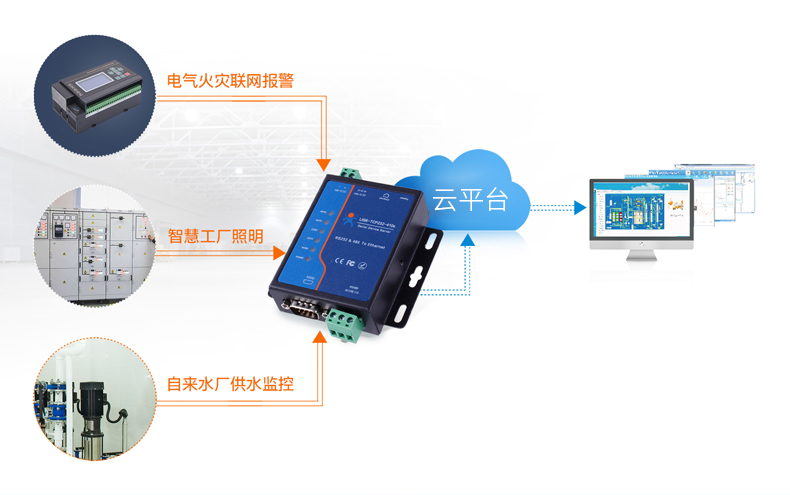
This time, we introduce the serial server USR-TCP232-410S from Youren Technology Company. It supports access to the MODBUS IoT platform via TCP and UDP, and has demonstrated exceptional stability in many users' IoT projects.
Taking this USR-TCP232-410S as an example, we will introduce the steps for connecting to the MODBUS IoT platform. Other serial server products from Zhuolan Company can also be connected in the same way.

Preparations on the MODBUS IoT platform
In practice, we typically use the serial server as a transparent gateway to forward messages between Modbus slave devices and the cloud platform.
- Create a project (Project Management → New Project).
- Create a device (Device Management → Device Information → Add New Device)
- Fill in the device name, randomly generate or manually enter the device number, select ModBus RTU in the device protocol, locate the latitude and longitude of the device, and save it. (Copy and save the device number for future use.)
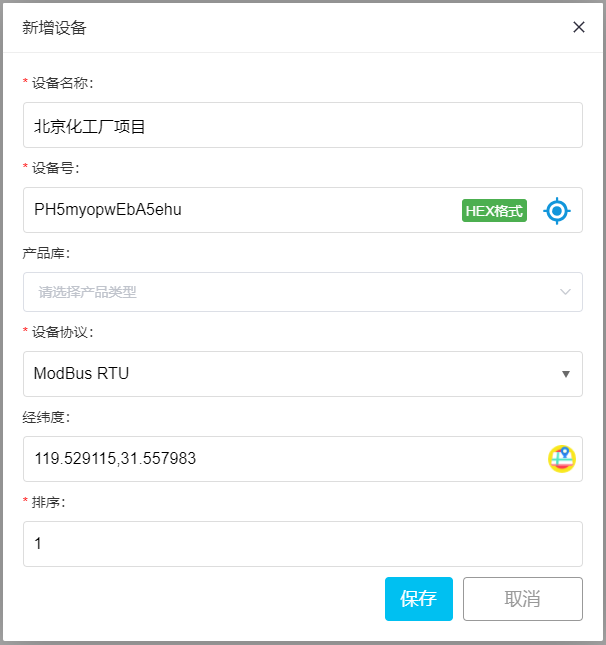
For specific steps, please refer to:Introduction to Modbus, which can usually be completed in a few minutes.
For configuring the USR-TCP232-410S serial server,
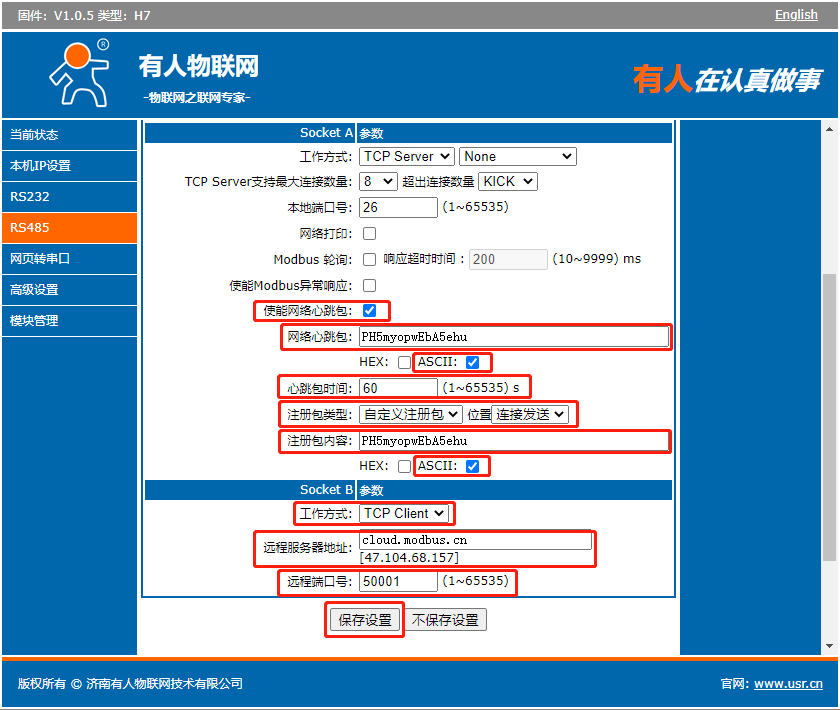
open the ZLAN Virtual Serial & Device Manager configuration software, connect to the Ethernet port or serial port, and only need to fill in the following sections:
Step 1:
- Operating Mode: TCP Server
- Remote Server Address: cloud.modbus.cn (recommended)
- 47.104.68.157 (alternate)
- www.wulianwang.net.cn (alternate)
- Remote Port Number: 50001
- Save Settings (Save)
as shown below:
Connect RS485 Modbus Relay
Here, we take the 8-channel relay as an example:
Click on "Property Settings"
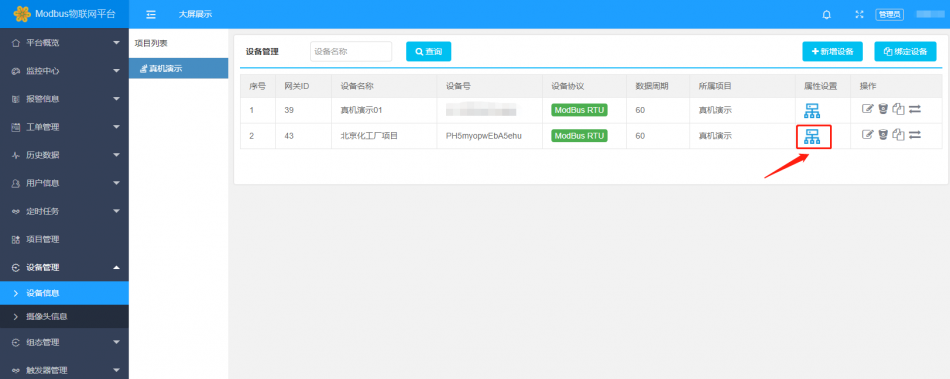
Click on "Add Sensor" to add 1-channel relay control
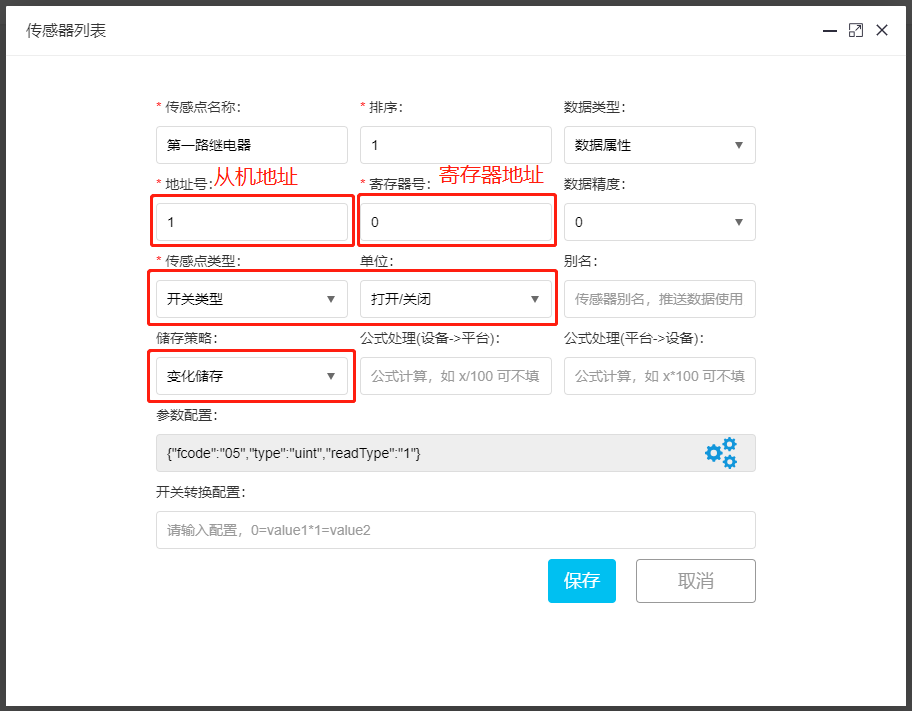
Parameter Configuration:
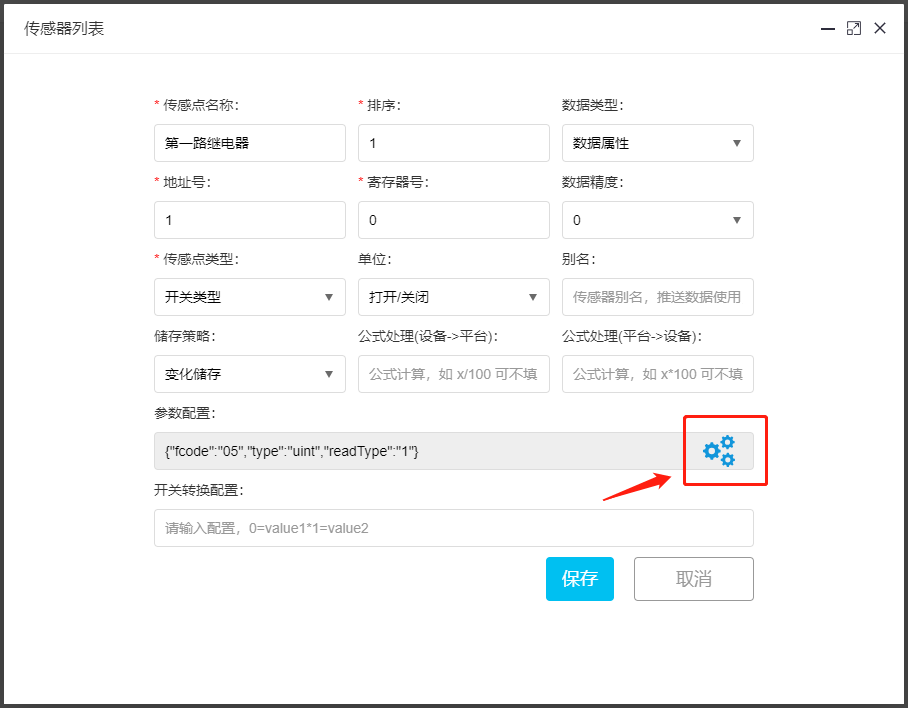
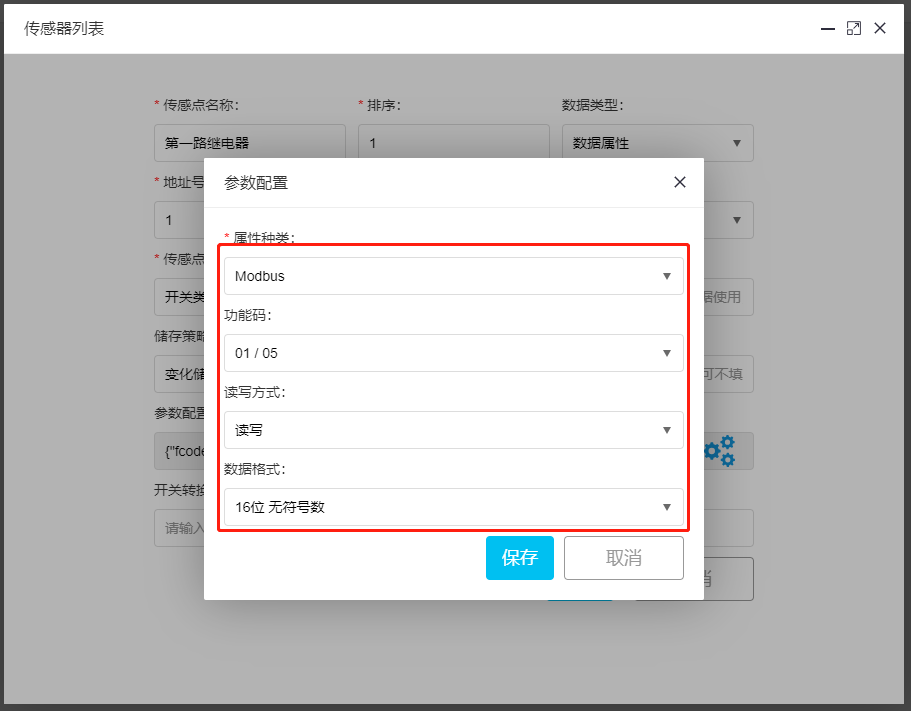
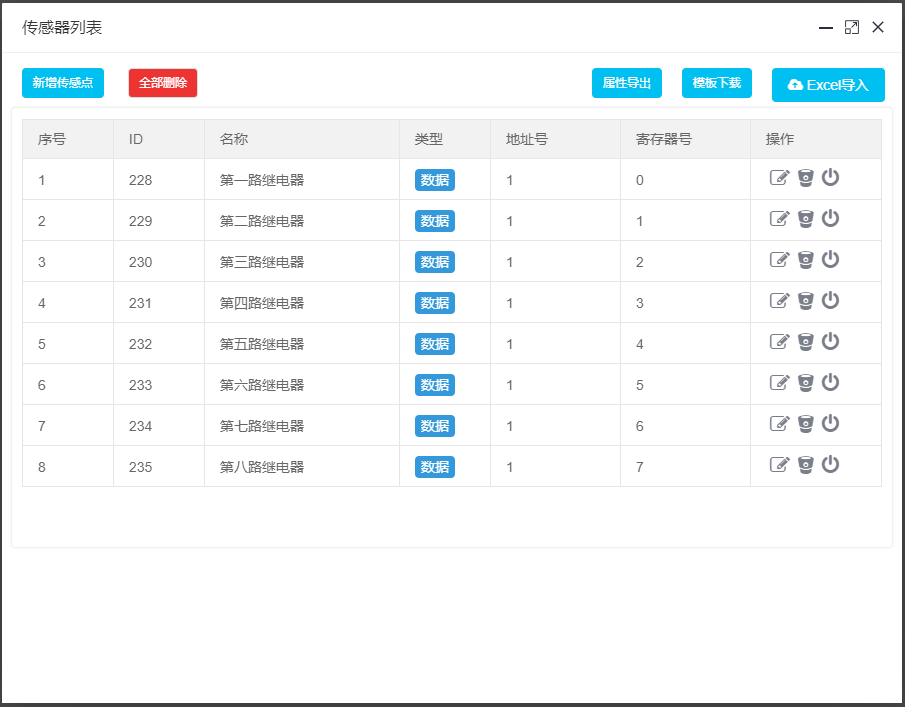
Add 8-channel relays in sequence, only needing to modify the register number.
After adding all 8-channel relays, the interface is as follows:
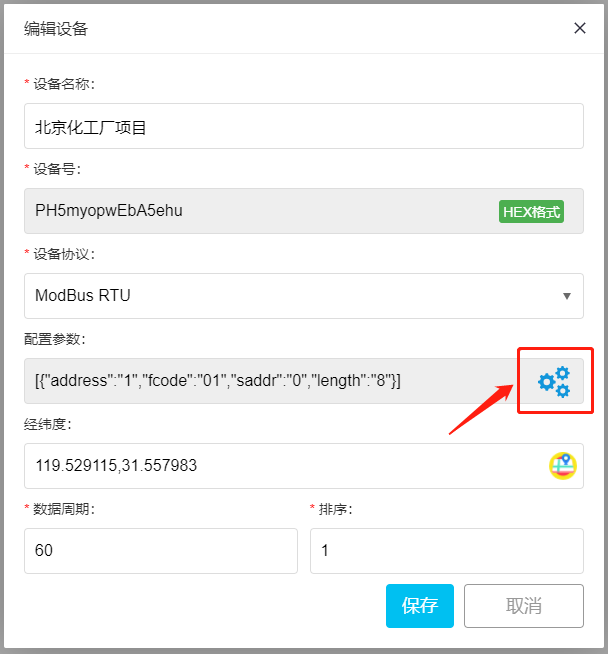
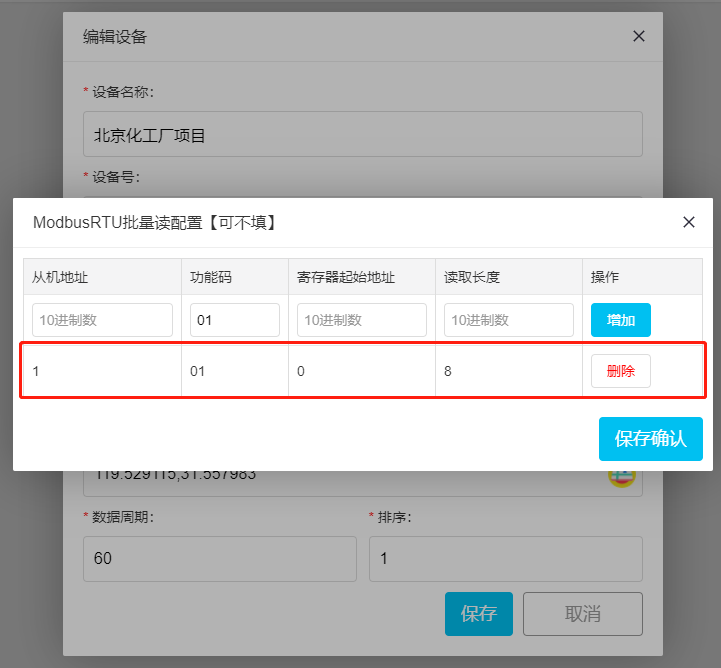
Modbus Batch Read Configuration
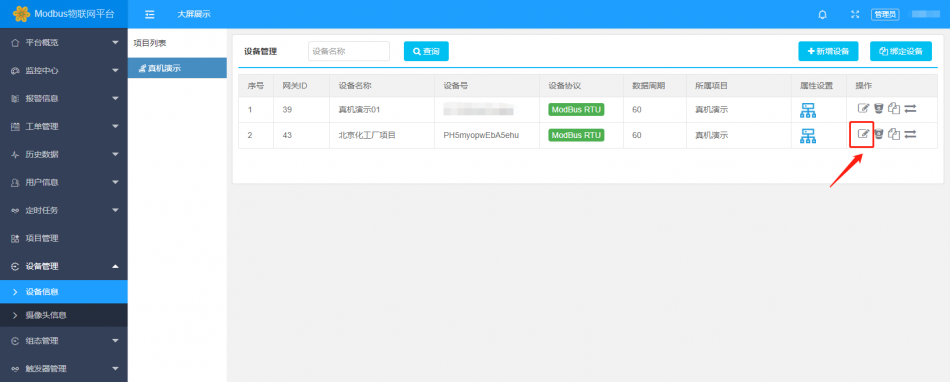
Click on "Configuration Parameters"
In this article, we have introduced the detailed steps for connecting the USR-TCP232-410S serial device server from Renren Technology to the MODBUS IoT platform through TCP transparent transmission, uploading the 8-channel relay module to the cloud platform, and generating customized dashboards and apps. These steps are also applicable to other manufacturers' serial device server products that support TCP transparent transmission.


Leave a Reply