Summary
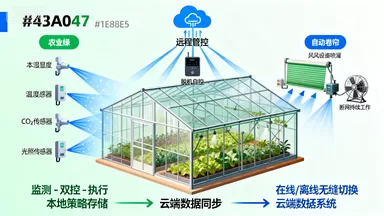
This article provides an in-depth introduction to an intelligent agricultural automation system based on Internet of Things technology. The system is designed for scenarios such as greenhouses and breeding facilities, and uses wireless communication technology to achieve remote monitoring of environmental parameters and intelligent control of equipment. The system has offline self-control capability, which can automatically operate according to preset strategies even in the event of network disconnection, effectively solving the problem of labor shortage in agriculture and promoting the transformation of traditional agriculture into a modern industry with scale and intensification.
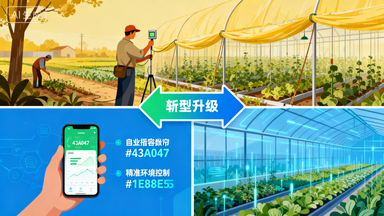
1、 The demand for modern agricultural transformation
Traditional agriculture relies on manual experience and on-site operations, facing challengesThe labor force is becoming increasingly scarce, Production efficiency is limited, Weak ability to cope with natural risksWaiting for the challenge. The intelligent agricultural self-control system uses Internet of Things technology to transform agricultural production from "relying on the weather for food" to "precise and controllable", realizing the production processHighly scalable, intensive, and industrializedSignificantly improve production efficiency and risk response capabilities, transforming traditional agriculture into an efficient modern industry.
2、 System communication architecture
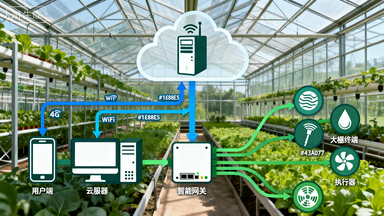
The system adoptsCloud network end three-layer architectureRealize seamless connection:
- Cloud platformAgricultural IoT cloud platform, supporting4G/5GFull network, Ethernet/WiFiAccess, lifetime free use
- Gateway layerIntelligent gateway realizes protocol conversion and data aggregation
- Terminal layerVarious sensors (temperature and humidity, light intensity, soil moisture, etc.) and execution equipment (fans, roller blinds, water valves, water pumps)CO₂Farmers use their mobile phones
Or computer software can be usedAPPUnlimited distance remote controlThe data is refreshed every minute to ensure real-time monitoring.3、 Core functional characteristics
Comprehensive environmental monitoring
1. Real time collection
Air temperature and humidity, soil temperature and humidity, light intensityConcentration, voltage, current, wind speed, wind directionCO₂Record the key parameters and data every minute to form a complete environmental database.Remote device control
2. Anytime, anywhere through mobile phones or computers
Manual controlEquipment such as fans, roller blinds, water valves, and water pumps can respond to environmental changes in real-time.Intelligent offline self-control
3. The biggest highlight of the system is:
Ability to operate autonomously when disconnected from the internet. Farmers can preset production processes and control strategies, and the equipment automatically executes according to the set logic (timing, feedback, circulation, etc.), without being affected by network conditions. For example:Timed mode
- Every dayAutomatic ventilation8:00, 12:00, 16:00Analog triggering
- : Temperature exceedsAutomatically open the roller shutter, below40℃Automatic shutdown25℃4、 Intelligent working mode
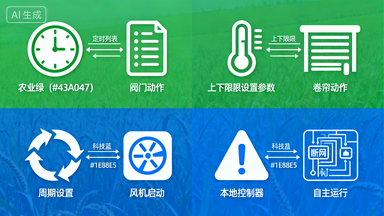
The system supports multiple flexible combinations of control strategies:
Timed control mode
Multiple fixed time points can be set each day to perform specific operations, such as timed irrigation and timed ventilation, suitable for production scenarios with strong regularity.Analog trigger mode
Automatically triggered based on environmental parameter thresholds, such as opening the fan when the temperature exceeds the limit or starting the water valve when the humidity is insufficient, to achieve precise environmental regulation.Loop control mode
Repeat the operation according to the set cycle, suitable for scenarios that require intermittent control.Offline self-control mode
All strategies are pre downloaded to the local controller and run completely autonomously after network disconnection. Data is automatically transmitted after network connection.5、 Advantages of automated operation

The system has been implemented.
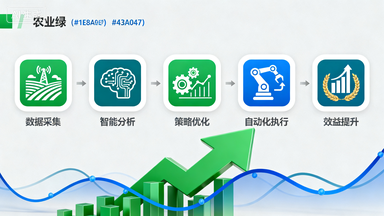
The system has been implemented.Automated management of the entire process:
- Warning responseWhen the environmental parameters are abnormal, the system automatically pushes an alarm through the mobile phone, making it easier for farmers to handle emergencies in a timely manner
- Strategy optimizationBased on historical data curve analysis, farmers can continuously optimize their control strategies and improve their production technology level
- Data accumulationLong term data storage provides a basis for agricultural big data analysis and modular large-scale production
- Energy saving and efficientAccurate control to avoid resource waste and reduce production costs
6、 Typical application scenarios
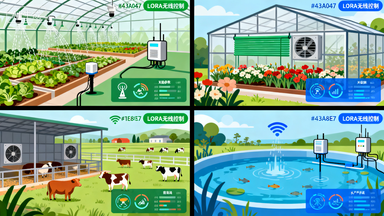
The system is widely applicable to various agricultural production scenarios:
plantingVegetable greenhouses, flower cultivation, and medicinal herb cultivation require precise environmental control
Aquaculture industryRegulating the environment of livestock and poultry houses to ensure the healthy growth of animals
Animal HusbandryAutomated management of drinking water and ventilation systems in pastures
AquacultureMonitoring of water quality parameters and control of oxygenation equipment
Each scene can be passed throughModular configurationQuick deployment without the need for complex wiring.
7、 Software functional platform
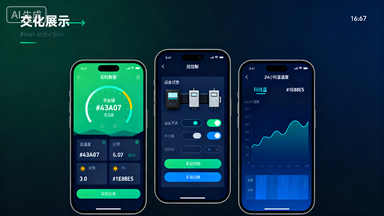
Provide supporting software platformLifetime freeCore functions:
Data visualizationReal time display of environmental parameter curves, support minute level data queries, and traceable analysis of historical data
Multi terminal collaboration: ProvidePCVersion software, AndroidAPP, iOS APPReal time data synchronization and unified operation interface
Intelligent alarmSupport custom alarm thresholds through WeChat, SMS, etcAPPMulti channel push of messages
Remote configurationAll control strategies can be remotely set, take effect in real-time, and refresh status synchronously
Data export: SupportExcelExport historical data in a format that facilitates scientific research analysis and production management
8、 System implementation benefits
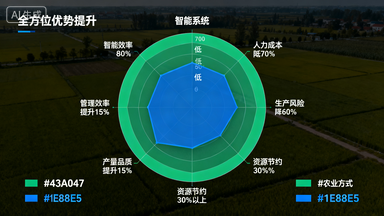
- Reduced labor costs70%Automated control significantly reduces manual inspections and operations
- Reduce production risks60%Real time monitoring and early warning effectively respond to sudden environmental changes
- Resource conservation30%abovePrecise irrigation and ventilation reduce water and electricity consumption
- Production and quality improvement15%Optimal environmental control promotes healthy crop growth
- Improving management efficiency80%Remote centralized management of multiple greenhouses, data-driven decision-making
9、 Future development direction
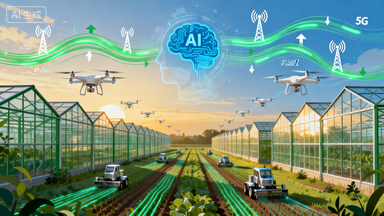
The intelligent agricultural self-control system will be deeply integratedArtificial intelligence and big data technologyImplement:
- Predictive control: Adjust environmental parameters in advance based on meteorological forecast and historical data
- Crop growth modelDynamically optimize irrigation and fertilization strategies based on crop physiological characteristics
- Energy consumption optimization: AIAlgorithm implementation for energy-saving scheduling of device operation
- Standardized productionData accumulation promotes modularization and standardization of agricultural production
The system will continue to evolve, providing safer, smarter, and more efficient solutions for smart agriculture.


Leave a Reply