
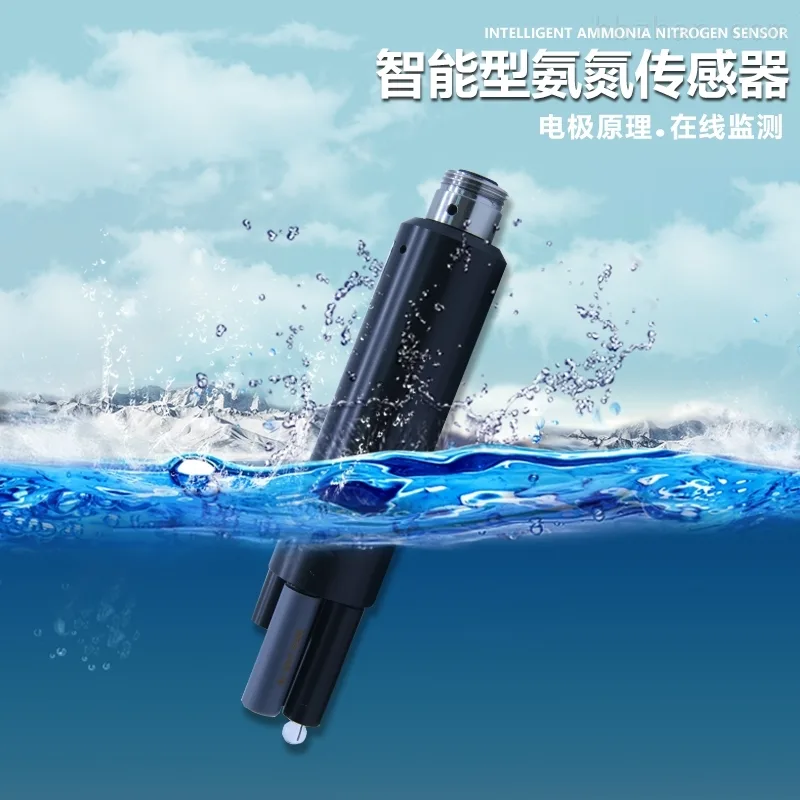
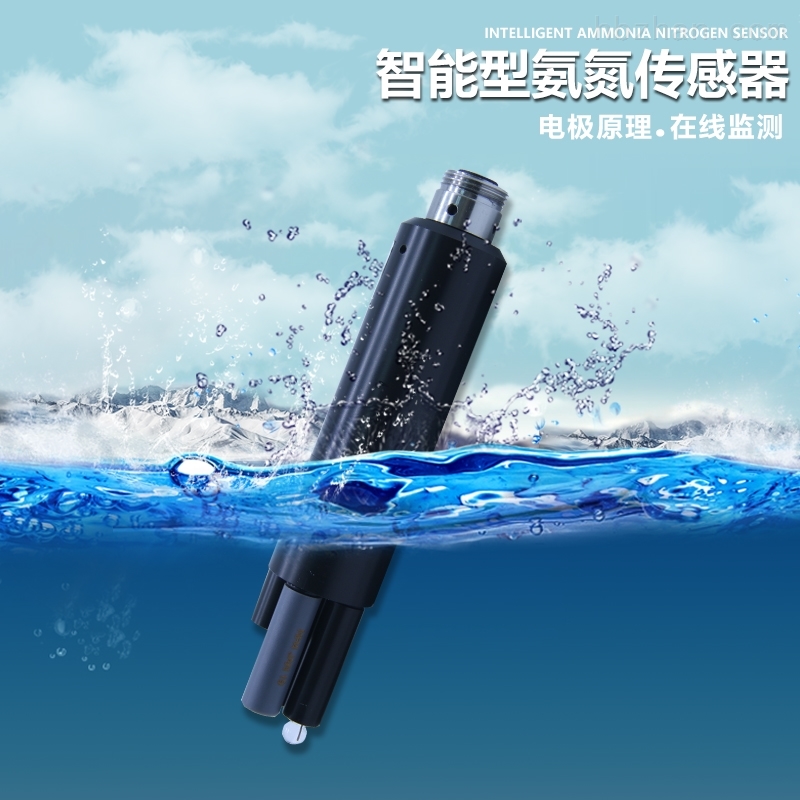
In water quality monitoring, ammonia nitrogen is a crucial parameter for assessing the total content of free ammonia (NH3) and ammonium ions (NH4+) in water bodies. The measurement of ammonia nitrogen is essential for environmental protection and water quality management, as it provides vital information about the health and pollution level of water bodies. In smart water management projects, the monitoring of ammonia nitrogen receives significant attention, as this parameter has a profound impact on the quality and sustainability of water bodies.
Hazards of ammonia nitrogen
High concentrations of ammonia nitrogen pose numerous hazards to the environment and organisms. Firstly, it has toxic effects on aquatic organisms, meaning that high concentrations of ammonia nitrogen can harm the health of fish and other aquatic organisms, disrupting the balance of aquatic ecosystems. Secondly, ammonia nitrogen is a nutrient, and when its concentration is too high, it can lead to eutrophication of water bodies, which reduces water transparency, makes it turbid, and also leads to the accumulation of toxic substances. Furthermore, high concentrations of ammonia nitrogen can also affect the pH of water bodies, making them more acidic, thereby harming organisms and ecosystems. Lastly, high concentrations of ammonia nitrogen may enter the human body through water bodies, posing adverse effects on human health. Therefore, controlling and monitoring the concentration of ammonia nitrogen is crucial for maintaining the health of water bodies and ecosystems.
Main sources of ammonia nitrogen
Ammonia nitrogen in water mainly originates from multiple sources. These include the decomposition products of nitrogen-containing organic matter in domestic sewage, certain industrial wastewater, and agricultural drainage. All these sources can lead to an increase in the concentration of ammonia nitrogen in water bodies. Therefore, understanding the sources of ammonia nitrogen is important for taking appropriate control and management measures.
Limit standards for ammonia nitrogen
In China, the GB3838-2002 "Environmental Quality Standards for Surface Water" stipulates limit standards for the concentration of ammonia nitrogen in different types of surface water. These standards aim to protect the quality and ecosystems of different types of water bodies. For example, for Class I surface water (source water, national nature reserves), the concentration of ammonia nitrogen is required to be less than 0.15 mg/L, while for Class IV surface water (industrial water use areas and recreational water use areas not directly contacting the human body), the allowable concentration of ammonia nitrogen can be as high as 1.5 mg/L. The establishment of these standards helps ensure that water bodies for different purposes are properly managed and protected.
Extended reading:
GB3838-2002 [Surface Water Environmental Quality Standards stipulates:
The ammonia nitrogen content of Class I surface water (source water, national nature reserve) is less than 0.15mg/L;
For Class II surface water (such as the first-grade protected areas of domestic drinking water sources and habitats of rare animals), the ammonia nitrogen content should be less than 0.5mg/L;
For Class III surface water (secondary protection zones of domestic drinking water sources, fish and shrimp overwintering areas, and swimming areas), the ammonia nitrogen content is less than 1.0 mg/L;
The ammonia nitrogen content in Class IV surface water (industrial water use areas and recreational water use areas not in direct contact with the human body) should be less than 1.5 mg/L;
agricultural water use and landscape requirements should be less than 2.0 mg/L;
Measurement methods of ammonia nitrogen
Currently, there are various measurement methods available for detecting the ammonia nitrogen content in water bodies. These methods include ammonia gas sensing electrode method, salicylic acid spectrophotometry, Nessler's reagent spectrophotometry, and ammonium ion electrode method, etc. In smart water projects, the electrode method is usually one of the preferred methods.
Ammonium ion electrode
The ammonium ion electrode is a widely used tool for measuring ammonia nitrogen, typically consisting of a working electrode and a reference electrode. The working electrode is covered with an ammonium ion-selective membrane, which, when in contact with ammonium ions in the water body, causes a change in potential, thereby measuring the concentration of ammonium ions. The ammonium ion electrode has the advantages of low cost, small size, and ease of operation, making it widely used in smart water projects.
However, the ammonium ion electrode also faces some challenges. Firstly, it is susceptible to interference from other ions in the water body, especially potassium ions and organic components. Secondly, the sensitive membrane of the electrode is prone to contamination by the water body, which may reduce the accuracy of measurement. Therefore, methods such as potassium ion compensation and chemical modification of the sensitive membrane are used to mitigate these issues.
Calibration of ammonia nitrogen electrodes
To ensure the accuracy and stability of ammonia nitrogen electrodes, laboratory analysis methods are usually used for calibration. Laboratory analysis methods typically have high precision and reliability, making them standard methods. The purpose of calibration is to ensure that the electrodes provide accurate measurement results in the field environment, in order to better protect the quality of water bodies and the health of ecosystems.
In summary, ammonia nitrogen monitoring plays a crucial role in smart water projects. Understanding the sources, hazards, and measurement methods of ammonia nitrogen helps to better protect water quality and ensure sustainable water resource management. The ammonium ion electrode, as a commonly used monitoring tool, has broad application prospects, but it also requires overcoming some technical challenges to improve accuracy and stability.
Continuous water resource management. As a commonly used monitoring tool, the ammonium ion electrode holds broad application prospects, but it also requires overcoming some technical challenges to enhance accuracy and stability.


Leave a Reply