
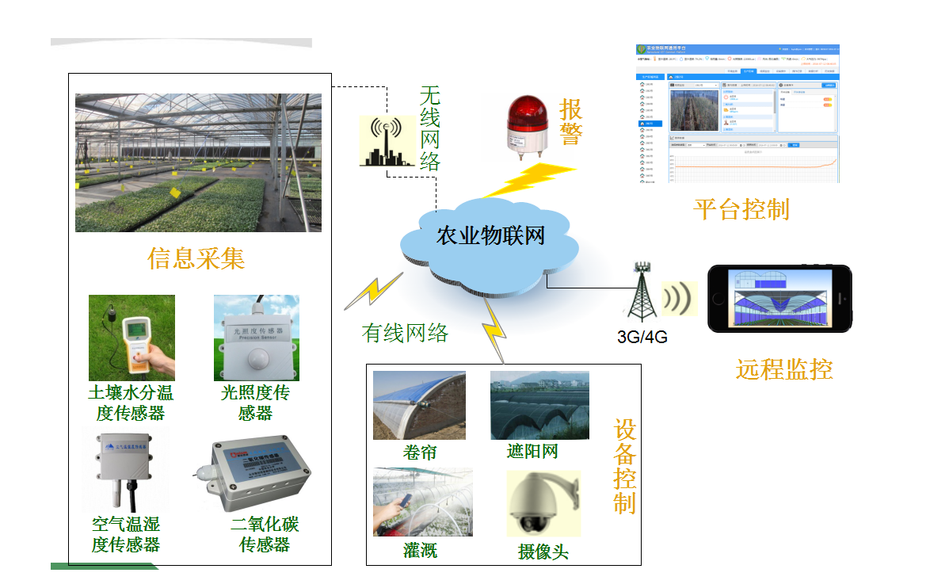
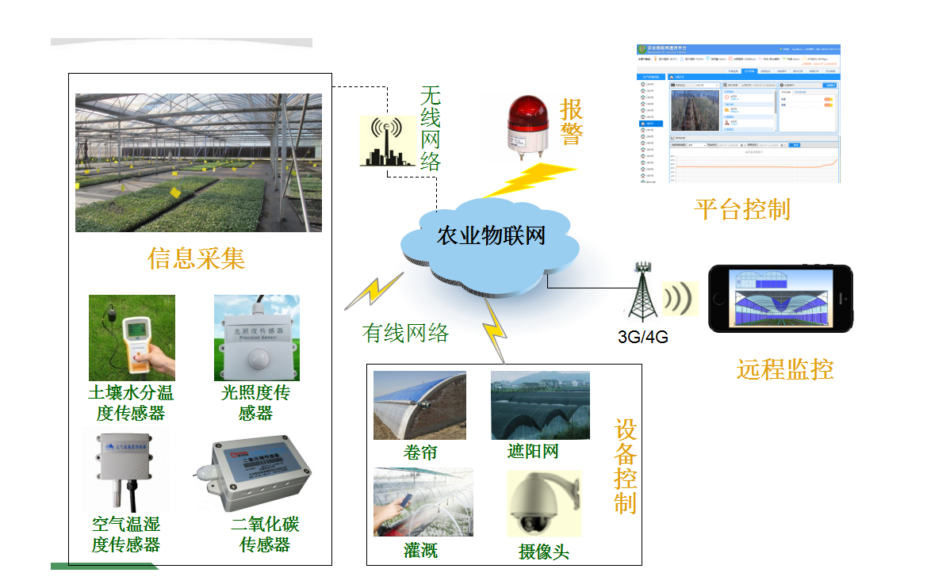
With the continuous evolution of technological capabilities, enterprise digital applications increasingly utilize combinations of technical methods and customized application scenarios to explore IIoT (Industrial Internet of Things). As the technical implementation methods and application scenarios become clearer, these scenarios can be standardized, evolving into "standardized applications with IIoT capabilities," namely "Industrial Internet Applications."
The Industrial IoT Control Platformconsists of a network, management components, and application components. The network transmits various information from the access layer to the management components through the underlying managed network. The management components provide users with a visual system management and deployment platform, rapidly constructing the overall structure of the network APP system for users and providing the technical foundation for the operation of the entire interconnected APP system, primarily enabling rapid data analysis and event processing functions. The application components offer users a visual data display platform, including real-time data display, data comparison, basic data analysis results such as correlation, and event alerts. The application components provide users with various clearly defined big data application APIs, allowing users to easily call or integrate them, and offer open API interfaces for accessing the platform for custom application modules.
How is Industrial IoTdefined? Broadly speaking,Industrial IoTrefers to the implementation of connecting networked instruments, sensors, and other devices with machines and processes in manufacturing and industrial environments. This definition may initially evoke thoughts of technology, but the strength of the Industrial IoT lies in its application instances. Innovative Industrial IoT applications enhance operational efficiency through automation, connectivity, and analysis. Only by successfully deploying Industrial IoT applications in the correct positions can the full advantages of Industrial IoT be realized.
The value of the Industrial IoT Control Platformapplication components is primarily reflected in providing users with a modular cloud service system, where users may need to perform functional integration and tailoring. The application layer is a complete application system that combines platform functions with actual industries, offering some commonly used application model frameworks that users can directly use based on actual application cases, as well as providing complex application customization services.
The web-based cloud platform of the Industrial IoT Control Platform mainly consists of a configuration management system, permission management system, monitoring system, data analysis system, and alarm management system, with the following functions:
1) Configuration Management System: Users create virtual bridges (including bridge configuration, data collection configuration, sensor configuration, and parameter configuration) for each collection point on the physical bridge through the configuration management system in the cloud.
2) Permission Management System: It assigns different management permissions to multiple units such as bridge management departments and maintenance departments.
3) Monitoring System: It monitors environmental themes, deformation themes, stress/deformation themes, and vibration themes through real-time monitoring and historical querying.
4) Data Analysis System: It integrates bridge domain knowledge to perform unified data processing and analysis on various quantitative and qualitative data collected by sensors and manually. Based on the early warning assessment model, it generates bridge safety condition assessments and early warning reports.
5) Alarm Management System: During system operation, it combines comprehensive monitoring data and alarm information to query the location and related information of alarm devices, and initiates emergency management processes for prompting.


Leave a Reply