
Equipment Technical Requirements
(1) Installation of tap water
including on-site hand washing sinks, water meters, PE pipes, etc. (Micro water stations can be built according to demand).
(2) The sample retention unit
needs to have the function of "retaining samples beyond the standard"; The sampling of the automatic sampler should be recorded, and various sampling methods such as automatic sampling for emergencies and timed sampling can be implemented;
Main technical parameter requirements:
| Serial number | Project | Technical specifications |
| 1 | Single sampling volume | 10-1000ml |
| 2 | Number of bottles | 24 bottles |
| 3 | Maximum capacity per bottle | 1000ml |
| 4 | Sampling interval | 1-9999 minutes adjustable |
| 5 | Temperature control | 4 ℃± 2 ℃ |
| 6 | Sampling accuracy | ± 5ml |
| 7 | Communication interface | RS232/485 |
| 8 | Operating voltage | AC220V±10%, 50Hz |
| 9 | Operating Temperature | 0~49℃ |
| 10 | Operating Humidity | Less than 85% |
(3) Water collection unit
Water collection method: Select an appropriate water collection plan based on the site conditions and provide a detailed design plan. The water intake can change with the water level to ensure safety and reliability, meeting the water collection needs of different water periods such as high, low, and dry seasons. Fully consider the impact of water level drop on water intake, avoid setting the water intake in stagnant water areas, and ensure that the water intake depth is about 0.5m-1m below the water surface;
The function of the water collection unit is to ensure that the water sample from the sampling point is directed to the automatic station instrument room under any circumstances, and to meet the needs of the water distribution unit and analytical instruments;
For the fixation of dynamic floating devices, methods such as stack bridges, pile driving, and anchoring can be used, which can be determined comprehensively based on the actual situation on site;
Submersible pumps or self-priming pumps are used for water intake, with dual pump and dual pipeline design, alternately used. Set up automatic diagnosis of pump and pipeline faults and automatic switching of pump and pipeline functions in the control unit to meet real-time uninterrupted monitoring requirements;
The water collection unit should have a relatively long average time between failures to ensure that the data capture rate of the water quality automatic monitoring station meets the relevant requirements;
The water extraction unit needs to design and manufacture necessary insulation, antifreeze, anti pressure, anti silt, anti-collision, anti-theft measures, and fix the water extraction equipment and facilities as necessary;
The water collection unit is equipped with cleaning and algae prevention functions. But when using chemical cleaning, prevent pollution to the environment.
The pipeline adopts an emptying design to prevent water accumulation inside the pipeline and prevent algae growth;
can automatically detect faults in the water intake unit and issue alarm signals;
The water collection unit is capable of self-protection during power outages and automatically recovers when powered on again;
The water collection unit can work continuously or intermittently, and can set the monitoring frequency on-site or remotely according to monitoring requirements;
Leave a water intake for comparative testing;
All components in the water collection unit should be equipped with support devices at the bottom to ensure that the water collection pump does not touch the bottom of the water body when the water level is low and is not affected by the sediment at the bottom. To ensure the reliability and service life of the water harvesting unit;
(4) Pre treatment Unit
1) Main Requirements:
The water sample should be pre treated before entering the water quality analysis instrument, ensuring that it does not affect the accuracy of the measurement while ensuring the normal and stable operation of the instrument, and ensuring the representativeness of each analyzed sample;
Pre treatment is equipped with a sedimentation tank, and the water sample is allowed to settle naturally for 30 minutes before entering the water quality analysis instrument. The sedimentation tank is equipped with automatic and manual sand discharge and cleaning devices;
Pre treatment devices such as five parameter measurement tanks and sedimentation tanks have automatic cleaning functions, reasonable waterway design, sufficient movable interfaces, and easy disassembly and cleaning;
The preprocessing unit is equipped with relevant liquid level monitoring devices or pressure sensing devices to ensure self-protection of the unit and timely issuance of relevant alarms in special circumstances;
Equipped with automatic backwashing function, the automatic operation and timed backwashing of the preprocessing unit are controlled by the control unit, and can switch whether the preprocessing unit is in automatic operation or backwashing state through instructions on the control screen; The preprocessing unit can automatically start according to the control timing of the acquisition controller after power outage recovery and automatic startup;
The preprocessing unit can automatically start according to the control timing of the acquisition controller after power outage recovery and automatic startup;
Except for the five parameters, other parameters shall be subjected to multi-stage pretreatment that meets the requirements of the analytical instrument. The retention time of the influent shall not exceed 30 minutes, and the device shall have the functions of sand removal and flushing; The automatic operation and cleaning of the preprocessing unit are controlled by the base station control management equipment;
The automatic operation and cleaning of the preprocessing unit are controlled by the base station control management equipment;
There are manual water intake ports before and after the pretreatment unit, which facilitate the collection of water samples for comparison experiments.
2) Preprocessing equipment requirements
Five parameter measurement pool:
Configure a five parameter measurement pool made of stainless steel material; The extension and drainage ports of the inlet pipe of the five parameter measuring pool are located at the bottom of the measuring pool, and the overflow port is located at the bottom of the top of the measuring pool. The water sample flows from bottom to top through the measuring tank and exits through the overflow pipe at the top of the tank. The flow of the water sample from bottom to top ensures the required measurement flow rate for dissolved oxygen measurement, thereby ensuring the accuracy of dissolved oxygen measurement values; The five parameter probe is vertically installed on the cover plate of the measuring tank to obtain accurate measurement values when the water sample flows. The circulation pool has the characteristics of good sealing performance, easy disassembly and maintenance, compact structure, etc;
The extension and drainage ports of the inlet pipe of the five parameter measuring pool are located at the bottom of the measuring pool, and the overflow port is located at the bottom of the top of the measuring pool. The water sample flows from bottom to top through the measuring tank and exits through the overflow pipe at the top of the tank. The flow of the water sample from bottom to top ensures the required measurement flow rate for dissolved oxygen measurement, thereby ensuring the accuracy of dissolved oxygen measurement values; The five parameter probe is vertically installed on the cover plate of the measuring tank to obtain accurate measurement values when the water sample flows. The circulation pool has the characteristics of good sealing performance, easy disassembly and maintenance, compact structure, etc;
Sedimentation tank:
Install a sedimentation tank to reduce the impact of sediment in the water sample on measurement and prevent damage to pipeline control valves caused by sediment in the water sample;
The inlet of the sedimentation tank is located at its bottom, and the water flows from bottom to top, giving it good hydraulic exchange capacity. The sedimentation tank is equipped with liquid level monitoring equipment, and high and low liquid level switches are installed on the side of the sedimentation tank. The liquid level in the water tank can be detected through a liquid level relay, and the liquid level information can be transmitted to the control unit;
By comparing the liquid level of the sedimentation tank with the pre-set standard values of water quality liquid levels with different sediment concentrations, it is determined whether the sedimentation tank is operating normally. When the liquid level exceeds the normal level, an alarm signal is issued, and the unit controls the water level in the sedimentation tank by turning on and off the water collection pump;
Water Distribution Pipeline Unit:
The pipeline adopts an emptying design, which means that after the water sample is sent to the instrument and backup water tank, the water sample in the pipeline is automatically emptied and waiting for the next water intake process, equipped with a manual emptying device;
Design algae removal process. Can effectively kill algae in pipelines and reduce the phenomenon of algae accumulation on pipe walls;
Different specifications of metal membranes can be selected according to the different filtration requirements of the supporting instruments, and the size of each connection interface should be matched with the analytical instrument and pipeline;
Reserved interface for automatic collection of excessive water samples, which can automatically collect excessive water samples after configuring the excessive sample retention equipment.
can display the pressure or flow rate of the sampling unit pipeline, with an independent water control manual valve, and can adjust and control the pressure and flow rate, and record parameter configuration and operating status;
(5) Backwash Unit:
The backwash unit includes cleaning internal pipelines and cleaning water collection pipelines. The cleaning water can be used in the same way as the auxiliary water, without causing secondary pollution to the environment. The algae killing cleaning device adopts advanced algae killing technology to ensure that the inside of the pipeline is not affected by algae. Adopting pressurized cleaning water flow flushing, the design does not use cleaning methods that cause pollution to the environment. The cleaning operation of the unit can be controlled automatically or manually on site;
The contractor is required to conduct classification preprocessing design for each different monitoring indicator and provide explanations for it. The cleaning and maintenance cycle of the filtering equipment must be greater than one month;
1) Cleaning/Backwashing:
Based on the pollution situation, the cleaning mode can be set on-site or remotely. It supports manual start-up of the cleaning unit and can also set the cleaning interval according to the on-site water quality conditions. The control unit starts the cleaning operation at regular intervals or according to the user's needs, and cleans the indoor sampling pipeline, measuring tank pipeline, sedimentation tank pipeline, outdoor water intake pipeline, sedimentation separation filter, and filtration device separately. Based on the on-site water quality, the duration of cleaning work can be pre-set, and each component can be washed with water according to a fixed time ratio;
The cleaning/backwashing requirements are as follows:
has sufficient backwashing capacity to ensure that there is no sediment, algae, or attachments on the pipe wall inside the pipeline;
Install an algae killing and cleaning device to ensure that the interior of the pipeline is not affected by sediment and algae;
has automatic pressure backwashing function: it can automatically backwash the sampling and distribution pipelines and sampling suction heads through pressurized cleaning water flow or chemical reagent cleaning solution. Can use pressurized cleaning water flow to flush the five parameter sensor; The cleaning/backwashing operation can be automatically or manually controlled on-site or remotely;
The cleaning/backwashing operation can be automatically or manually controlled on-site or remotely;
Ensure that the overall and five parameter sensors are cleaned during each measurement cycle;
Ensure that the flushing water is pumped out of the area that will not affect the monitoring results, and do not use cleaning methods that pollute the environment in the design.
2) Algae removal:
During backwash cleaning, a algae removal agent is introduced to kill algae. When the backwash cleaning unit is started, the algae removal agent is introduced into the pipeline by controlling the solenoid valve to open. The algae removal agent is mixed with pressurized water through the control unit to better remove algae and clean the inner and outer pipelines.
(6) Water Quality Five Parameter Analyzer
1) Controller
Display: backlight, color touch screen;
has data storage function and Chinese menu display;
Signal output: 0/4-20mA output, MODBUS or PROFIBUS optional;
Signal input: Multi channel access, interchangeable, instrument automatic recognition;.
2) Dissolved oxygen sensor
Testing principle: membrane free fluorescence method;
Measurement range: 0-20.00mg/L;
Environmental temperature: 5-45 ℃;
Resolution: 0.01mg/L;
Automatic temperature compensation: 0-50 ℃;
repeatability error: ± 0.3mg/L;
Zero drift: ≤± 0.3mg/L;
Range drift: ≤± 0.3mg/L;
Anti interference: not affected by hydrogen sulfide, heavy metals, oil, and other chemical substances in water.
3) Conductivity sensor
Measurement range: 0-200000uS/cm or other applicable range;
Accuracy: ≤± 1%
Resolution: ≤ 0.01 µ s/cm;
Repeatability error: ≤± 1%;
Zero drift: ≤± 1%;
Range drift: ≤± 1%;
4) PH/T Sensor
PH Measurement Principle: Electrode Method, Automatic Temperature Compensation;
Measurement range: 0-14PH;
Sensitivity: ± 0.1pH;
Resolution: 0.01pH;
Repeatability error: ± 0.1pH;
Drift (pH=4,7,9): ≤± 0.1pH;
Temperature accuracy: ± 0.5 ℃;
Temperature measurement principle: temperature sensor method;
Range: Temperature from 5 to 45 ℃.
5) Turbidity sensor
Measurement principle: dual beam near-infrared light/scattered light, chromaticity compensation;
Measurement range: 0.001-1000NTU;
Accuracy: ± 3%;
Resolution: ≤ 0.1NTU;
Zero drift: ± 3.0%;
Range drift: ± 3.0%.
(7) Potassium permanganate index analyzer
Measurement principle: potassium permanganate digestion, spectrophotometry;
Measurement range: 0-5/10/20mg/L;
Accuracy: ≤± 3%;
Resolution: 0.1mg/L;
Minimum detection limit: ≤ 0.5mg/L;
Zero and range drift: ≤± 5% F.S;
Signal output: with 4-20mA, RS485 interface;
(8) Ammonia nitrogen automatic analyzer
Measurement principle: Salicylic acid spectrophotometric method or gas sensitive electrode method;
Measurement type: manual or automatic analysis with set intervals;
Measurement interval: can be freely programmed according to actual conditions;
Measurement time: 35-45 minutes;
Measurement range: 0-2/10/50mg/L, customizable range;
Minimum detection limit: 0.02mg/L;
Reproducibility: ≤ 2%;
Zero point and range drift: 1%;
(9) Automatic analyzer for total phosphorus and total nitrogen
Total phosphorus: ammonium molybdate spectrophotometric method;
Total nitrogen: UV spectrophotometry;
LCD display;
Measurement range: 0-50mg/L, customizable range;
Environmental conditions: temperature between 2-40 ℃, humidity less than 85% (RH);
(10) Chlorophyll and blue-green algae analyzer
Chlorophyll a range: 0.03 to 400 μ g/L;
Accuracy: Linear: R ²>0.999;
Resolution: 0.01 μ g/L;
Range of blue-green algae: 0-100ug/L;
Accuracy: Linear: R ²>0.999;
Resolution: 0.01ug/L;
Conductivity measurement range: 0-200mS/cm;
Accuracy: 0-100mS/cm: ± 0.5% of the reading or 0.001mS/cm, whichever is greater; 100-200 mS/cm: ± 1% of reading;
Resolution: 0.0001-0.01mS/cm;
Temperature measurement range: -5-50 ℃;
Accuracy: ± 0.05 ℃;
The host is equipped with no less than 4 universal interfaces of the same diameter, with intelligent recognition function, which can automatically identify various sensors on each interface and automatically detect sensor performance;
Smart Sensor: Can store calibration data, and the calibrated sensor can be transferred between different hosts or different interfaces of the same host without the need for recalibration;
Sensor Scalability: The device has the ability to expand other sensors, such as FDOM, turbidity, and other parameters.
(11) Data acquisition control unit
The data acquisition control unit is mainly composed of monitoring software, logic controller, industrial computer, control cabinet, data acquisition and other parts, with unit control, data acquisition, storage and transmission functions.
The industrial control computer is embedded with a communication expansion card and an analog-to-digital acquisition module, which can realize the connection and data transmission of various signals of various monitoring devices, and realize the collection, processing and other processes of various signals and data. In addition, the industrial computer integrates on-site monitoring software to complete the control, data collection, storage, and processing of water quality automatic monitoring stations. The data acquisition control equipment can be connected to analog, pulse, and switch digital signals of various devices on site for input/output. All control components are integrated into one control cabinet and can be manually operated through buttons on the panel. Adopting standard RS232/485 interface and Ethernet network interface, it can support standard 4-20mA signal acquisition and RS232/485 signal acquisition. At the same time, PLC can also transmit signals and instrument detection parameters from various pumps, valves, water tank levels, pressures, and other sensors in the unit to the industrial computer for timely adjustment of the unit's working process.
(1) Industrial Control Computer
1) 19 inch and above touch screen integrated industrial control computer;
2) CPU processor: clock speed of 3.50 GHz or above, dual core;
3) Memory: 4GB or above;
4) Hard drive: 500GB or above;
5) Standard configuration of I/O interface: no less than 6 RS232/RS485 communication ports;
(2) Programmable Controller
1) CPU ≥ 800MHz;
2) Memory ≥ 256MB;
3) Hard disk capacity ≥ 512MB;
5) Communication interface RS232/485 COM port, not less than 4, network port, not less than 1;
7) Scalability: The controller's input and output interfaces meet the requirements and have a margin of no less than 4 channels for future expansion;
8) Lightning protection and anti-interference capability: comply with relevant regulations on electromagnetic radiation and induction, and have power isolation and signal isolation measures.
(12) The data communication transmission unit
supports RS-232 or RS-485 standard communication methods, as well as TCP/IP communication methods. According to the functional requirements of the national surface water automatic monitoring platform, corresponding data labeling, key parameters, working status, alarm information reporting shall be implemented, and control commands issued by the platform shall be responded to. Using 4G channel communication.
1) Monitoring project data collection
Conventional five parameters (water temperature, pH, conductivity, dissolved oxygen, turbidity), ammonia nitrogen, permanganate index, total phosphorus, total nitrogen, chlorophyll-a, blue-green algae.
2) Environmental indicators
Temperature (including indoor), humidity (including indoor).
3) Working status of instruments and equipment (including water pumps, valves): power supply, start, stop, operation, measurement, zero calibration, calibration, sample verification and testing, cleaning, maintenance, faults, sampling time, sampling frequency, automatic sample retention, inlet and outlet pressure, power supply equipment status, communication status, etc.
▲ 4) Alarm Information
Internal instrument abnormalities such as power supply failure, equipment failure, equipment shutdown, reagent shortage, equipment abnormal changes, data exceeding standards, data exceeding limits, calibration abnormalities, measurement abnormalities, indoor temperature and humidity safety information.
5) Key parameters
include calibration interval, measurement interval, sample verification interval, measurement mode, upper and lower limits of measurement range, curve coefficient, standard solution parameters, calibration information, etc.
6) Monitoring project
According to the determined monitoring frequency, each time is collected as a valid value, and the frequency can be set.
7) has a historical data storage function, which can store data for at least 90 days after a power outage, and can store raw data for more than 3 years, as well as records of calibration, power outages, and other events that occurred during the corresponding period.
8) Collect the working status variables of automatic analysis instruments and integrated station units, and record and save them in the form of operation logs.
9) Automatically record and classify abnormal data collection information, facilitating users to comprehensively manage data. Different monitoring points can flexibly set different monitoring items.
10) The data collector has a time adjustment and control window to ensure that the data collector, PLC control equipment, and instrument clock travel time are consistent, and to ensure that each unit has a consistent step.
11) It can record the operational status of the site and save it in the form of operation logs for more than one month.
12) Power outage protection and backup: Save parameters and historical data in case of power outage, and automatically restore in case of power outage.
13) Automatically protect historical data and parameter settings after power failure.
(13) NVR, camera device
with NVR, 400w pixel camera (supports serial output, including installation bracket and power light).
(14) Station air conditioning
Air conditioning type: wall mounted;
Number of horsepower: 1.5 horsepower or more (3500W);
Type of heating and cooling: electric auxiliary for heating and cooling;
Energy saving and environmental protection: frequency conversion;
Energy efficiency level: above level three.
(15) UPS uninterruptible power supply
UPS uninterruptible power supply has functions such as sine wave, power-off protection, automatic recovery, overload protection, etc., which can ensure that all analytical instruments can complete a single analysis cycle, and control units, data acquisition and communication units and other equipment are not powered off. The standby time shall not be less than 1 hour.
The functional and technical requirements are as follows:
Rated capacity: 6kVA;
Input voltage: 120V-275V;
Output voltage: 220V ± 1% V AC;
Frequency range: 46-64HZ, 50/60HZ adaptive;
Input power factor: 0.98;
Rated power factor: 0.8;
(16) Laboratory comparison
The third-party comparison experiment includes all configuration items such as conventional five parameters (water temperature, pH, conductivity, dissolved oxygen, turbidity), ammonia nitrogen, permanganate index, total phosphorus, total nitrogen, chlorophyll-a, blue-green algae, and an automatic sampler;
The abbreviations, units, and required decimal places for test items are shown in Table 2.2-2.
The third-party comparison experiment requires 30 pairs of data, with 3 pairs of data per day for a total of 10 days.
The third-party comparison laboratory should have China Metrology Accreditation (CMA) certification.
Table 2.2-1 Comparison Experiment Regulations Monitoring and Analysis Methods
| Serial number | project | Comparison of experimental methods |
| 1 | water temperature | Water temperature gauge method (GB13195-91), on-site monitoring |
| 2 | pH | Glass electrode method (GB6920-86), on-site monitoring |
| 3 | DO | Iodometric method (GB7489-87), on-site fixed sample electrochemical probe method (GB11913-89), on-site calibration |
| 4 | conductivity | Conductivity meter method *, on-site monitoring |
| 5 | ammonia nitrogen | Nessler's reagent colorimetric method (GB7479-87), salicylic acid method |
| 6 | Permanganate index | Determination of permanganate index (GB11892-89) |
| 7 | Total Nitrogen | Ammonium molybdate spectrophotometric method (GB11893-89) |
| 8 | Total Phosphorus | Alkaline potassium persulfate digestion/UV spectrophotometry (GB3838-2002) |
| 9 | Chlorophyll a | Acetone extraction method/spectrophotometric method |
| 10 | Cyanobacteria | Algae count |
Table 2.2-2 Abbreviations, Units, and Digits of Monitoring Items
| Serial number | Project Name | abbreviation | unit | decimal places |
| 1 | water temperature | T | ℃ | 1 |
| 2 | pH | pH | dimensionless | 2 |
| 3 | dissolved oxygen | DO | mg/L | 2 |
| 4 | conductivity | EC | S/cm | 0 |
| 5 | turbidity | TB | NTU | 0 |
| 6 | ammonia nitrogen | NH 3-N | mg/L | 2 |
| 7 | Permanganate index | I Mn | mg/L | 1 |
| 8 | Total Nitrogen | TN | mg/L | 2 |
| 9 | Total Phosphorus | TP | mg/L | 3 |
| 10 | Chlorophyll a | Chl-a | g/L | 1 |
| 11 | Cyanobacteria | B-algae | Cell/L | 0 |
The specific comparison experiment steps are as follows:
- Water sample collection and processing (comparison of river channels and water collection pipelines, verification of deviations)
In principle, the comparison experiment should use the same water sample as the automatic monitoring instrument; The sampling position should be kept as consistent as possible with the sampling position of the automatic monitoring instrument.
- Sampling frequency and sample determination
Collect instantaneous samples and synchronously record the readings of automatic monitoring instruments. Compare the experimental samples and take a flat sample for measurement.
The calculation of measurement error is shown in the following formula:
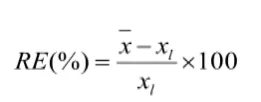
In the formula

For automatic monitoring instruments to measure values
xl——Determination value (average) for national standard analysis method
- Assessment and comparison of automatic samplers
Set a fixed time to collect water samples once a day and set the collection volume. Record whether the automatic sampler performs timed and quantitative sampling.
- Blind sample comparison
Conduct a standard solution verification on the water quality automatic monitoring station equipment, and the relative error of the results should not exceed ± 10%.
(17) Station building unit/group screen equipment
The 16 automatic water quality monitoring stations are divided into: 8 stations of station type, 5 stations of compact type, and 3 stations of prefabricated type.
The station building type is provided by the employer, and the contractor shall carry out reasonable renovation and construction according to the actual environmental conditions available on the site. The station building needs to be appropriately decorated and renovated, including the ground, walls, lightning protection, water and electricity, air conditioning installation and treatment, etc., to meet the requirements of station construction. All equipment and auxiliary equipment (including various pipelines such as water and electricity) must meet the requirement of ≤ 15 square meters after installation;
Compact station construction area ≤ 7 square meters, constructed by the contractor according to the site conditions and in accordance with the style of the hydrological station or self recording platform, meeting the requirements of aesthetic design;
Each station of the prefabricated house type has an area of approximately 15 square meters. The contractor shall carry out reasonable renovation and construction based on the actual environmental conditions available on the site, including site leveling, foundation and hardening, prefabricated houses, lightning protection facilities, and external water and electricity access costs.
Box requirements:
Composed of an outer casing, internal metal components, and accessories, it facilitates the operation and maintenance of water quality automatic monitoring equipment by maintenance engineers.
It has sealing performance, waterproof and impact resistance, and the overall protection level reaches IP54 or above.
Has corrosion resistance: the outer surface is sprayed with plastic or special anti rust paint.
Internally, thermal insulation treatment is carried out, and the interlayer is made of fire-resistant and heat-insulating rock wool. The bottom needs to be made of concrete foundation (specific requirements depend on the actual situation on site and user needs).
Reserve water supply and drainage outlets to facilitate monitoring of water sample and tap water supply, as well as discharge of station building wastewater.
Flame retardant: meets the requirements of Experiment A in the current national standard "Test Methods for Fire Hazard of Electrical and Electronic Products - Diffusion and Premixed Flame Test Methods" (GB/T 5169.7).
Equipped with anti-theft function and meeting the relevant specifications for lightning protection and grounding.


Leave a Reply