
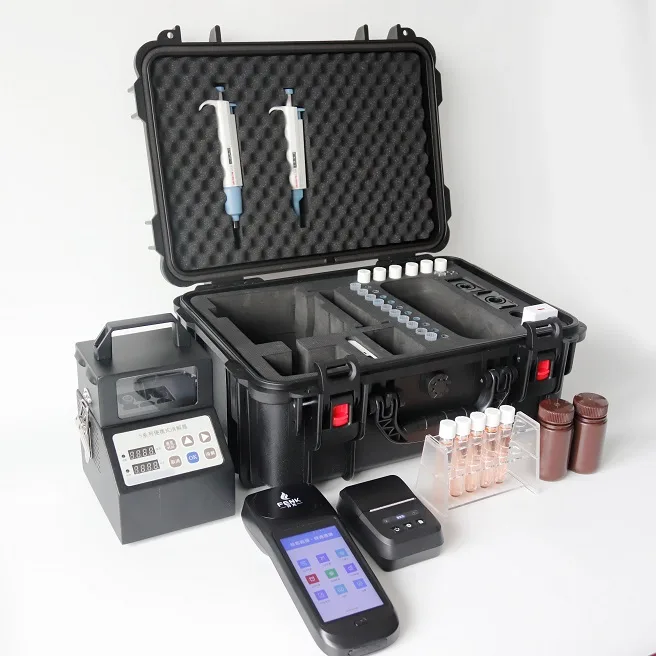
The water quality monitoring methods can be divided into four forms based on the detection location and form: laboratory testing, mobile laboratory testing, online monitoring, and online sensor monitoring, which basically correspond to the four stages of water quality monitoring.
01. Laboratory monitoring
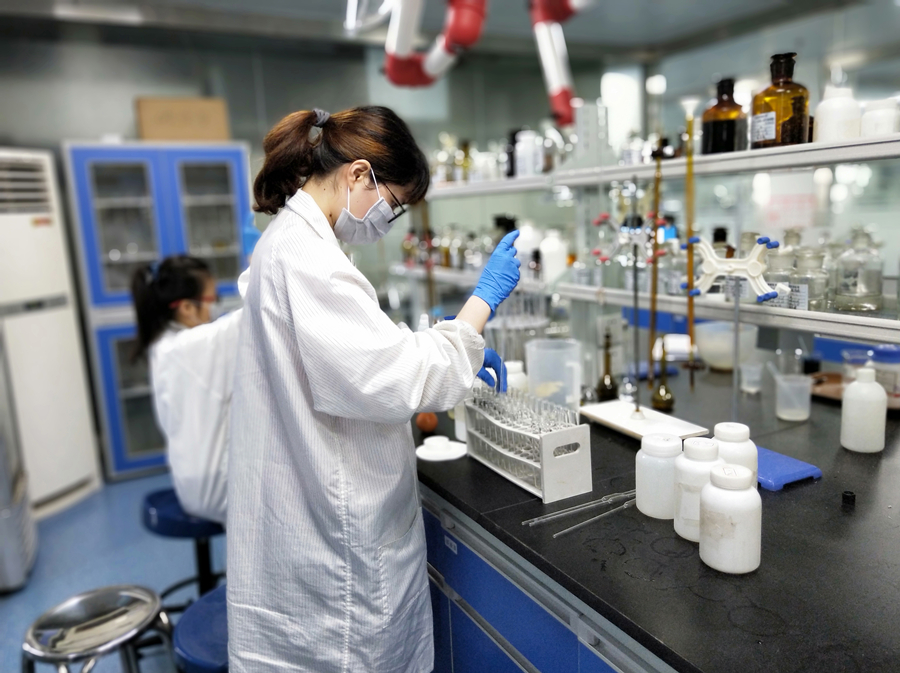
In laboratory monitoring methods, water samples need to be collected and sent to the laboratory for analysis. The laboratory uses various chemical methods and instruments to process and test water samples to determine their various water quality parameters, such as pH value, dissolved oxygen, ammonia nitrogen, etc COD, Total suspended solids, etc.
There is a serious lag in laboratory monitoring methods, and some indicators such as BOD and PH are prone to change during sampling and transfer processes.
02. Mobile laboratory monitoring
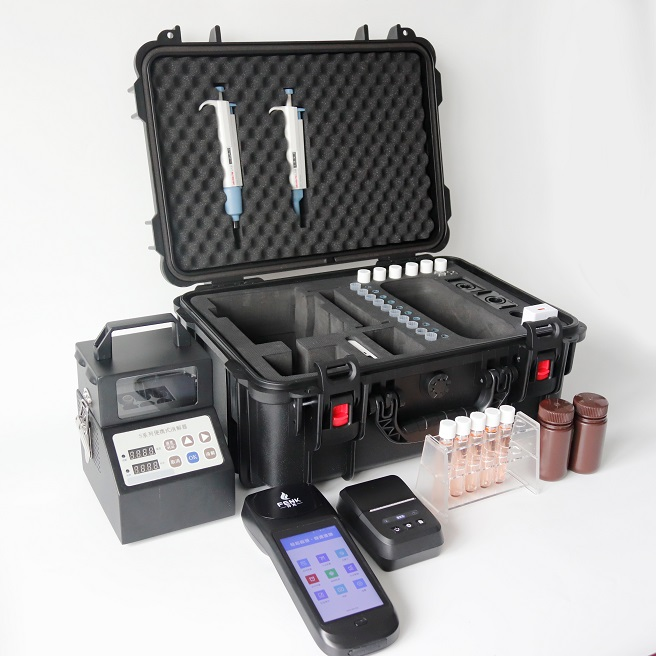
In order to solve the problems of time delay and disconnected sampling in laboratory monitoring, mobile laboratories are gradually emerging.
This method usually uses portable analytical instruments and equipment for on-site analysis at sampling points in Fujian.
The mobile laboratory assembles simple and portable water quality monitoring equipment on a vehicle, and drives the vehicle directly to the vicinity of the water source for on-site water intake testing, providing fast water quality analysis results. However, there are issues such as a lack of professional personnel, equipment limitations, and slow collection and analysis speed of detection data.
However, there are problems such as a lack of professional personnel, equipment limitations, and slow collection and analysis of detection data.
03. Online Monitoring
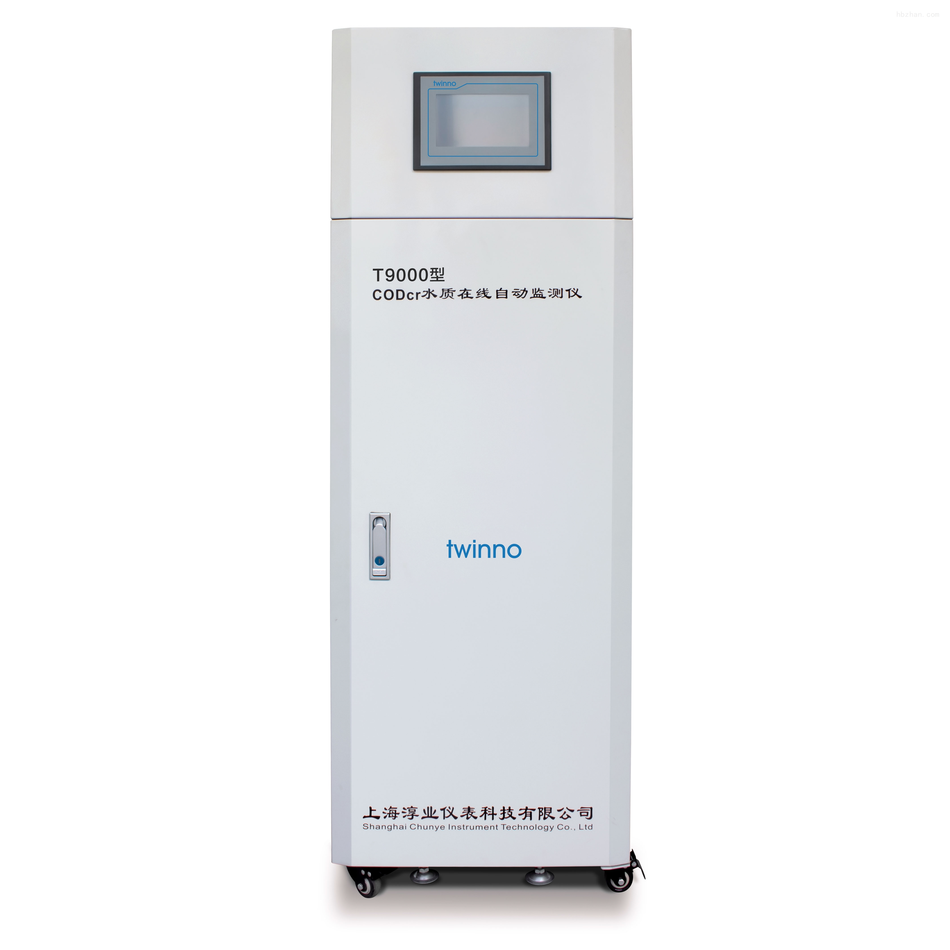
Online monitoring can achieve online and continuous monitoring, solving the problem of monitoring and corresponding time delay. Online monitoring combines flow injection technology with chemical analysis methods.
Online monitoring combines flow injection technology with chemical analysis methods.
Through a series of automated processing steps, continuous and real-time measurement of specific chemical substances in water samples has been achieved.
In online monitoring, the following steps are usually included:
① Sampling: The water sample is obtained from the monitoring point and can be continuously and regularly sampled through an automatic sampler.
② Flow injection: The water sample enters the flow injection system and is injected through a series of injection valves and pumps, allowing the water sample to be analyzed under continuous flow conditions.
③ Reagent injection: In a flow injection system, the reagent solution is injected into the water sample and undergoes a specific reaction with the target chemical substance. These reagents can be used for sample pretreatment, labeling of chemical substances, or catalytic reactions.
④ Reaction: After reagent injection, the target chemical substance in the water sample undergoes a specific reaction with the reagent, forming the physical or chemical property changes required for measurement. These changes can be color, fluorescence, current, etc.
⑤ Signal detection: After the reaction is completed, optical, electrochemical, or other detection methods are used to measure the reaction products. Usually, spectrometers, fluorescence meters, electrochemical sensors and other equipment are used to convert signals into analysis results.
⑥ Data analysis and output: Through data processing and analysis, convert the obtained measurement results into numerical values of water quality parameters. These data can be output through display screens, computers, or wireless transmission.
04. Sensor monitoring
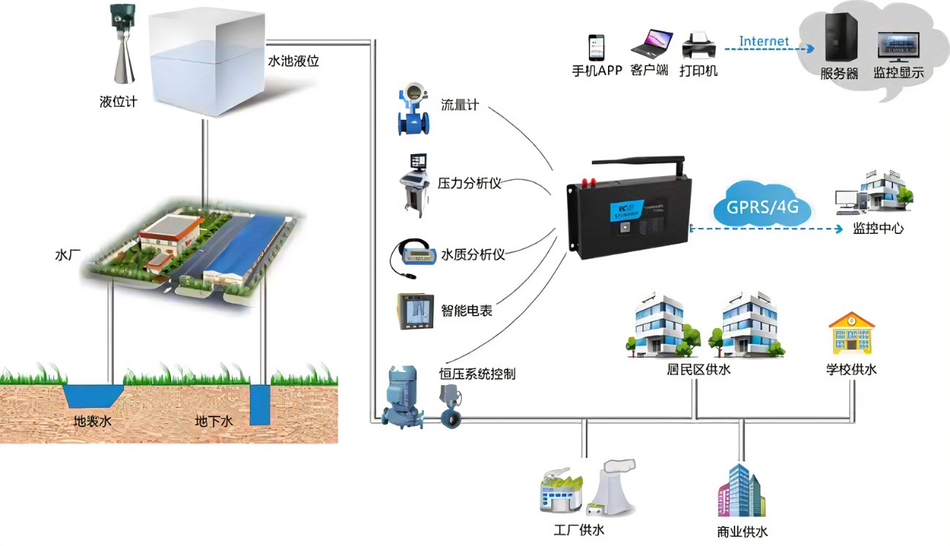
With the development of sensor technology, water quality monitoring is gradually shifting towards online sensor monitoring.
Online sensor monitoring utilizes sensor devices installed in water bodies or pipeline systems to measure water quality parameters in real-time, such as pH, conductivity, turbidity, dissolved oxygen, etc.
These sensors can transmit data to the central monitoring system through wireless communication or wired connections, enabling automated, continuous, and real-time water quality monitoring.
Sensor monitoring is a further development of online monitoring, which utilizes smaller and more intelligent sensor devices to achieve monitoring of more water quality parameters.
Sensor monitoring technology can not only monitor traditional water quality parameters in real-time, but also more complex water quality indicators such as trace elements, organic pollutants, heavy metals, etc.


Leave a Reply