
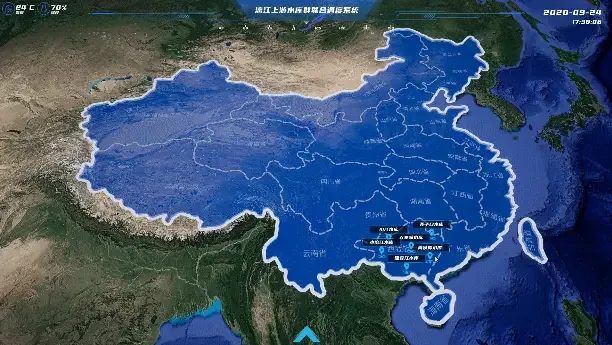
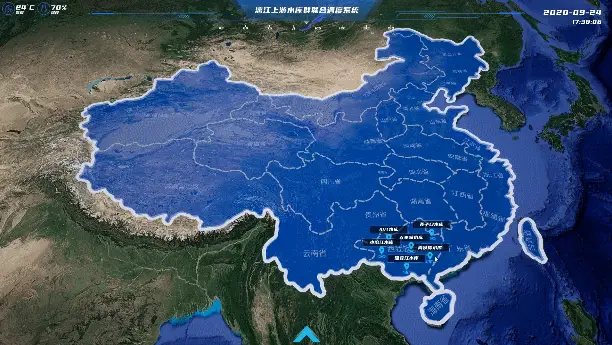
The key role of information infrastructure in digital twin watersheds in the water conservancy industry
With the rapid development of technology, digital twin technology has made significant progress in various industries. In the water conservancy industry, the information infrastructure of digital twin watersheds has become a core element in promoting industry intelligence and efficiency improvement. This infrastructure includes network facilities such as optical cables, microwaves, satellites, and mobile communications, aimed at supporting the collection, transmission, and sharing of data in hydrology, water resources, water quality, and hydraulic engineering. These facilities provide basic data on the basic characteristics and conditions of the watershed, supporting decision-making, early warning, remote monitoring, and intelligent management in the water conservancy industry.
The Importance of Information Infrastructure in the Water Conservancy Industry
Information infrastructure plays a crucial role in the water conservancy industry. It covers various network devices and technologies, providing strong support for the operation of water conservancy systems. The construction and operation of these infrastructures not only have a profound impact on the modern management of the water conservancy industry, but also have important significance for the sustainable utilization of water resources and environmental protection.
In the water conservancy industry, the importance of information infrastructure is mainly reflected in the following aspects:
1.1 Data Collection and Monitoring
Information infrastructure perceives and collects real-time data and information related to water conservancy through various sensors and monitoring devices. These data include key information such as water level, flow rate, rainfall, deformation, displacement, water quality, as well as the operational status and safety performance of water conservancy facilities. Through big data analysis, these data provide accurate and comprehensive watershed information for the water conservancy industry, providing strong support for scientific decision-making.
1.2 Data Transmission and Sharing
The information infrastructure transmits the collected data to the data center through network devices, achieving centralized storage, management, and processing of data. This enables timely and efficient transmission of various types of information, ensuring the interconnectivity of the water conservancy system network. At the same time, the construction of a shared data platform has promoted the exchange and sharing of information among all parties in the industry, and improved the operational efficiency of the entire water conservancy system. Based on the large amount of data collected by information infrastructure, the water conservancy industry can achieve more accurate decision support and early warning systems. Through advanced algorithms and models, the system is able to analyze water conditions, identify potential problems in advance, and develop timely response plans to reduce disaster risks and improve the emergency response capabilities of the water conservancy system.
1.3 Decision Support and Early Warning
Based on the large amount of data collected by information infrastructure, the water conservancy industry can achieve more accurate decision support and early warning systems. Through advanced algorithms and models, the system is able to analyze water conditions, identify potential problems in advance, and develop timely response plans to reduce disaster risks and improve the emergency response capabilities of the water conservancy system.
1.4 Remote Monitoring and Intelligent Management
The construction of information infrastructure makes remote monitoring and intelligent management possible. The water conservancy industry can achieve real-time monitoring and regulation of the water conservancy system through remote control of equipment. The intelligent management system is based on big data and artificial intelligence technology to optimize the allocation of water resources and improve the overall efficiency of the water conservancy system.
2. Composition of Information Infrastructure for Digital Twin Watershed
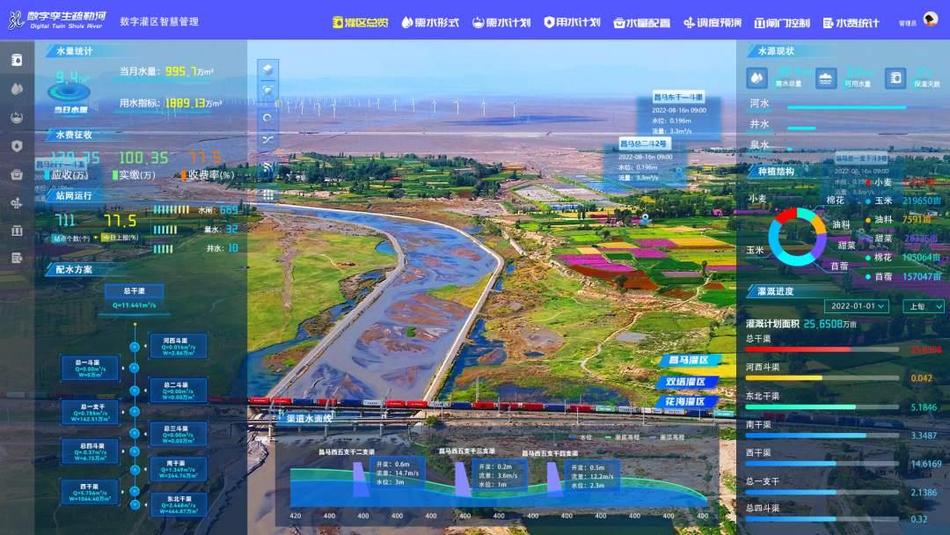
Digital twin watershed is an advanced application of information infrastructure in the water industry, which includes three major components: water perception network, water information network, and water cloud.
2.1 Water Conservancy Perception Network
Water Conservancy Perception Network is a network system that uses sensors and monitoring devices deployed within a watershed to perceive and collect real-time data and information related to water conservancy. In this network system, sensors deployed on water conservancy facilities such as reservoirs, rivers, gates, and pumping stations are used to monitor key data such as water level, flow rate, rainfall, deformation, displacement, and water quality. At the same time, the Water Conservancy Perception Network has strengthened the application of new monitoring methods such as radar, satellite remote sensing, aerial remote sensing, high-definition video, unmanned aerial vehicles, unmanned ships, ground robots, and underwater robots, thereby achieving the fusion of ground monitoring data and providing accurate, synchronized, and timely support for the interaction between the virtual world and the physical world. Its goal is to achieve comprehensive perception and monitoring of the hydrological environment and water conservancy facilities within the watershed.
2.2 Water Resources Information Network
Water Resources Information Network is a network system that integrates, stores, manages, and shares data collected by the Water Resources Perception Network and other related data. It includes data centers, databases, data platforms, etc., used for centralized storage, management, and processing of data. The water conservancy information network should achieve seamless and seamless interconnection of the water conservancy system network, meeting the needs of timely and efficient transmission of various types of information. It fully utilizes new generation network technologies such as communication satellites, Beidou, and 5G to ensure the safe and reliable transmission of monitoring station networks in extremely harsh environments. The core function of the Water Resources Information Network is to provide timely and accurate water resources information to decision-makers and relevant departments through data integration and sharing, thereby supporting decision-making and planning.
2.3 Water Resources Cloud
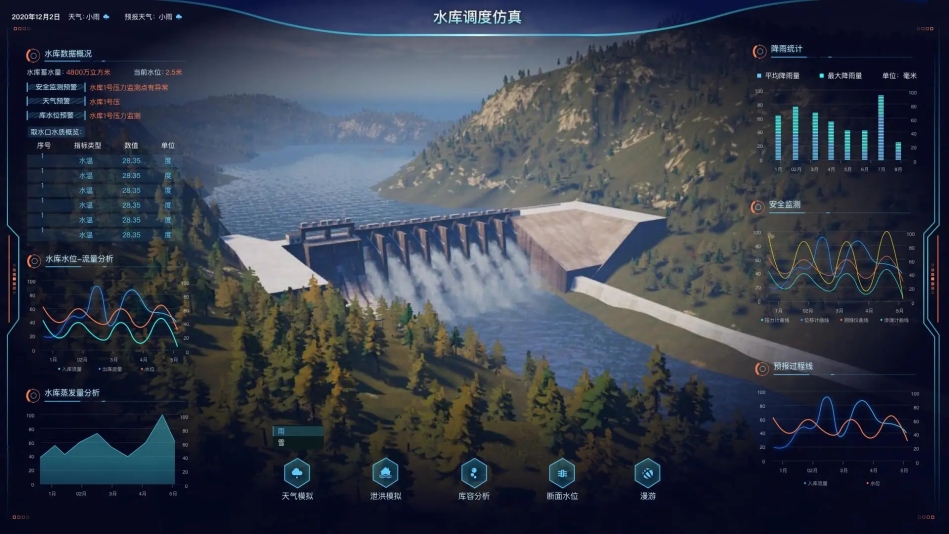
Water conservancy cloud refers to a water conservancy information processing and application platform based on cloud computing technology. By utilizing cloud computing resources and algorithm models, the data collected by the water perception network is analyzed, modeled, and simulated to achieve digital twin simulation of the watershed. The construction of the Water Resources Cloud includes the first level Water Resources Cloud of the Ministry of Water Resources' own nodes and seven watershed management agency nodes, as well as the second level Water Resources Cloud constructed by the provincial water administrative department based on government cloud, self built cloud, etc. Its goal is to provide decision support and optimization solutions to help decision-makers better carry out watershed planning, water resource management, environmental protection, and other work.
3. Advantages and challenges of information infrastructure
The construction of information infrastructure has brought many advantages to the water conservancy industry, but it also faces some challenges.
3.1 Advantages
3.1.1 Improve the operational efficiency of water conservancy systems
Through the information infrastructure of digital twin watersheds, the water industry has achieved real-time monitoring and precise regulation of water conditions. This improves the operational efficiency of the water conservancy system, reduces resource waste, and lays the foundation for sustainable development.
3.1.2 Optimize water resource allocation
The construction of information infrastructure enables the water industry to better optimize the allocation of water resources. Through big data analysis and digital twin simulation, the system can provide the best water resource allocation solutions for different demand scenarios, improving the efficiency of the entire water conservancy system.
3.1.3 Improving environmental monitoring and protection
The information infrastructure of the digital twin watershed provides more accurate data support for environmental monitoring and protection. By real-time monitoring of parameters such as water quality and flow rate, the system can promptly identify pollution sources, take measures to reduce environmental pollution, and promote sustainable environmental management.
3.2 Challenge
3.2.1 Safety hazards
The construction of information infrastructure has increased the connectivity of the system, but also brought security risks. Network attacks, data breaches, and other security issues may have a serious impact on water conservancy systems, therefore it is necessary to strengthen network security measures to ensure the security of information infrastructure.
3.2.2 Data Privacy
With the increase of data collection and sharing, a large amount of sensitive information related to individuals and institutions is involved. Therefore, how to protect data privacy has become an urgent problem to be solved. The water conservancy industry needs to establish sound regulations and systems to ensure the legal and compliant use of data.
3.2.3 Technical Standards and Interoperability
In the construction of digital twin watersheds, multiple devices and systems may be involved, and their technical standards and interoperability may differ. This requires all parties in the industry to jointly develop consistent technical standards to ensure the collaborative operation and data sharing of information infrastructure.
4. Future prospects and development directions
The information infrastructure of the digital twin watershed shows great potential in the water conservancy industry, and the future development direction is mainly reflected in the following aspects:
4.1 Intelligent Water Conservancy System
With the continuous development of technologies such as artificial intelligence and the Internet of Things, the information infrastructure of the digital twin watershed will become more intelligent. By introducing intelligent algorithms and automation technology, water conservancy systems will be able to operate more adaptively and autonomously, improving overall management efficiency.
4.2 Multi source Data Fusion
In the future, the information infrastructure of digital twin watersheds will pay more attention to the fusion of multi-source data. In addition to traditional sensor data, multi-dimensional information such as satellite remote sensing, meteorological data, and socio-economic data will also be integrated to form a more comprehensive view of watershed management. With the continuous expansion of information infrastructure, network security will become a top priority. The future development requires strengthening investment in network security, establishing a sound network security system, and ensuring the stable operation of the water conservancy system. To promote the construction of information infrastructure in digital twin watersheds, the government needs to introduce relevant policies and regulations to regulate industry development, ensure the legitimacy and sustainable development of information infrastructure.
4.3 Strengthening Network Security
With the continuous expansion of information infrastructure, network security will become a top priority. The future development requires strengthening investment in network security, establishing a sound network security system, and ensuring the stable operation of the water conservancy system.
4.4 Policy and regulatory support
To promote the construction of information infrastructure in the digital twin watershed, the government needs to introduce relevant policies and regulations, regulate industry development, and ensure the legitimacy and sustainable development of information infrastructure.
4.5 International Cooperation and Standard Setting
The information infrastructure of the digital twin watershed is not only widely used domestically, but also needs to be in line with international standards. Strengthen international cooperation, establish consistent technical standards, and promote the coordinated development of global water information infrastructure.
Conclusion
The information infrastructure of the digital twin watershed is a key driving force for the water industry to achieve intelligent management. Through the construction of the Water Conservancy Perception Network, Water Conservancy Information Network, and Water Conservancy Cloud, the water conservancy system has achieved comprehensive perception of the watershed, centralized data processing, and intelligent decision support. The development of information infrastructure not only enhances
Improving the operational efficiency and management level of the water conservancy system also provides strong guarantees for sustainable development. In the face of future challenges, the water conservancy industry needs to strengthen security protection, pay attention to data privacy protection, promote the unity of technical standards and interoperability, and strengthen support in policies, regulations, and international cooperation to jointly promote greater development achievements in the information infrastructure of digital twin watersheds.


Leave a Reply