
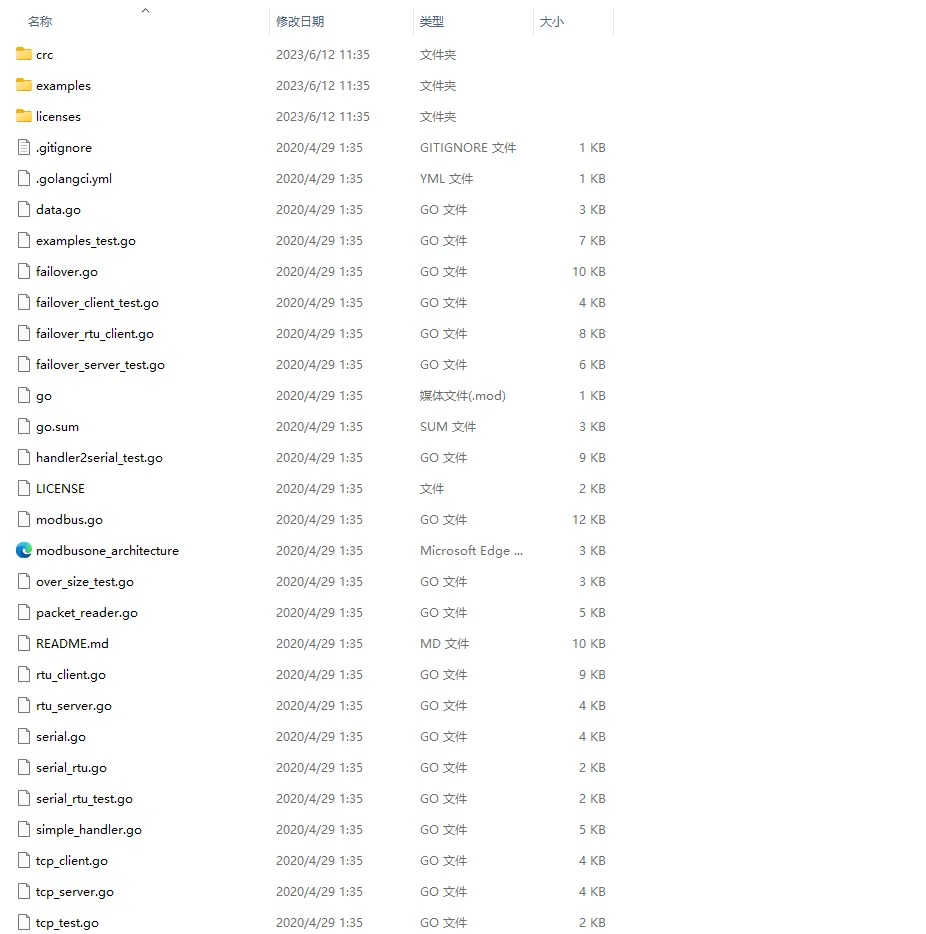
The importance of Modbus protocol in industrial automation and control system development is self-evident. For developers who use Go language, how to effectively develop Modbus is a common issue. Fortunately, ModbusOne has provided us with a solution.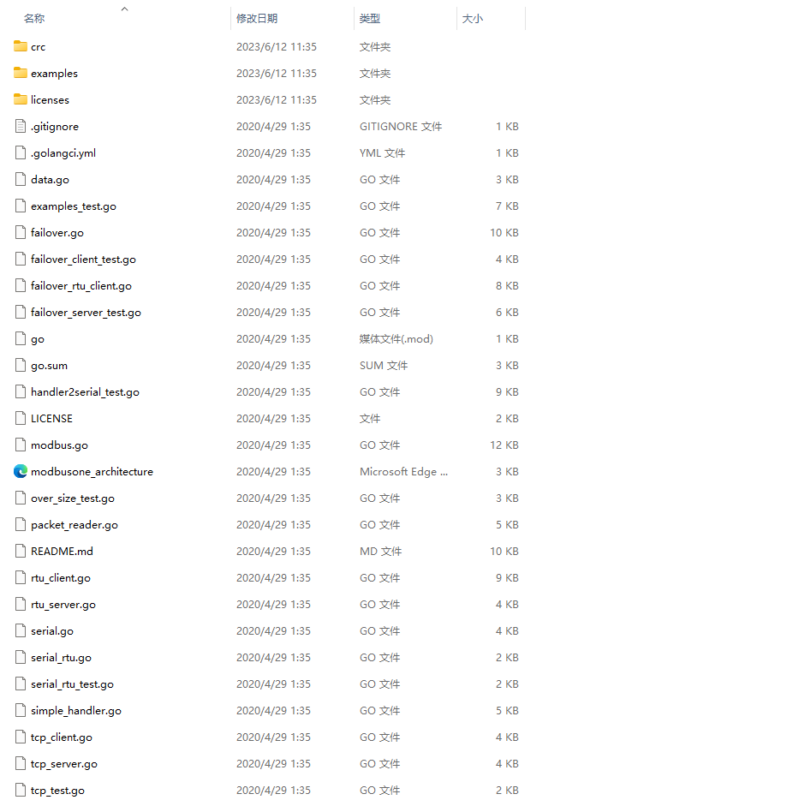 So, hurry up and purchase this compressed package to start your Modbus development journey!
2026 Update: Current Status of ModbusOne and Recommended Solution for Modbus Development in Go Language
Starting from 2024, ModbusOne (github.com/Nigh/ModbusOne) The original repository has been removed from GitHub and Go package indexes and is no longer being maintained. For projects that require Modbus development in Go language, we recommend the following alternative solutions:
- go-modbus (
github.com/thinkgos/go-modbus) The Modbus library implemented purely in Go supports three modes: RTU/ASCII/TCP, and provides both client and server APIs. It is currently the most actively maintained Go Modbus library in the community. Adopting object pool design, with high memory allocation efficiency, suitable for high concurrency collection scenarios. - eModbus (
github.com/eModbus/eModbus) Modbus library developed based on ESP32 MCU, still actively maintained in 2026 (latest submission: February 2026). Although it is a C++library, it has important reference value for embedded Modbus gateway applications. - libmodbus (
github.com/stephane/libmodbus) : The classic Modbus library written in C language supports Linux/Mac/Windows/QNX multi platform, which can be called in Go project through CGo. There will still be maintenance updates in December 2025.
For production level projects such as industrial IoT gateways, it is recommended to prioritize maintaining active libraries and pay attention to their license compatibility (go modbus uses MIT license, libmodbus uses LGPL v2.1).


Leave a Reply