
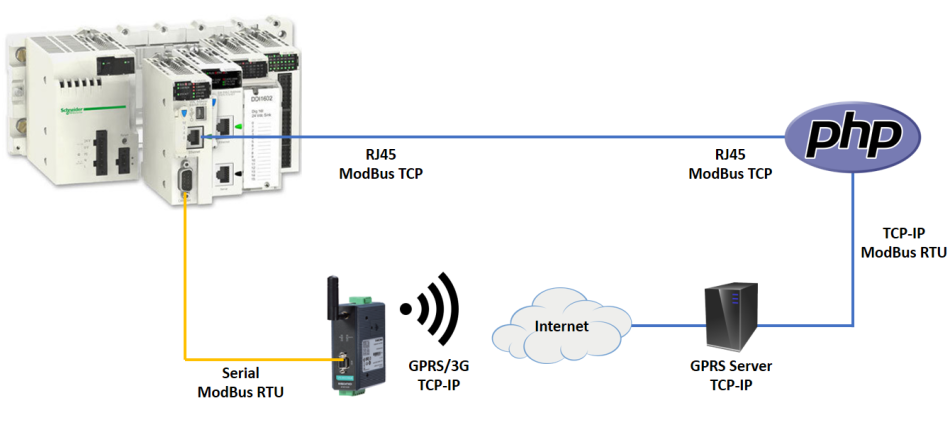
With the development of the Internet of Things (IoT), Modbus, a traditional industrial communication protocol, is increasingly being used in combination with modern computing models such as edge computing and cloud computing. Next, we will explore how Modbus integrates with edge computing and cloud computing, and gain a deeper understanding of its applications and benefits:
Integration of Modbus with edge computing:
- Data preprocessing: Edge devices (such as PLCs, gateways, or controllers) can directly read data from connected Modbus devices, perform preprocessing such as data cleaning, aggregation, or conversion, and then transmit the processed data to the cloud.
- Real-time feedback: Based on Modbus-based real-time data, edge devices can quickly make decisions or execute control commands without waiting for communication with the cloud.
- Edge storage: When the connection to the cloud is interrupted, edge devices can temporarily store data collected from Modbus devices and upload it when the connection is restored.
- Security enhancement: Implementing Modbus-to-other protocol conversions (such as MQTT or HTTPS) on edge devices can provide encryption and other security measures to ensure the security of data during transmission to the cloud.
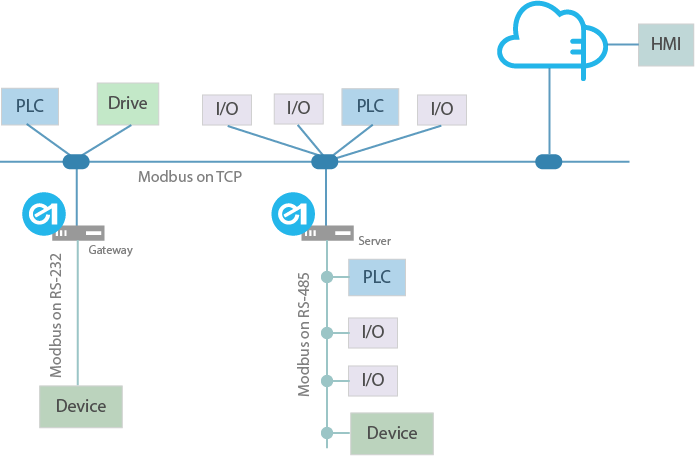
Integration of Modbus with cloud computing:
- Data storage and analysis: A large amount of data generated by devices connected via Modbus can be uploaded to the cloud for long-term storage, analysis, and processing, leveraging the powerful capabilities of cloud computing to extract valuable insights.
- Remote Monitoring and Management: Engineers and operators can monitor and manage Modbus devices in real-time through the cloud platform, regardless of their location.
- Device Firmware Updates: The cloud platform can provide remote firmware and software update services for connected Modbus devices.
- Integration with Other Services: Modbus data can be integrated with other applications and services in the cloud (such as ERP, CRM, or other IoT applications) to enable cross-platform utilization of data.
- Advanced Security Features: Cloud services provide a variety of advanced security features, such as data encryption, authentication, and access control, to ensure the security of Modbus data.
Conclusion:
Combining Modbus with edge computing and cloud computing can achieve efficient data utilization, enhanced system flexibility, and reduced operational costs. Moreover, this integration provides a bridge that enables traditional industrial automation systems to seamlessly migrate to modern IoT architectures, thereby unlocking greater value.


Leave a Reply