
Description
Product Overview
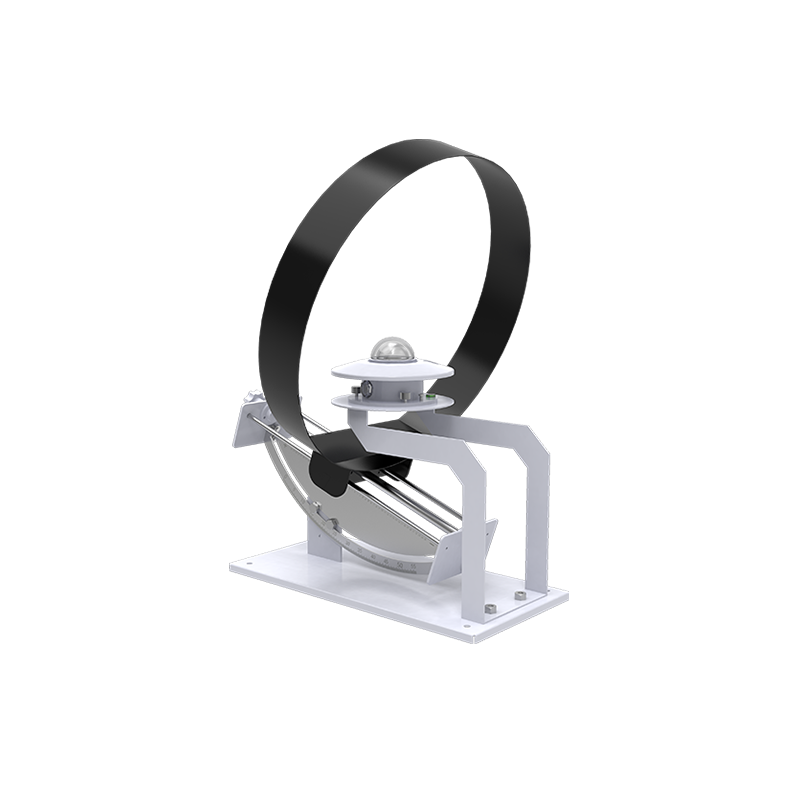
Modbus scattering radiation transmitter is a scattering radiation measurement instrument that uses thermoelectric principle. It can be widely used in departments such as solar energy utilization, meteorology, agriculture, building material aging, and air pollution to measure sky scattering radiation.
Product Features
- **High measurement accuracy: * * Using thermoelectric induction elements, high measurement accuracy, high sensitivity, and short response time.
- * * Stable and reliable: * * Double layer glass cover, high transmittance of up to 95%, good sensitivity, special surface treatment to prevent dust adsorption, spectral range of 0.3~3 μ m, temperature compensation function, more accurate measurement within the range.
- * * High protection level: * * The shell is made of aluminum alloy material, which has a high protection level and can be used continuously outdoors for a long time.
- * * Easy Installation: * * Compact structure, easy installation, and simple wiring method.
- * * Multiple output modes: * * Supports standard ModBus RTU 485 communication protocol, which can directly read the current scattered radiation value.
Technical Specifications
| Parameter Name | Indicator |
|---|---|
| Power Supply Range | 10V~30V DC |
| Output mode | 485 (standard ModBus RTU protocol) |
| Power consumption | 0.2W |
| Operating temperature | -40 ℃~+60 ℃ |
| Operating humidity | 0% RH~95% RH Non condensing |
| Sensitivity | 7-14 μ V · W-1 · m2 |
| Internal resistance | 200-400Ω |
| Response time (95%) | ≤30s |
| Nonlinear error | ≤±3% |
| Directional corresponding error | ≤±30W/m² |
| Temperature response error | ≤±3% (-30℃~+50℃) |
| spectral range | 0.3~3μm |
| measurement range | 0-2000W/m² |
| Resolution | 1W/m² |
| precision | ±3% |
| Yearly stability | ≤±3% |
| Cosine response error | ≤±5% |
| Tilt response error | ≤2% |
| zero drift | ≤ 6 W/m ² |
| Latitude scale range | 0~55 ° |
| declination range | ± 25 ° (north latitude is positive) |
| Ring diameter | Φ 400 |
Product selection
| Model | Description |
|---|---|
| RS-JTBQ-N01-AL | 485 output (standard ModBus RTU protocol), aluminum alloy shell |
Product Application
- * * Solar Energy Utilization: * * Used to measure solar energy resources and provide a basis for the design and operation of solar power generation systems.
- * * Meteorology: * * Used to measure atmospheric scattered radiation, providing data for meteorological forecasting and climate research.
- * * Agriculture: * * Used to measure crop photosynthesis and provide guidance for agricultural production.
- * * Building Material Aging: * * Used to measure the degree of photoaging of building materials and provide data for durability research of building materials.
- * * Air Pollution: * * Used to measure the aerosol content in the atmosphere and provide data for air pollution monitoring.
Product Advantages
- * * High Measurement Accuracy: * * Adopting advanced measurement technology, high measurement accuracy and reliable data.
- * * Stable and reliable: * * Double layer glass cover, high transmittance of up to 95%, good sensitivity, special surface treatment to prevent dust adsorption, spectral range of 0.3~3 μ m, temperature compensation function, more accurate measurement within the range.
- * * High protection level: * * The shell is made of aluminum alloy material, which has a high protection level and can be used continuously outdoors for a long time.
- * * Easy Installation: * * Compact structure, easy installation, and simple wiring method.
- * * Multiple output modes: * * Supports standard ModBus RTU 485 communication protocol, which can directly read the current scattered radiation value.
Product Selection Guide
Users can consider the following factors when selecting:
- * * Measurement Accuracy: * * Choose the appropriate measurement accuracy based on actual application needs.
- * * Protection level: * * Choose the appropriate protection level based on the installation environment.
- * * Output mode: * * Based on data