


When we talk about communication protocols between automation equipment (such as PLCs, temperature controllers, etc.) and computers, ModBus is a widely used communication protocol. ModBus supports multiple communication methods, including ModBus RTU, ModBus ASCII, and ModBus TCP. Each communication method has its unique characteristics and application scenarios.
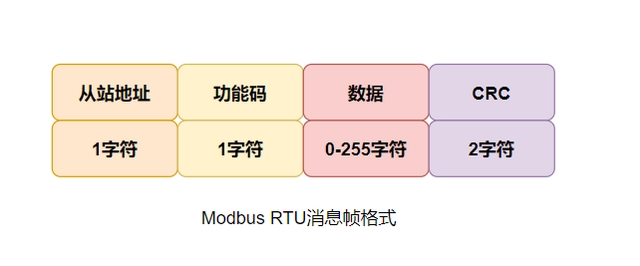
ModBus RTU uses binary data transmission, which is the most common implementation of the ModBus protocol. It uses serial communication and supports both RS232 and RS485 interfaces. In RTU mode, each byte can transmit two hexadecimal characters. ModBus RTU has high transmission efficiency and stability, but is not very easy to read. Its message frame format consists of multiple parts, such as address code, function code, data, etc.
The message frame format consists of the following parts:
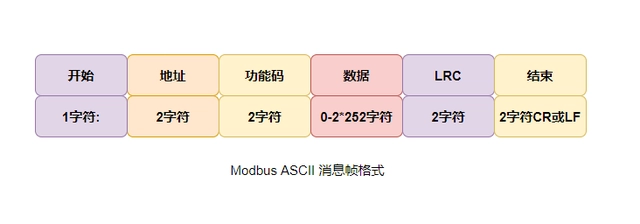
ModBus ASCII uses ASCII code to transmit text information. Compared to ModBus RTU, its transmission efficiency is lower, but it has better readability. ModBus ASCII also uses serial communication and supports both RS232 and RS485 interfaces, making it suitable for short-range communication. In ASCII mode, each 8-bit byte is split into two ASCII characters for transmission, and the message frame begins with a colon ":" and ends with a carriage return and line break symbol (CRLF).
ModBus TCP is an extension of the ModBus protocol that uses the TCP/IP protocol for communication and can transfer data between local area networks (LANs) and wide area networks (WANs). ModBus TCP supports various network devices, including computers, servers, switches, routers, etc. It is suitable for remote monitoring and control, commonly used in industrial networks and IoT applications. The physical layer, data link layer, network layer, and transport layer of this protocol are all based on the TCP protocol, and it only encapsulates the ModBus protocol at the application layer.
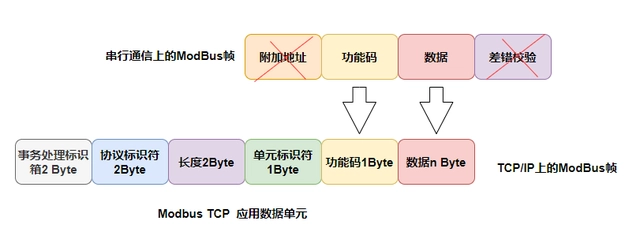
In ModBus RTU and ModBus ASCII, communication is conducted through a serial interface, which means they can only communicate over short distances. Therefore, if communication is required over a long distance, ModBus TCP needs to be used. On the other hand, ModBus RTU and ModBus ASCII use binary and ASCII codes for data transmission respectively, resulting in differences in their transmission efficiency and readability. When choosing ModBus communication method, multiple factors need to be considered, including communication distance, transmission efficiency, and readability.
In short, for short-range communication, both ModBus RTU and ModBus ASCII can be chosen. If higher transmission efficiency is required, ModBus RTU can be chosen; If better readability is needed, ModBus ASCII can be chosen. For long-distance communication, only ModBus TCP can be used.


Leave a Reply