
Overview
The environmental monitoring system collects and displays various environmental data (such as temperature and humidity, air quality, light intensity, etc.) in real time through IoT technology and sensor networks, and supports remote monitoring and data analysis. This system is widely used in agricultural greenhouses, industrial plants, schools, communities and other scenarios, helping users achieve intelligent management and optimization of the environment. The construction of an environmental monitoring system is not only a technical requirement, but also a practice of modern environmental management concepts. With the rapid development of IoT technology, environmental monitoring systems have evolved from traditional single data collection to multi-dimensional, real-time, and intelligent comprehensive management platforms. Through this system, users can real-time monitor environmental changes, adjust management strategies in a timely manner, thereby improving resource utilization efficiency, reducing operating costs, and ensuring personnel health and production safety.
The construction of an environmental monitoring system is not only a technical requirement, but also a practice of modern environmental management concepts. With the rapid development of IoT technology, environmental monitoring systems have evolved from traditional single data collection to multi-dimensional, real-time, and intelligent comprehensive management platforms. Through this system, users can real-time monitor environmental changes, adjust management strategies in a timely manner, thereby improving resource utilization efficiency, reducing operating costs, and ensuring personnel health and production safety.
II. Construction Objective
- Real time Monitoring of Environmental Data: Through sensor networks, real-time collection and display of environmental data are achieved to ensure the accuracy and timeliness of the data.
- Intelligent Control and Management: Automatically control relevant equipment (such as air conditioning, irrigation systems, etc.) based on environmental data to optimize environmental conditions.
- Remote Monitoring and Warning: Supports remote viewing of data through mobile apps or PC terminals, setting warning thresholds, and timely detection of abnormal situations.
- Data Analysis and Decision Support: Provide scientific basis for environmental management through historical data statistics and analysis.
III. Construction Content
1. Intelligent Control Core
Recommended Equipment: Environmental Monitoring Screen
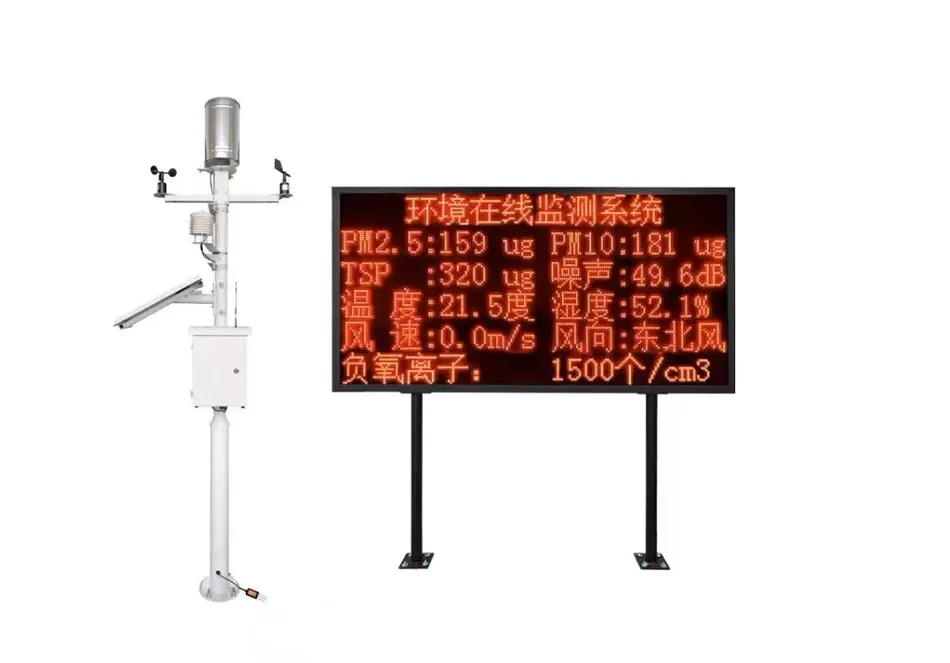
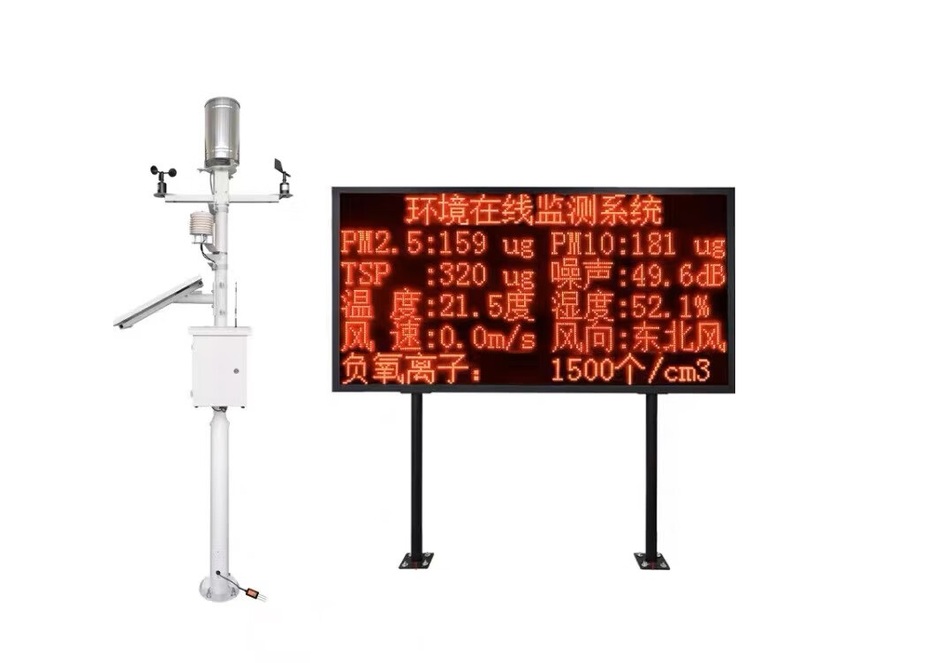
- Function Description: As the core display device of the environmental monitoring system, it centrally displays various environmental data (such as air temperature and humidity, soil temperature and humidity, CO ₂ concentration, light intensity, etc.), supports multiple communication methods (RS485, TCP/IP, 4G, etc.), and can achieve real-time data updates and remote monitoring.
- Installation locationIt is recommended to install it in a prominent location in the monitoring area for easy observation and management.
- technical details:
- The display screen adopts a high brightness LED dot matrix screen to ensure clear and visible data under strong light.
- Support customized display content and flexible adjustment of display format according to user needs.
- Built in data processing module, capable of preliminary analysis and processing of collected data.
2. Environmental monitoring and regulation
Recommended equipment:
- Temperature and humidity sensorReal time monitoring of air temperature and humidity.
- Soil temperature and humidity sensorMonitor soil temperature and humidity to guide irrigation.
- CO ₂ SensorMonitor the concentration of CO ₂ in the air.
- light sensorMonitor light intensity and optimize lighting conditions.
- PM2.5/PM10 sensorMonitor air quality.
- Rainfall Sensor: Monitoring Rainfall.
- Wind Speed and Direction Sensor: Monitor wind speed and direction.
- Noise SensorMonitor environmental noise.
- Functional DescriptionVarious sensors collect real-time environmental data and transmit it to the monitoring screen through RS485 or wireless communication. The monitoring screen automatically adjusts relevant equipment (such as ventilation systems, irrigation systems, etc.) according to preset conditions.
- Installation LocationInstall in suitable locations such as walls, ceilings, or soil according to monitoring requirements.
- technical details:
- The temperature and humidity sensor adopts a high-precision probe, with a measurement range of -40 ℃ to 80 ℃ and an accuracy of ± 0.5 ℃.
- Soil temperature and humidity sensor supports depth adjustment and is suitable for different types of soil. The CO ₂ sensor adopts non dispersive infrared (NDIR) technology with a measurement range of 0-5000ppm.
- The CO ₂ sensor adopts non dispersive infrared (NDIR) technology, with a measurement range of 0-5000ppm.
- The light sensor supports full spectrum measurement and is suitable for indoor and outdoor environments. The PM2.5/PM10 sensor adopts laser scattering technology, with a measurement range of 0-999 μ g/m ³ and an accuracy error of less than 10%. The rain sensor adopts a tipping bucket design with a measurement range of 0-200mm/h. The wind speed and direction sensor supports 0-360 ° wind direction measurement and 0-12 level wind detection.
- The PM2.5/PM10 sensor adopts laser scattering technology, with a measurement range of 0-999 μ g/m ³ and an accuracy error of less than 10%.
- The rainfall sensor adopts a tipping bucket design, with a measurement range of 0-200mm/h.
- The wind speed and direction sensor supports 0-360 ° wind direction measurement and 0-12 level wind detection.
- The measurement range of the noise sensor is 30-130dB, with an accuracy of ± 1.5dB.
3. Data transmission and communication
Recommended equipment:
- Wireless gateway: Supports multiple communication methods such as 4G, Wi Fi, LORA, etc., to ensure real-time data transmission.
- Server: Store and process environmental data, support remote access and analysis of data.
- Function Description: Through wireless gateway and server, centralized management and remote monitoring of environmental data are achieved, supporting multi device collaborative work.
- Installation location: The wireless gateway is installed in the center of the monitoring area, and the server can be placed in the computer room or cloud.
- Technical Details:
- Wireless gateway supports multiple communication protocols and allows for flexible selection of suitable transmission methods. The server adopts high-performance processors and large capacity storage to ensure efficient data processing and storage.
- The server adopts high-performance processors and large capacity storage to ensure the efficiency of data processing and storage.
- Supports redundant backup of data to ensure data security.
4. Remote Monitoring and Management
Recommended Devices:
- Mobile APP: Supports Android and iOS systems, providing real-time and historical data viewing, chart analysis functions.
- PC software: Supports detailed analysis and management of data.
- Function Description: Users can view environmental data anytime and anywhere through mobile apps or PC software, set warning thresholds, and receive abnormal notifications.
- Installation location: No physical installation required, can be used through network connection.
- Technical Details:
- The mobile app supports offline data viewing, ensuring that critical data can still be accessed in case of network instability. The PC software provides data export function and supports generating and analyzing reports.
- The PC software provides data export function, supporting the generation of reports and analysis reports.
- supports multi-user permission management to ensure data security and privacy.
5. Data Analysis and Decision Support
Recommended equipment:
- Data analysis module: Integrated in the server, supporting data statistics, analysis, and visualization display.
- Function Description: Through the data analysis module, users can view the trend changes of environmental data, generate reports, and provide scientific basis for environmental management.
- Installation location: Integrated into the server, no additional installation required.
- Technical Details:
- The data analysis module supports multiple statistical methods, such as mean, maximum, minimum, etc.
- provides data visualization functionality, supporting the generation of various charts such as bar charts, line charts, pie charts, etc.
- supports automatic identification and alarm of abnormal data, helping users discover potential problems in a timely manner.
IV. Equipment Selection and Purchase Suggestions
- Intelligent Control Core: Greenhouse Environment Monitoring Screen, supporting multiple communication methods, suitable for scenarios such as agricultural greenhouses and industrial plants.
- Environmental monitoring equipment: temperature and humidity sensors, soil temperature and humidity sensors, CO ₂ sensors, light sensors, PM2.5/PM10 sensors, rainfall sensors, wind speed and direction sensors, noise sensors, ensuring comprehensive monitoring of environmental data.
- Data transmission equipment: Wireless gateway (supporting communication methods such as 4G, Wi Fi, LORA, etc.), server, ensuring real-time transmission and storage of data.
- Remote Monitoring Device: Mobile APP (supporting Android and iOS systems), PC software, providing convenient remote monitoring and management functions.
- Data analysis equipment: Data analysis module, supporting data statistics, analysis, and visualization display.
V. Summary of Solution Value
- Full Protocol Compatibility: Supports multiple communication protocols such as RS485, TCP/IP, 4G, etc., reducing the difficulty of integrating multiple brands of devices.
- Industrial grade stability: High precision sensors and stable communication modules are used to ensure continuous operation 24/7.
- Flexible Expansion: Supports multiple sensors and communication methods, and can be flexibly expanded according to needs.
- Energy Conservation and Environmental Protection: Through real-time monitoring and intelligent regulation, optimize environmental conditions and reduce energy waste.
VI. Implementation Precautions
- Wiring Specification: The RS485 bus should use twisted pair shielded wire (AWG18) to avoid parallel connection with strong electricity.
- Protocol Testing: Before purchasing, request the protocol document from the supplier to verify compatibility with the existing system.
- Equipment Installation: Ensure that the equipment is installed in a reasonable location for easy wiring and management.
- System Debugging: After installation, perform system debugging to ensure that all devices are running normally.
- Maintenance: Regularly check sensors and communication equipment to ensure the accuracy of data collection and the stability of the system.
7. Application Scenarios
1. Agricultural Greenhouse
By real-time monitoring of environmental parameters such as temperature and humidity, light intensity, and CO ₂ concentration inside the greenhouse, the ventilation, irrigation, and lighting systems are automatically regulated to optimize crop growth conditions and improve yield and quality.
2. Industrial plant
Monitor environmental parameters such as air quality, temperature and humidity, noise, etc. inside the plant to ensure that the working environment meets health and safety standards, while optimizing energy use and reducing operating costs.
3. Schools and Communities
Deploy environmental monitoring systems in schools and communities to real-time monitor environmental data such as air quality, temperature, and humidity, providing a healthy and comfortable living and learning environment for teachers, students, and residents.
4. Water Quality Monitoring
By monitoring water quality parameters such as water temperature, chromaticity, turbidity, pH value, etc., water quality problems can be detected in a timely manner to ensure the safety of drinking water.
8. Summary
Environmental monitoring system is not only a technical platform, but also a management tool. It helps users achieve refined management of the environment through real-time data collection and intelligent regulation. Whether in agriculture, industry, or community management, environmental monitoring systems can provide scientific data support and decision-making basis, contributing to sustainable development. Through reasonable equipment selection and system design, users can easily build an efficient, stable, and flexible environmental monitoring system to meet diverse needs.


Leave a Reply