
In the Internet of Things, the role of communication lines is to transmit data, signals, and power, establishing communication links between devices.
Common communication lines include USB cables, signal lines, RS485, RS232, Ethernet cables, CAN, etc. Among them, USB cables are digital signal transmission lines that can connect computers and other peripherals, performing functions such as data transmission, charging, and power supply. Signal lines are used to transmit single or specific signals, typically connecting different modules, circuits, or components within a device to transmit specific signals or signal types. Communication lines such as RS485, RS232, Ethernet cables, and CAN are used for data transmission and communication between different devices, establishing long-distance communication links.
Transmission distance of communication lines with different protocols
| Communication line | Distance | Description |
| RS485 | 1200 meters | Two-wire system, differential signal transmission, half-duplex communication, with a maximum communication distance of over a kilometer. |
| RS232 | 10 meters | Three-wire system, full-duplex communication, with a general communication distance of less than 10 meters. |
| RS422 | 1200 meters | The maximum transmission distance of RS-422 is approximately 1200 meters. The maximum transmission rate is 10Mb/s. The length of its balanced twisted pair is inversely proportional to the transmission rate, and the maximum transmission distance can only be achieved at rates below 100kb/s. |
| Ethernet | 100 meters | 4-wire or 8-wire, multi-master communication, high performance, communication distance within 100 meters using ordinary network cables. |
| CAN | 1000 meters | 2-wire system, multi-master communication, high performance, high reliability, capable of transmitting up to 8 bytes of data at a time, communication distance over a kilometer. |
| M-Bus | 1000 meters | 2-wire system, half-duplex, specially designed bus for remote meter reading systems, the transmission distance of M-Bus communication lines can reach 1000 meters. |
| USB | 10 meters | In the Internet of Things (IoT), USB communication cables are primarily used for data transmission between devices and computers or other devices. The transmission distance of USB communication cables is usually very short, generally only a few meters to a dozen meters. This is because USB communication cables are used for short-range communication between devices, and both their transmission rate and transmission distance are limited. |
Wireless Transmission Protocols and Distance
- Bluetooth:The effective range of the Bluetooth protocol is 50 to 100 meters, supporting data transmission rates of up to 1 Mbps. Recently, IoT developers have shown a preference for Bluetooth Low Energy (BLE) based on the Bluetooth Smart protocol. Compared to its predecessor, BLE significantly reduces power consumption but is not suitable for large file transfers.
- Zigbee:Zigbee, based on the IEEE 802.15.4 standard, has become one of the most widely used communication protocols in embedded applications. Zigbee is used to connect devices within a range of 10-100 meters and supports data rates of up to 250 Kbps. As a low-power, low-data-rate technology, Zigbee is highly suitable for bidirectional data transmission between IoT sensors and IoT gateway devices, as well as ad hoc wireless mesh networks. Through its mesh topology, Zigbee devices can transmit data over a certain distance via intermediate devices. For IoT applications in the consumer and industrial sectors that require low-cost and low-power sensor networks, Zigbee is an excellent choice.
- LoRa:LoRa is a long-range wireless transmission solution based on spread spectrum technology, with a maximum transmission distance of several kilometers or even tens of kilometers. The LoRa protocol features low power consumption, long-range transmission, and large network capacity, making it highly suitable for IoT applications.
- Wi-Fi:Wi-Fi is designed to replace Ethernet and provides easy-to-use short-range wireless connectivity and cross-vendor interoperability through the IEEE 802.11 standard series. Although Wi-Fi is not a low-power technology, its transmission distance is relatively long, typically ranging from tens of meters to hundreds of meters.
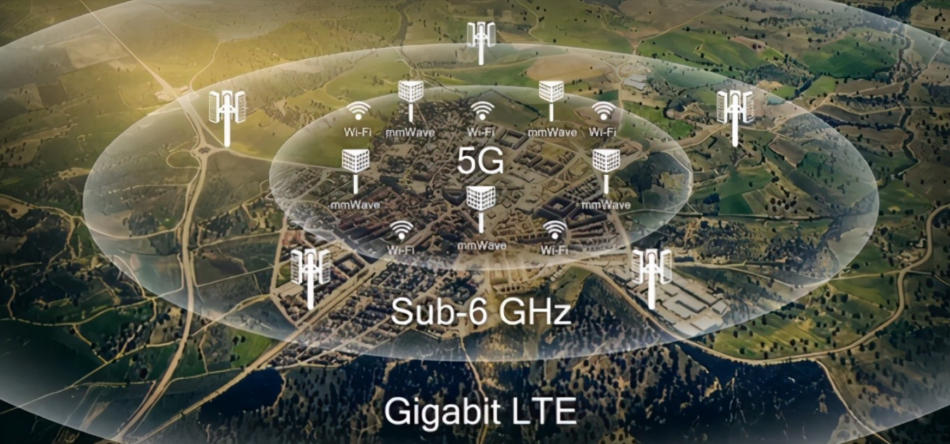
- Cellular Networks:For IoT applications that require long-distance continuous connectivity, cellular networks are a viable solution.
- Sigfox:Sigfox is a software-based Low Power Wide Area Network (LPWAN) protocol designed to provide a simple, low-cost, and reliable communication solution for Internet of Things (IoT) applications. Sigfox achieves long-range transmission through the use of ultra-narrowband technology, with a maximum transmission distance of up to hundreds of kilometers.
- LoRaWAN:LoRaWAN is a Wide Area Network (LPWAN) protocol based on the LoRa protocol, designed to provide long-range, low-power, and secure communication capabilities for IoT applications. LoRaWAN supports multiple data transmission rates and various frequency bands, with a maximum transmission distance ranging from several kilometers to tens of kilometers.
These wireless transmission protocols each have their own characteristics and usage scenarios, and need to be selected based on specific requirements. For example, for sensor networks that require low power and bidirectional communication, Zigbee is a good choice; for application scenarios that require long-range transmission, LoRa or LoRaWAN may be a better option; and for wireless connections that require fast and long-range capabilities, Wi-Fi or cellular networks are more suitable choices.


Leave a Reply