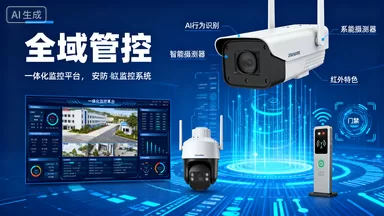
As the core infrastructure of intelligent buildings, the security monitoring system deeply integrates six subsystems including surrounding anti-theft alarm, closed-circuit television monitoring, electronic anti-theft alarm, building intercom, access control, and patrol management through a "layered defense, rigorous monitoring, and comprehensive management" architecture system, building a comprehensive and three-dimensional security protection network. The deployment plan and application value of the system in diverse scenarios will be elaborated in detail based on actual needs.
1、 Smart residential community scene
Scene featuresPopulation density, frequent access, and diverse security needs require a balance between convenience and protection.
System deployment and linkage:
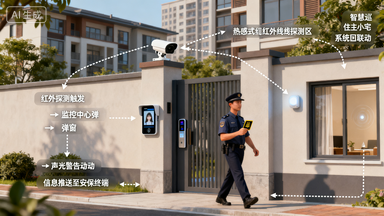
- The first line of defense around the perimeterInstall thermal infrared detectors and intelligent cameras on the walls of the community to achieve24Hourly motion detection and cross-border alarm. When the infrared detector triggers an intrusion alarm, the monitoring center platform automatically pops up the on-site screen, activates the sound and light warning, and synchronously pushes it to the security personnel's mobile terminal.
- Unit door second line of defenseThe building intercom system is linked with the access control system, and the owner can confirm the visitor's identity through a visual intercom and remotely open the unit door; Facial recognition access control supports "seamless passage" for homeowners, and visitors need to temporarily authorize registration. All entry and exit records are uploaded to the platform in real-time.
- The third line of defense indoorsHome alarms use intelligent sensors to set up defenses for doors, windows, balconies, and important rooms. In night or outdoor mode, once abnormal opening or human activity is detected, the local alarm will be immediately triggered and alarm information will be sent to the owner's mobile phone and monitoring center.
- Patrol the fourth line of defenseSecurity personnel hold electronic patrol signs and clock in to patrol along the preset route. The platform tracks patrol trajectories in real-time, automatically alerts for missed or delayed patrols, ensuring no blind spots in prevention and control.
Typical applicationsEffectively prevent unauthorized entry and exit of outsiders, burglary, high-altitude littering tracing, and abnormal entry and exit warnings for the elderly and children.
2、 Commercial complex scene
Scene featuresDue to high foot traffic, complex business formats, and long operating hours, it is necessary to focus on ensuring the safety of public areas and merchant property.
System deployment and linkage:
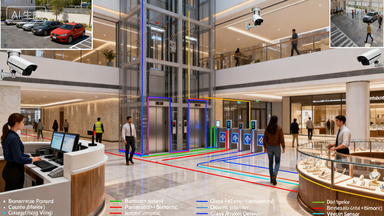
- Global visualization managementThe closed-circuit television monitoring system covers key areas such as parking lots, elevator halls, corridors, and cash registers. It uses intelligent digital image motion tracking technology to automatically identify abnormal behaviors such as personnel gathering, staying, and running, achieving fully automatic warning.
- Graded access controlSeparate the office area from the commercial area and implement hierarchical authorization management for employees, merchants, and customers through an access control system; Key areas such as the finance room and monitoring center adopt "access control+password"+ biometric"Multiple verifications, with operation records kept throughout the entire process.
- Key protection linkageHigh risk merchants such as gold shops and jewelry cabinets deploy electronic anti-theft alarm systems, with glass breakage detectors and vibration sensors linked to the monitoring center. After triggering the alarm, the camera automatically turns to the preset position for recording, forming a complete evidence chain.
- Optimization of security effectivenessThe electronic patrol system standardizes patrol frequency and routes, especially during night patrols after store closure, to ensure that each floor and fire escape is patrolled on time and prevent risks such as fire and theft.
Typical applicationsPassenger flow statistics and analysis, merchant joint defense linkage, automatic night defense switching, rapid positioning and disposal of emergencies.
3、 Industrial park/enterprise park scene
Scene featuresThe area is wide, the perimeter is long, and night duty is weak. It is necessary to strengthen boundary protection and internal control.
System deployment and linkage:
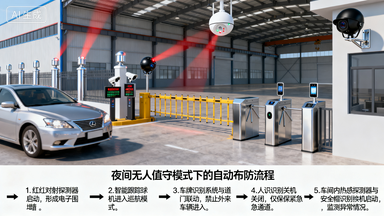
- Strict perimeter defenseThe periphery of the park adopts a combination of infrared detectors and intelligent tracking ball machines to form a virtual electronic fence, which supports intelligent analysis such as boundary detection, area intrusion, and wandering detection. The alarm pop-up window can be linked to the alarm light, alarm number, and nearby camera for tracking and shooting.
- Management of pedestrian and vehicle separationInternal vehicles are automatically released through the license plate recognition system at the vehicle entrance and exit, and visitor vehicles need to make appointments for registration; Access control gates are set up in the personnel channel, and employees use facial recognition to pass through. External personnel are temporarily authorized through visitor management and building intercom system confirmation.
- Production area safetyDeploy thermal infrared detectors and smoke sensors in key areas such as workshops and warehouses, and enter defense mode at night when there is no one present; Machine vision cameras can monitor unsafe behaviors such as personnel not wearing safety helmets and violating boundaries.
- Patrol and compaction responsibilityIn response to the wide range of the park, multiple patrol routes and mandatory inspection points are set up, and patrol data is uploaded in real-time. Management personnel can remotely supervise the quality of patrols through the platform to prevent security guards from sleeping or leaving their posts.
Typical applicationsMaterial theft prevention, safety production supervision, full process traceability of visitors, and unmanned automation at night.
4、 Public building scenes such as education/healthcare
Scene featuresPersonnel are dense and vulnerable groups are concentrated, with significant safety responsibilities that require rapid emergency response.
System deployment and linkage:
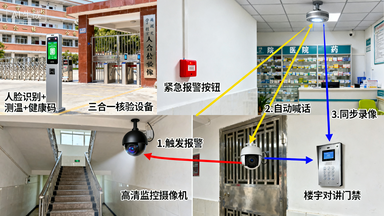
- Intelligent control of entrances and exitsThe school gate and hospital outpatient building are equipped with integrated access control and temperature measurement cameras, achieving a three in one passage of "facial recognition+temperature detection+health code verification", automatically intercepting and reporting any abnormalities.
- Monitoring of key areasHigh definition monitoring and emergency alarm buttons are deployed on school playgrounds, stairwells, hospital pharmacies, and toll booths. One click triggering can achieve synchronous response of "alarm+call+video", deterring illegal behavior.
- Dormitory/ward managementStudent dormitories and inpatient departments adopt building intercom and access control linkage, with timed locking at night. Nurse stations and dormitory management centers can remotely open doors and view intercom videos to ensure personnel safety.
- Visualization of security patrolsThe security patrol trajectory is presented in real-time on the platform, and in case of emergencies, the location and scene can be reported with one click, and the command center can quickly dispatch reinforcements.
Typical applicationsStudent loss prevention, prevention of medical disputes, control of dangerous goods areas, and emergency evacuation command.
5、 Smart community comprehensive governance scenario
Scene featuresMulti system, multi data, and multi business integration require upgrading from single point prevention and control to global intelligent governance.
System deployment and linkage:
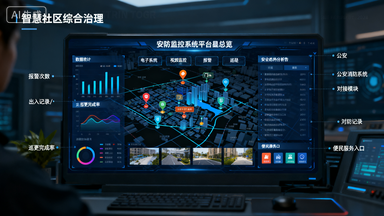
- Platform integration and integrationIntegrate video surveillance, access control, alarm, patrol, intercom and other subsystems into a unified security monitoring system platform, breaking down information silos and achieving "one platform, one map, one click scheduling".
- Intelligent data analysisThe platform conducts big data analysis on alarm data, access records, and patrol trajectories generated by various devices, automatically generates security situation reports, identifies high-frequency alarm points and risk periods, and guides precise defense deployment.
- Multi departmental collaboration and linkageThe platform can be integrated with public security, fire protection, and property management systems to achieve one click reporting and multi-party linkage for major police incidents, improving disposal efficiency.
- Integration of convenient servicesBuilding intercom and communityAPPBy connecting, homeowners can remotely open doors for visitors, view monitoring of their surroundings, and receive safety reminders, achieving a dual improvement of "safety+service".
Typical applicationsCommunity safety situation awareness, coordinated prevention and control, refined property management, and improved satisfaction of residents' sense of security.
Summary
The core value of the security monitoring system lies in the deep linkage and platform based centralized management between subsystems, upgrading the traditional passive response to active warning and shifting from post traceability to pre prevention. Whether it is residential communities, commercial complexes, industrial parks, or public buildings, they can all build a three-dimensional protection system of "point, line, surface, and body" through closed-loop management of "detection monitoring alarm disposal recording", truly achieving the safety goal of "preventing problems before they happen".


Leave a Reply