
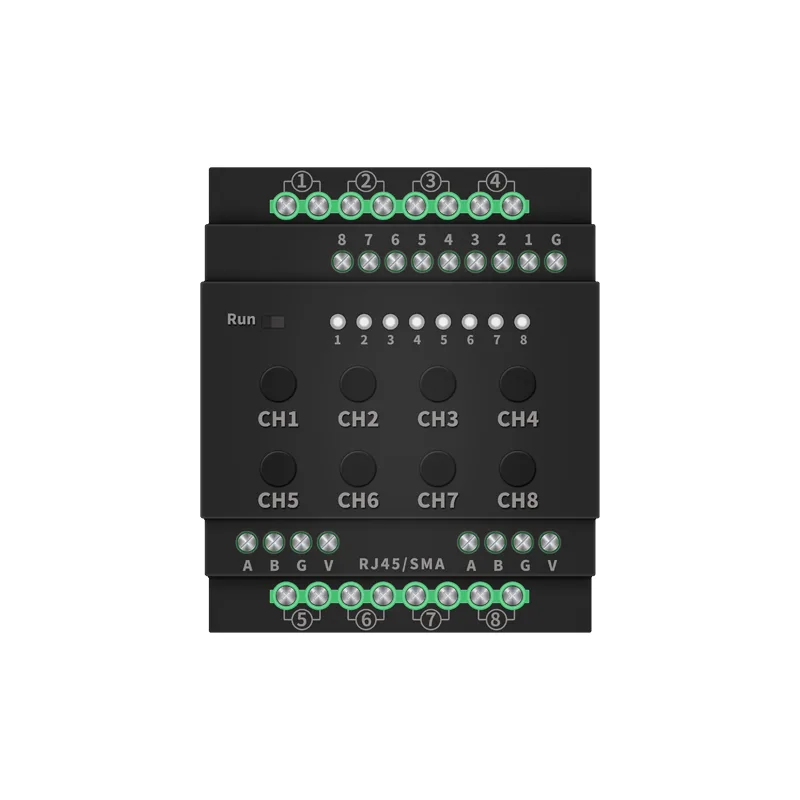
Detailed explanation of Modbus protocol
This protocol supports function codes 01, 02, 03, 05, 06, 15, 16. The register addresses mentioned in this agreement are:00As the starting point, Among them, the register address00What was actually sent16Binary data0x00.
- Broadcast address: use245As a broadcasting address, Operating this address will affect all modules on the bus.
- Function code:
01: Read the status of the relay. For example, Address00Representing the first route, 11Representing the second route.02: Read the status of switch input. Address rules are the same as function codes01.05: Operate the status of a single relay. The address rules are the same as above.15: Operate multiple relay states. The address rules are the same as above.03: Read the values of multiple registers.06: Write the value of a single register.16: Write values for multiple registers.- Register address and its function:
- Address00: Save the local address, Support reading and writing, Compatibility function code03, 06, 16.
- Address500: Save input status, Only supports reading. For example, Address500Representative1-16Road, 501Representative17-32Road, and so on, Support function code03.
- Address1000: Save the status of the output relay. For example, Address1000Representative1-16Road, 1001Representative17-32Road, and so on, Support reading and writing, Compatibility function code03, 06, 16.
- Address1500: Save internal variable values. For example, Address1500Representing internal variables1, 1501Representing internal variables2, and so on, Support function code03, 06, 16. Each instruction can only read or write one internal variable.
Three, Jumping symbol Modbus Protocol control demonstration
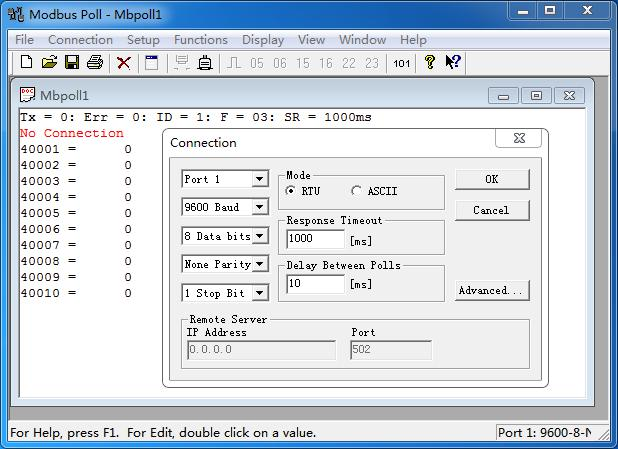
- Open the software: Set the correct serial port number, The default baud rate is9600, 8Data bits, 1A stop position, No checksum.
- Use function codes:
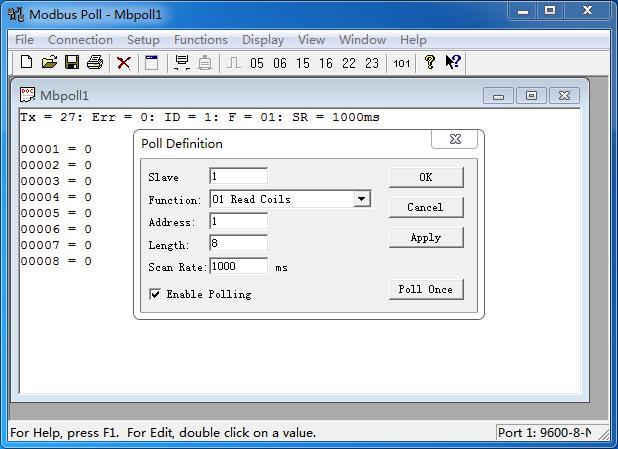
01: Read the status of the relay.
02: Read the status of switch input.
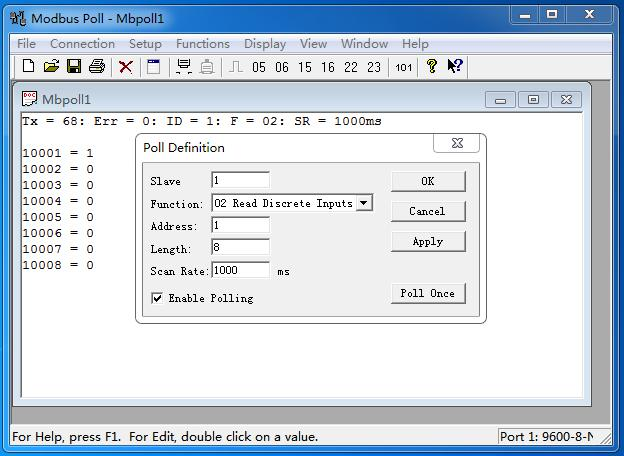
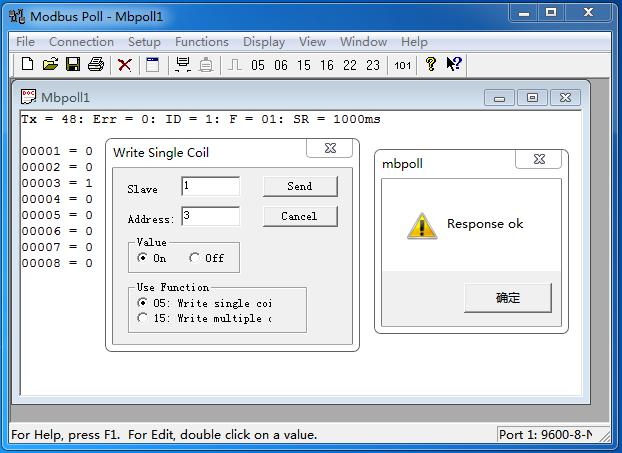
05: Operate the status of a single relay.
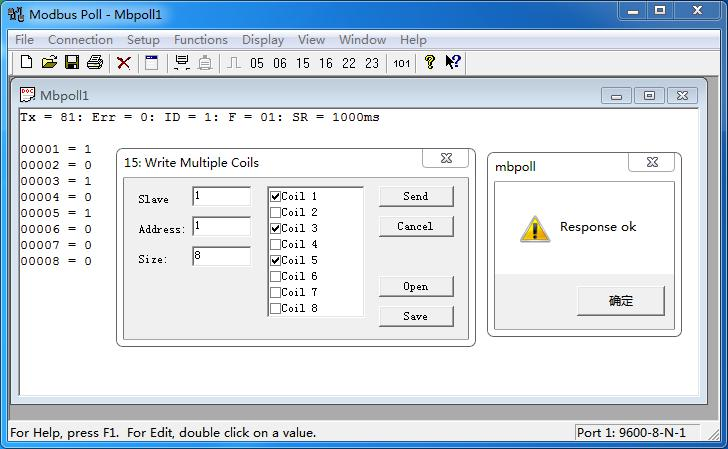
15: Operate the status of multiple relays.
- The use of these function codes is crucial for understanding and controlling the relays in our product. Customers can monitor and control the behavior of relays through these function codes, For example, opening or closing circuits, Or read the current status. This flexibility ensuresModbusThe protocol can adapt to various application scenarios, From simple household appliances to more complex industrial control systems.
- Four, Practical application cases
- In order to better understand the practical application of these functional codes, Let's consider a simple example. Assuming you need to monitor multiple pumps in a water supply system. Use function codes01And02, You can read the relay status and switch input status of each pump, Understand which pumps are running, Which ones are in a stopped state. Subsequently, If it is necessary to change the operating status of a certain pump, You can use the function code05Or15To control the corresponding relay, Thereby starting or stopping the pump.
- This flexibility not only enablesModbusProtocol becomes a powerful tool, It also ensures that it can meet the requirements of various different needs and application scenarios. By consulting our customer service team in detail, You can find the product that best suits your needs, And make full use of itModbusThe powerful functionality of the protocol.
Conclusion
to make a long story short, Jumping symbolModbusThe protocol provides an efficient and flexible way to control and monitor various devices. Whether you need simple device control or complex system monitoring, This type of agreement can provide necessary support. We encourage all interested customers to contact our customer service team, To learn more about product information compatible with this protocol, And make full use of these functions to improve your operational efficiency and control ability.
Product Purchase: https://item.taobao.com/item.htm?ft=t&id=629715423665


Leave a Reply